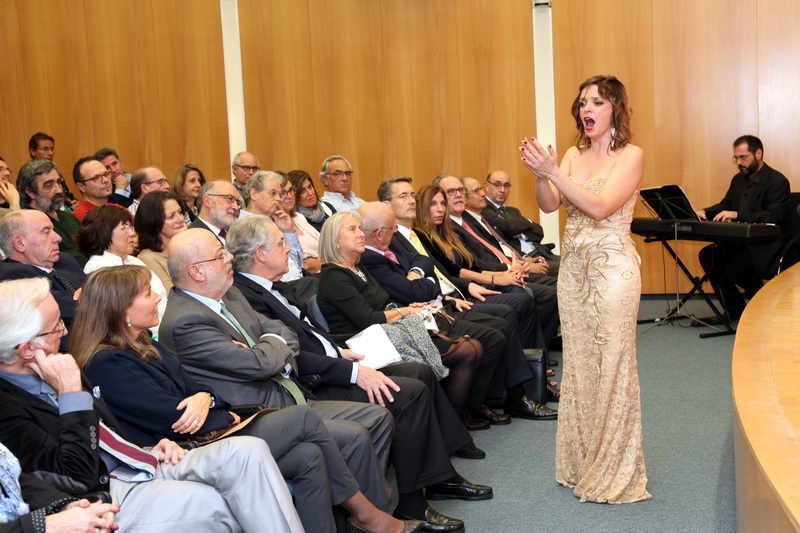


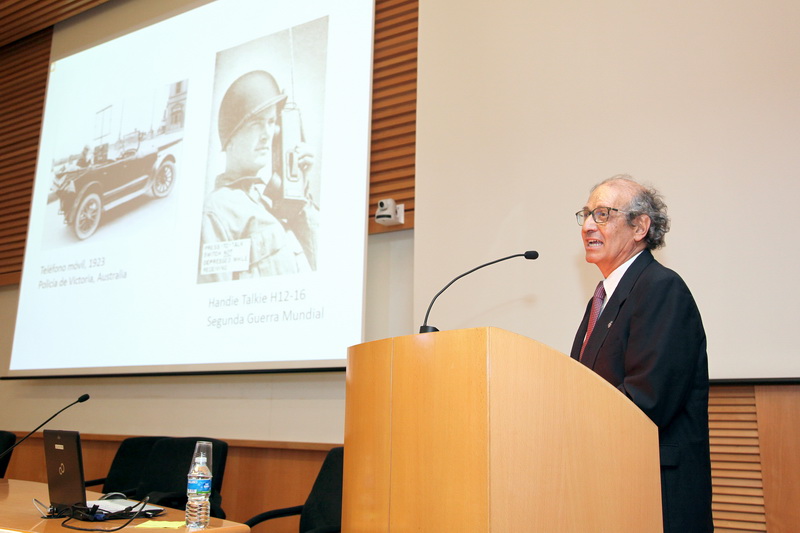
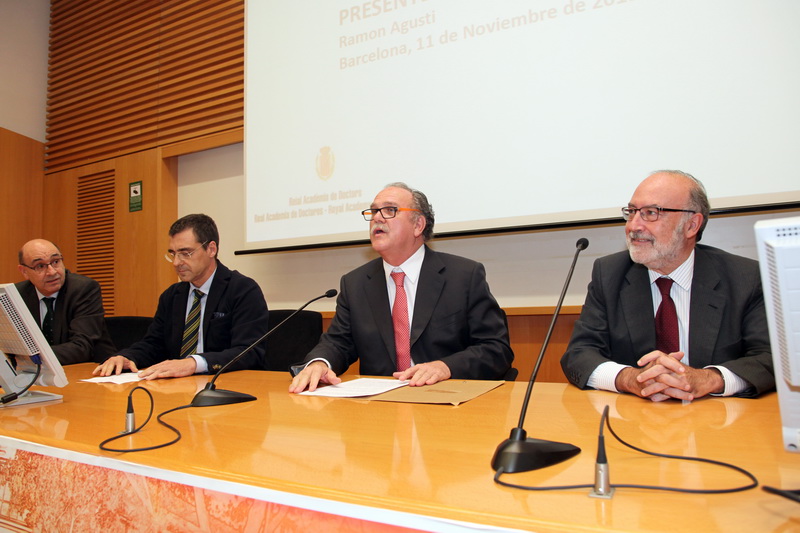
The future stage in human communications and music that does not serve times and generations. The professor at the Polytechnic University of Catalonia Ramon Agustí, the soprano Charo Tris and the pianist Juli Rodríguez, joined yesterday in Barcelona with Technological Sciences Section of the Royal Academy of Doctors a rigorous reflection on developments and challenges 5G technology and careful interpretation of arias by Bizet, Puccini and Rossini, among others.
Academician of the Royal Academy of Engineering of Spain, Agustí explained how since the 80s of last century the first mobile communication systems aimed at the general public with the appearance of what is called the first generation (1G) developed in just three decades, mankind has experienced a first revolution with the mass adoption of these devices in the 90s with GSM (2G) and rapid development to the adoption of UMTS (3G), which introduced the mobile internet, and the current era 4G. The immediate future, reported Agusti, come from the hand of the 5G, machine-to-machine communications that will transform healthcare and private transport, among other sectors.
The speaker said that the complexity of this new 5G, to be addressed by a huge growth in traffic will require intensive software and will result in the emergence of new forms of flexible mobile terminals and augmented reality.
Convened by the president of the Section, Full Academician Eugenio Oñate, the session ended with a performance by Charo Tris, accompanied on piano by Juli Rodríguez, playing counterpoint to the technological revolutions imperishable along eras and generations works.