


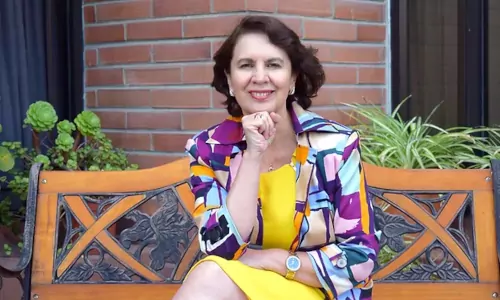
Dr Rosalía Arteaga
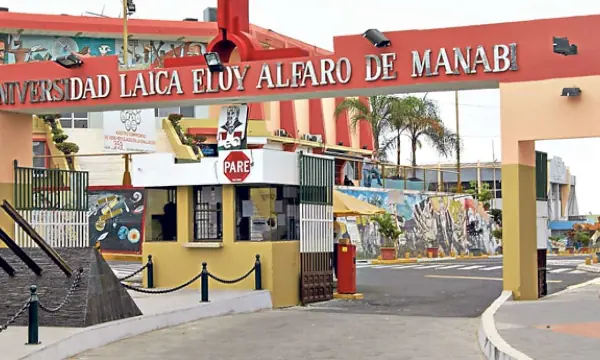
Rosalía Arteaga, former President and former Minister of Education of Ecuador, President of the Foundation for the Development of Latin America, a renowned advocate for education and children’s rights, and honorary academic and member of the Senate of the Royal European Academy of Doctors (READ), has been awarded an honorary doctorate by the Laica Eloy Alfaro University of Manabí, Ecuador. The ceremony took place on November 13 at the university’s campus in the city of Manta, where her exceptional career and invaluable contributions to education, culture, and public service at both national and international levels were highlighted.
During the ceremony, the guest speaker, economist Alberto Dahik, expressed his deep satisfaction in paying tribute to Arteaga, recalling that this academic distinction is granted exclusively to individuals who have demonstrated extraordinary merit in fields such as literature, the arts, science, politics, or service to humanity. “Arteaga has devoted much of her professional life to education and society, serving as president, vice president, minister, and leading policies focused on children and youth. Her material and intellectual integrity, as well as her commitment to the future of the country, were highlighted as central elements of her career. Her decisive role during critical moments for Ecuador was also recalled, demonstrating serenity, integrity, and a profound sense of civic responsibility. Her exemplary conduct helped preserve national stability in challenging times,” it was emphasized during the solemn event.
In addition, the honorary academic took part on November 11 in the Business Commitment to Education Forum, held at the Wyndham Guayaquil Puerto Santa Ana in the coastal city of Guayaquil. Arteaga delivered the keynote address “How Education Can Change Ecuador.» «Education is the only human activity that can contribute frankly and positively, with serenity and effectiveness, to facing the challenges that each new dawn brings,» she stated. The event brought together representatives from Ecuador’s Ministry of Education and other educational institutions, students, as well as representatives from various companies and foundations.
 Arteaga was also recognized during the 24th edition of the World Summit on Investment in Family Offices, held in Miami on February 18 and 19, for her outstanding career in promoting equality and education. On that occasion, she was appointed Global Ambassador of Waterkeeper Alliance, a worldwide movement that brings together more than 300 organizations and affiliates across the globe, mobilizing civic action to combat issues such as pollution and climate change. The movement patrols and protects nearly 15.5 million square kilometers of rivers, lakes, and coastlines across the Americas, Europe, Australia, Asia, and Africa. For the organization, Arteaga’s experience and achievements expand its reach by providing a unique perspective from Latin America, a region critical to global conservation. In this role, she becomes a bridge between cultures and communities, fostering international cooperation in the fight to ensure a sustainable future and clean water for all.
Over more than two decades, Arteaga has led transformative initiatives in the fields of education and culture in Ecuador. Beyond her role as Minister of Education, she has distinguished herself through her leadership in educational issues from civil society, her commitment to democracy and environmental sustainability, and her ability to identify challenges and design innovative initiatives to generate social impact—an impact now further enabled by the expansion of online education driven by the pandemic. She further reinforced this profile through her candidacy for the post of Secretary-General of the Ibero-American General Secretariat, an organization created in 2003 that brings together the 22 countries of the Ibero-American community, as well as her candidacy for Secretary-General of the United Nations, proposed by the youth organization Forward. Although the UN did not formally endorse this popular candidacy—despite provisions for such initiatives in its regulations—it allowed the honorary academic to highlight the role of civil society, and particularly that of Ibero-American youth.