

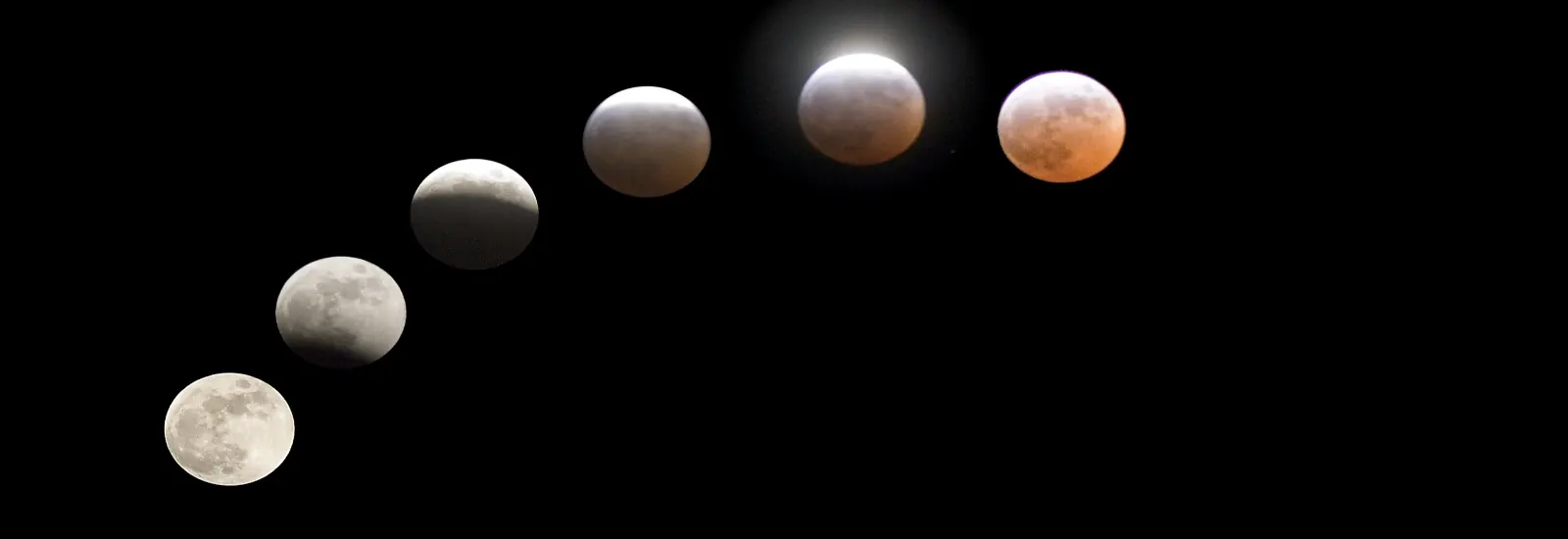
The Royal European Academy of Doctors and the Pro Royal European Academy of Doctors Foundation, together with the Academy of Sciences, Engineering and Humanities of Lanzarote, held the Eclipse 2026 Academic Meeting from 11 to 13 August in the municipality of Arija, in the province of Burgos. During the event, members of both institutions observed the total solar eclipse visible on 12 August across much of the Iberian Peninsula, within the framework of a scientific programme featuring several outreach lectures related to astronomy and a number of observations from a privileged location. The meeting was supported by Arija Town Council, with sponsorship from the Department of Justice and Democratic Quality of the Government of Catalonia, the “la Caixa” Foundation and the Association of Manufacturers and Distributors–AECOC.
Following welcoming remarks by the President of the READ, Alfredo Rocafort, and the President of the Academy of Lanzarote and honorary member of the READ, Francisco González de Posada, the Academic Meeting began with a first day during which the Mayor of Arija and lecturer at the University of the Basque Country, Josu Aramberri, was admitted as a corresponding member of the Academy of Lanzarote with the speech “Different Ways of Looking at the Eclipse.” This was followed by “Ethics and Cosmic Research,” by Juan Jesús González Torres, also a member of the Academy of Lanzarote; “Artificial Eclipses and Other Ways of Observing the Sun,” by Abelardo Bethencourt, Emeritus Professor at the Polytechnic University of Madrid and also a member of the Academy; and “The Universe According to Current Cosmology,” by González de Posada himself. Arija Town Council also hosted the exhibition “Waiting for the 2026 Eclipse in Arija. Albert Einstein in Spain, 1923.”
On 12 August, the sessions included the presentations “Contemplation of the Tears of Saint Lawrence,” by Enrique de Ferra Fantín, astronomer and member of the Academy of Lanzarote; “Observing the Eclipse,” by Juan Vicente Pérez Ortiz, President of the Mediterranean Astronomical Circle and also an academician; “Numerical Models and Light Pollution,” the admission speech delivered by Federico Pastor, President of the Alicante Astronomical Association, on joining the Canary Islands academy; “The Great Mystery of the Solar Corona,” by Pablo de Ferra; and “Astronomy and Philosophy in Classical Antiquity: A Complicated Relationship,” also an admission speech, delivered by Alfonso Hernando González upon joining the Academy of Lanzarote. Afterwards, attendees travelled to Monte Gurugú in Arija to observe the eclipse and, later that night, to the beaches of Vilga to view the Perseids.
On the final day, the programme featured “Spanish Science and Einstein and Relativity,” by Francisco González Redondo, a member of the Academy of Lanzarote and regular collaborator of the READ; “The Eclipse That Made Einstein Famous,” by Albino Arenas, also a member of the Canary Islands academy; “From Apollo to Artemis: Humanity Returns to the Moon,” by Jesús Martínez Frías, a member of the Canary Islands academy; and “Environmental Quality and Global Health,” by Maria Àngels Calvo, Vice-President of the Royal European Academy of Doctors and member of the Academy of Lanzarote. The programme concluded with the admission ceremony of Verónica Arroyo to the Canary Islands institution, during which she presented the lecture-concert “The Construction of a Complete Musical Scene by a Single Performer. Simultaneity of Soprano Voice and Violin in Solo Format. Classical Music in a Multi-Instrumental Key.”