


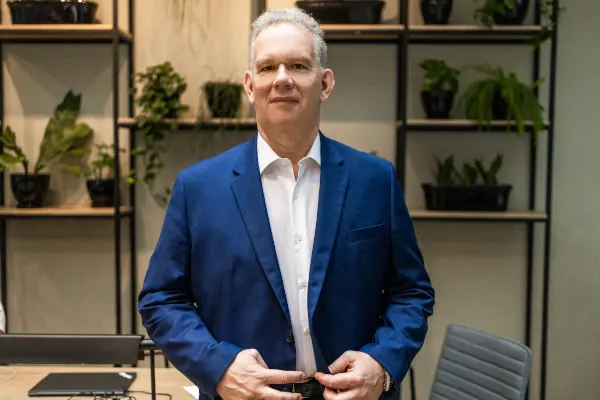
Dr. Juan Pablo Ventosa
Juan Pablo Ventosa, founding partner of the consultancy Human Performance and a Numerary Member of the Royal European Academy of Doctors (READ), advocates a new model of business management based on a strong corporate culture in a report published on 27 February by the Mexican newspaper “Excélsior.” Ventosa has developed part of his business and research activity in this country, where Human Performance maintains two offices, in Mexico City and Monterrey. The firm, a benchmark in talent management and organisational efficiency with extensive experience advising leading international companies, is also established in Madrid and Barcelona.
For the academic, the corporate concept of community—both internally and in its external projection—has become a key factor in business performance, as it directly influences profitability, productivity and the capacity to retain talent. For years, organisational culture was regarded as a “soft” element, but it is now recognised as a strategic variable for successfully executing business strategy, he notes. To support this argument, the report, written by journalist Alicia Jaramillo, provides conclusive data: companies with high levels of employee engagement can increase profitability by up to 21% and productivity by 17%, demonstrating that internal culture directly impacts operational performance.
Ventosa points out that many organisations fail not because of a lack of strategy, but because their internal culture is not prepared to implement it. Although most executives consider a strong culture essential for success, few companies actually manage to align their values and behaviours with their strategic objectives. Drawing on the experience of Human Performance, the report also highlights that poorly managed corporate culture leads to staff turnover, absenteeism and difficulties in adapting to change. By contrast, organisations that promote trust, responsibility and collaboration show greater resilience in the face of market and technological transformations.
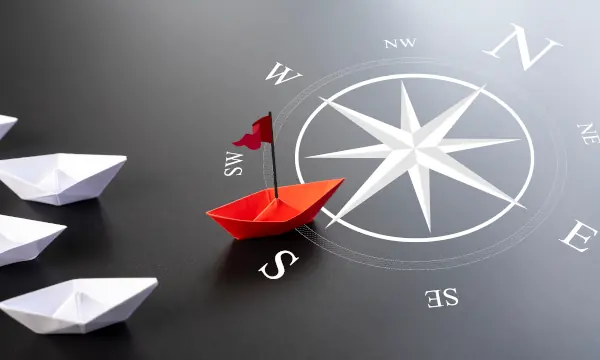 “In a scenario characterised by digital transformation, global competition and the constant evolution of talent expectations, organisational culture emerges as a measurable strategic differentiator. Its omission no longer represents merely a reputational risk, but an operational risk. From this perspective, the central question for executive teams is not limited to designing strategy, but rather to the real capacity of organisational culture to sustain it under pressure,” the text concludes.
Author of the reference work in human resources management, “Leadership Analytics,” Ventosa promotes an innovative vision of leadership understood as a system integrating science, consciousness and results. His approach combines executive experience with a solid methodological foundation that links both the quality and quantity of leadership to business sustainability. He has developed his career as a professor, consultant and advisor, supporting executives, boards of directors and business families in Spain and Latin America, and has taught at leading business schools. The expert was admitted as a Numerary Member of the READ on 18 February with the inaugural address “Leadership Analytics: Towards Verifiable and Conscious Leadership”, in which he called for business leadership to cease being an abstract and arbitrary concept and instead become a verifiable, conscious and adaptive discipline.