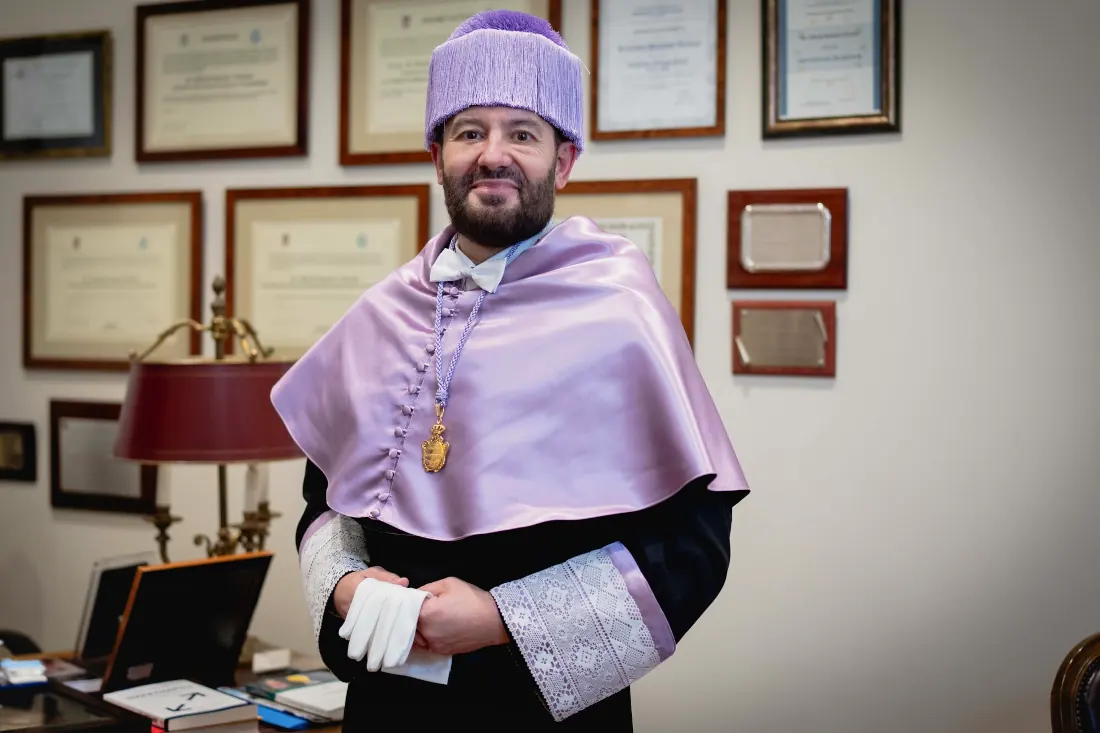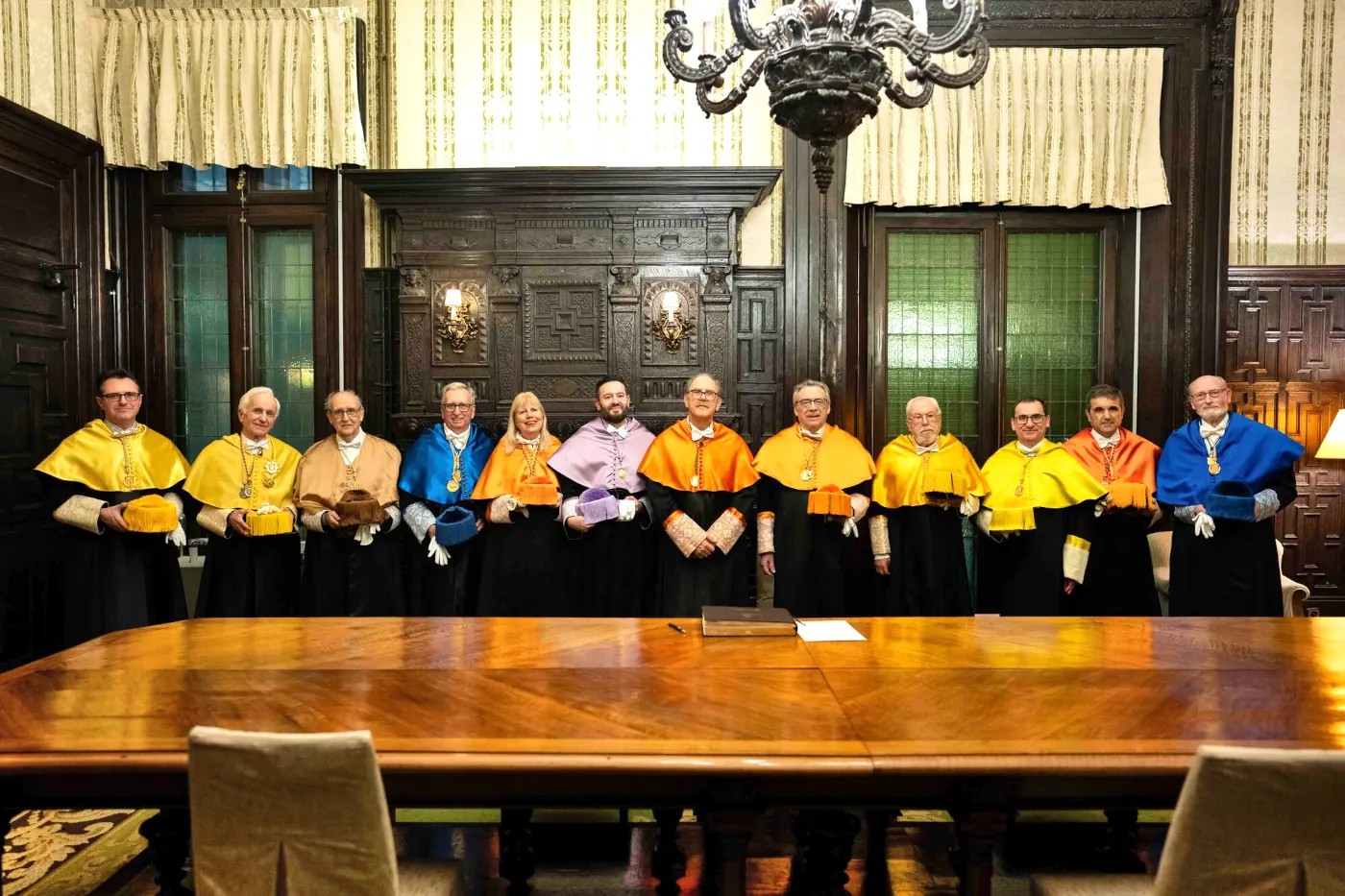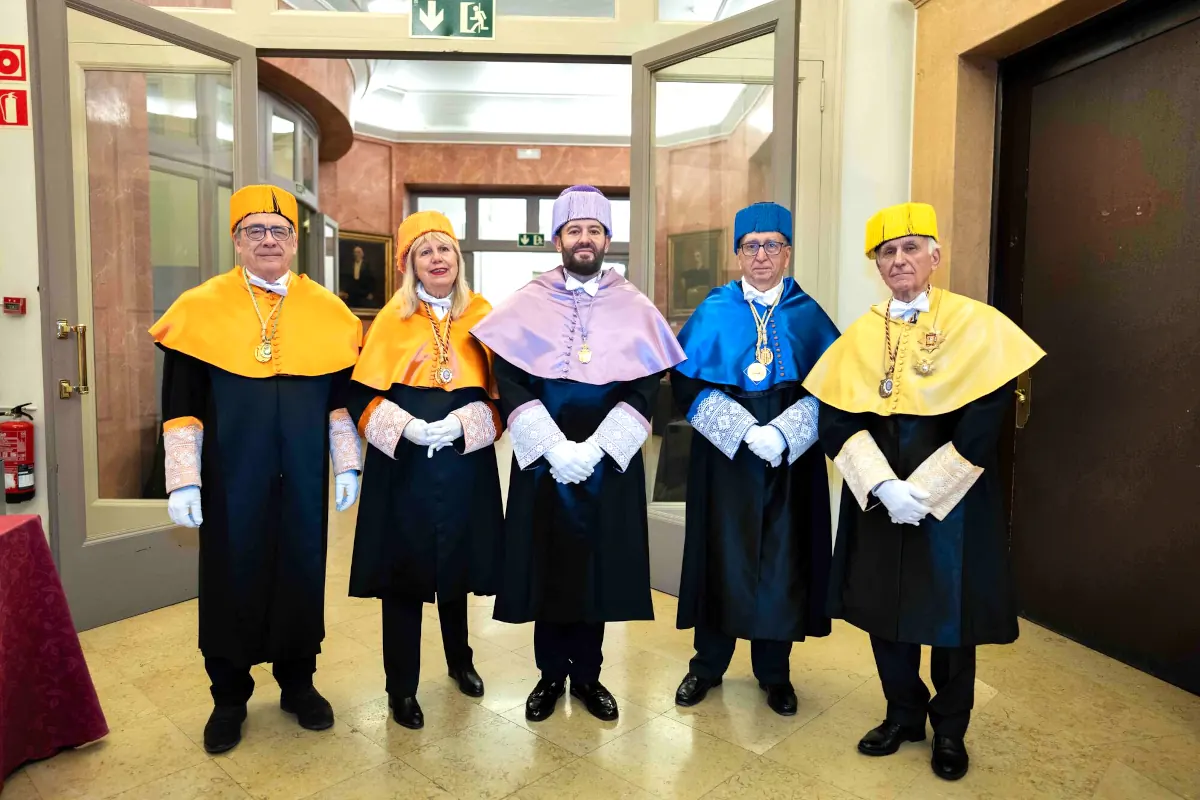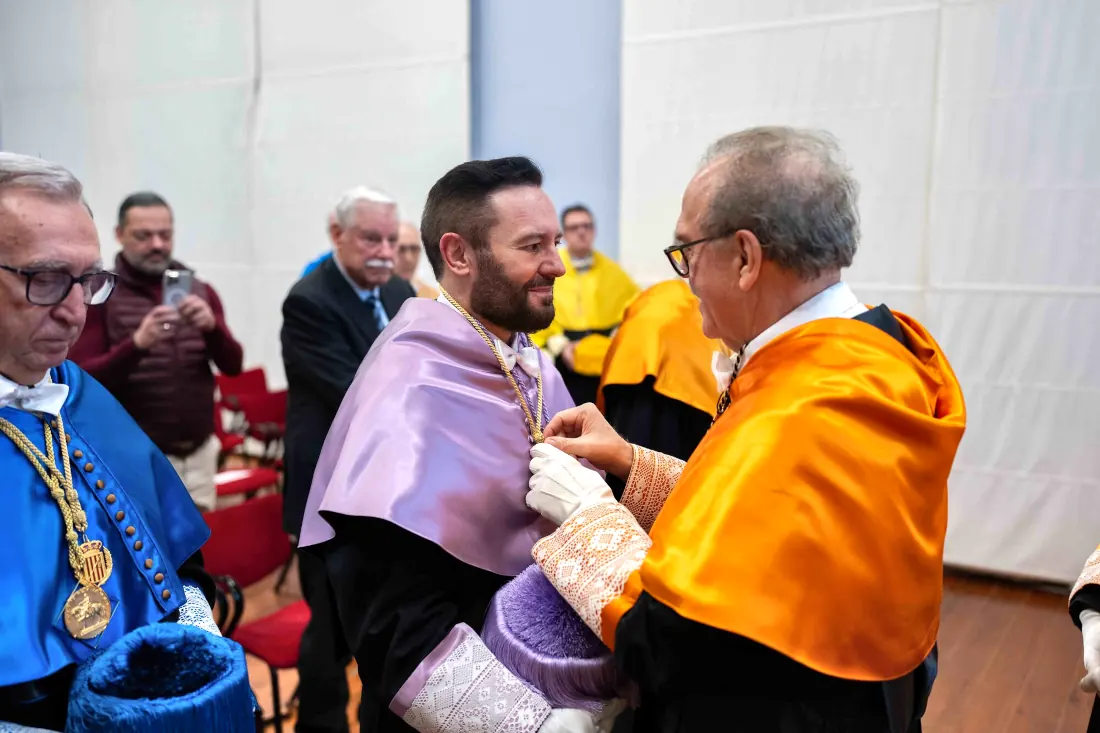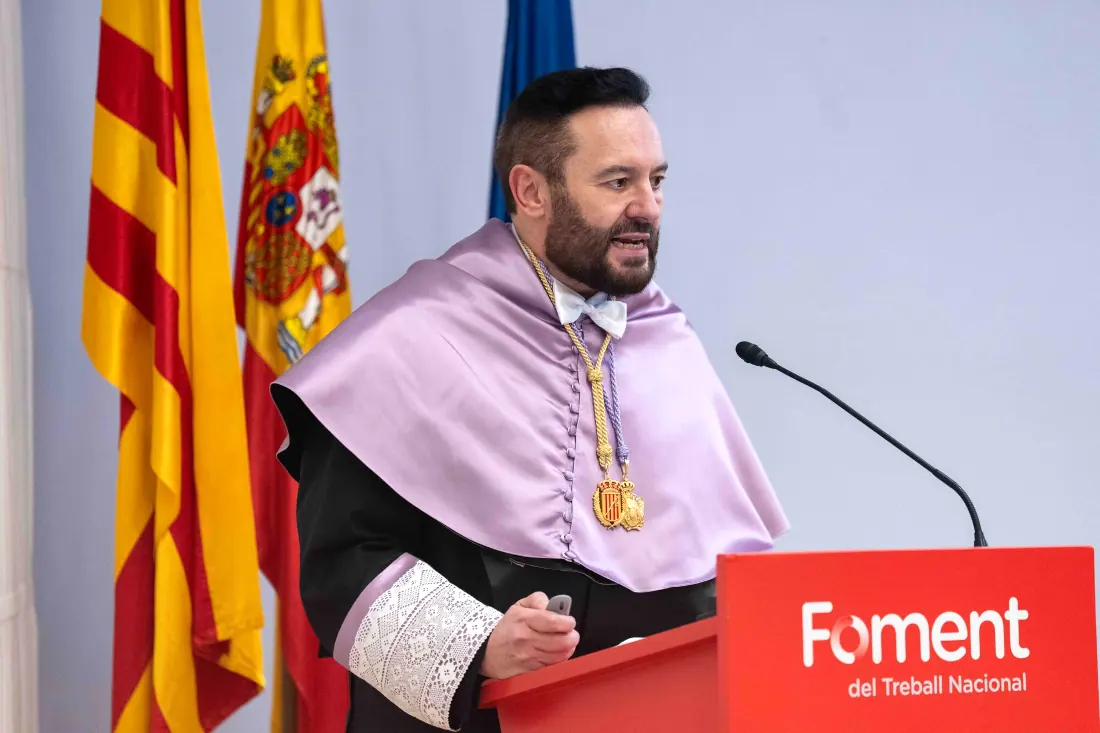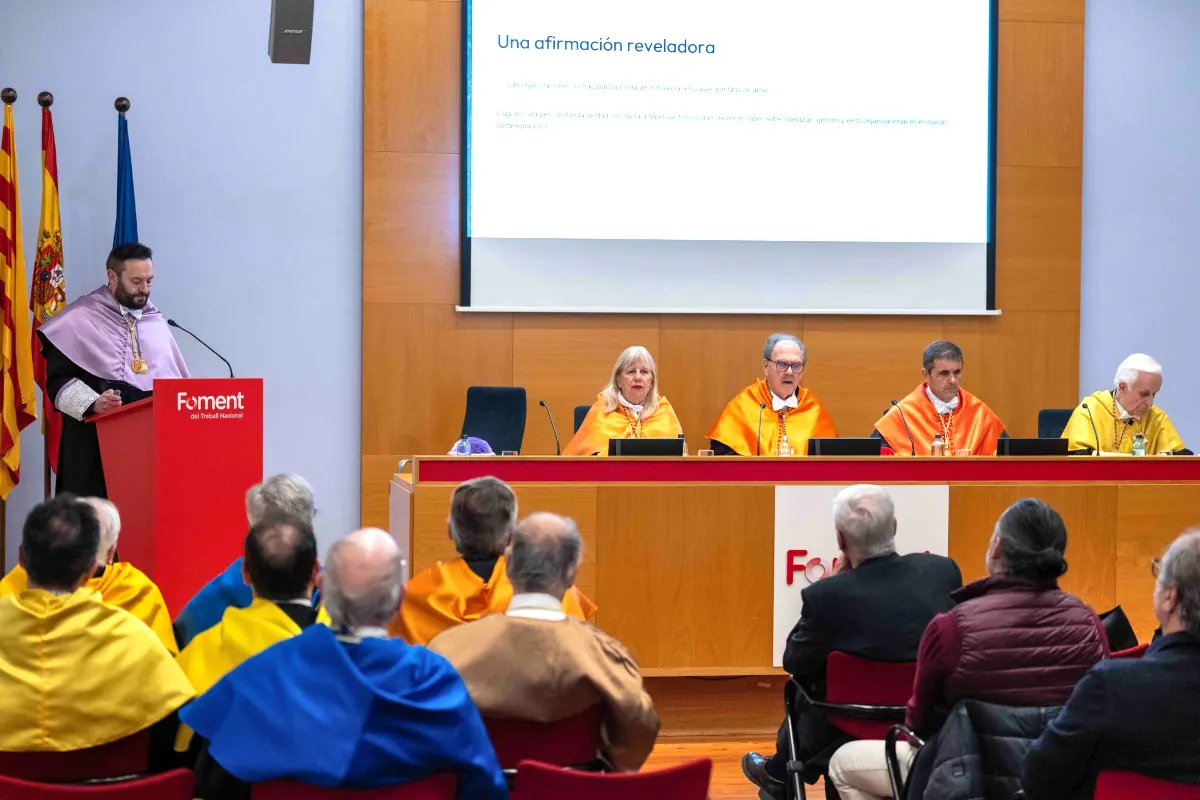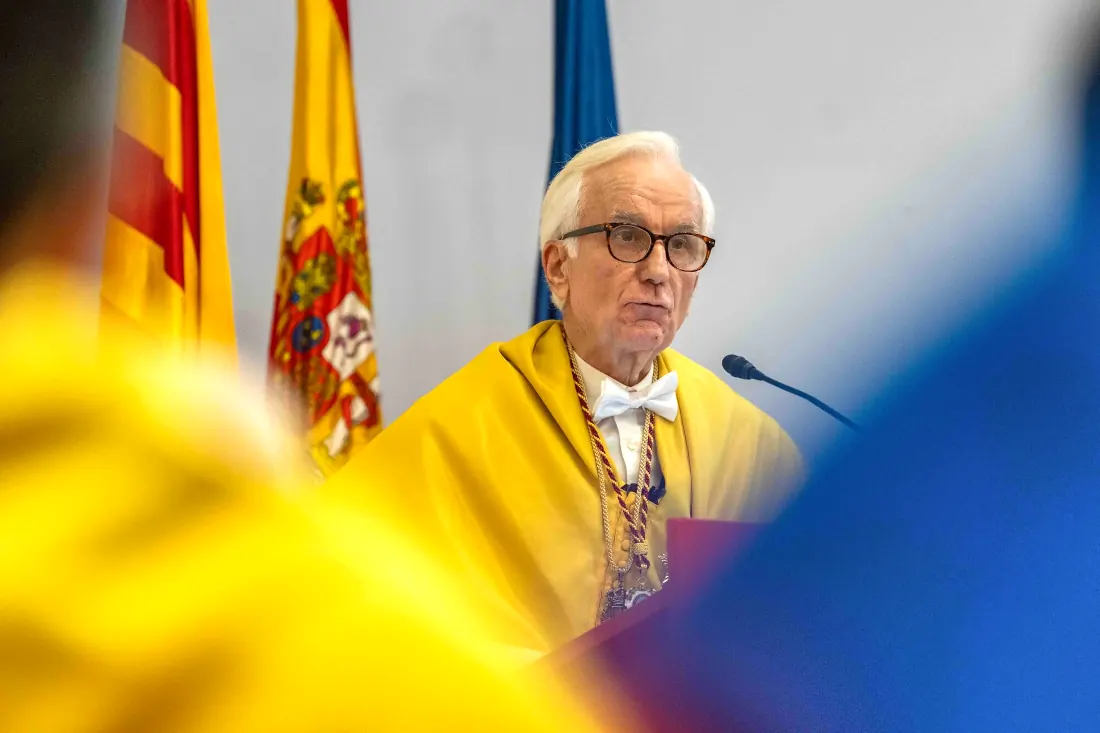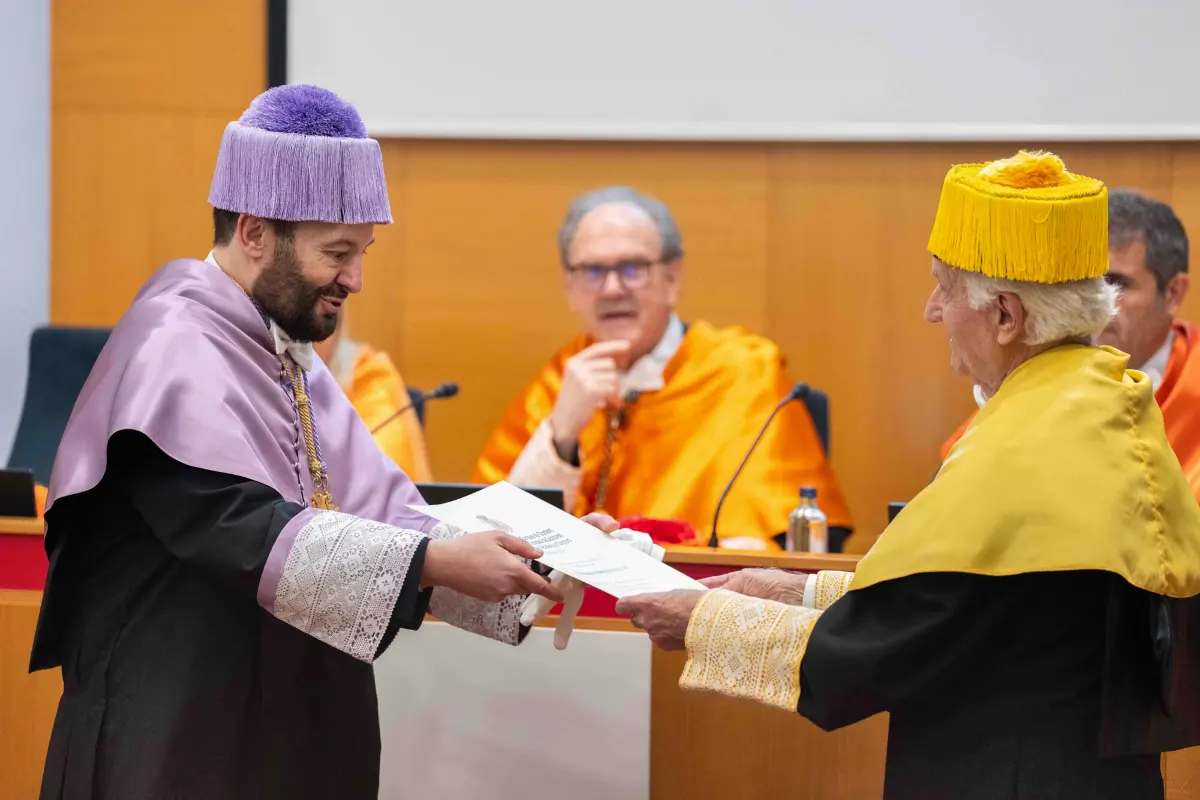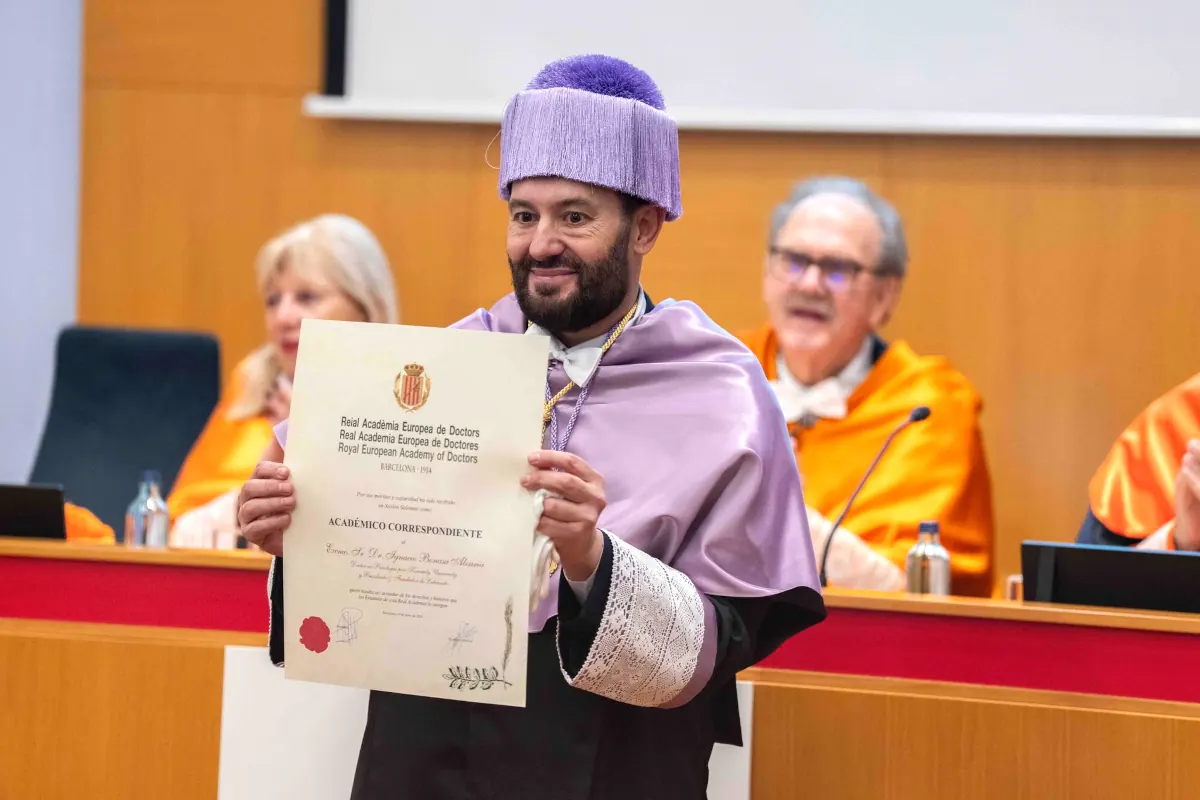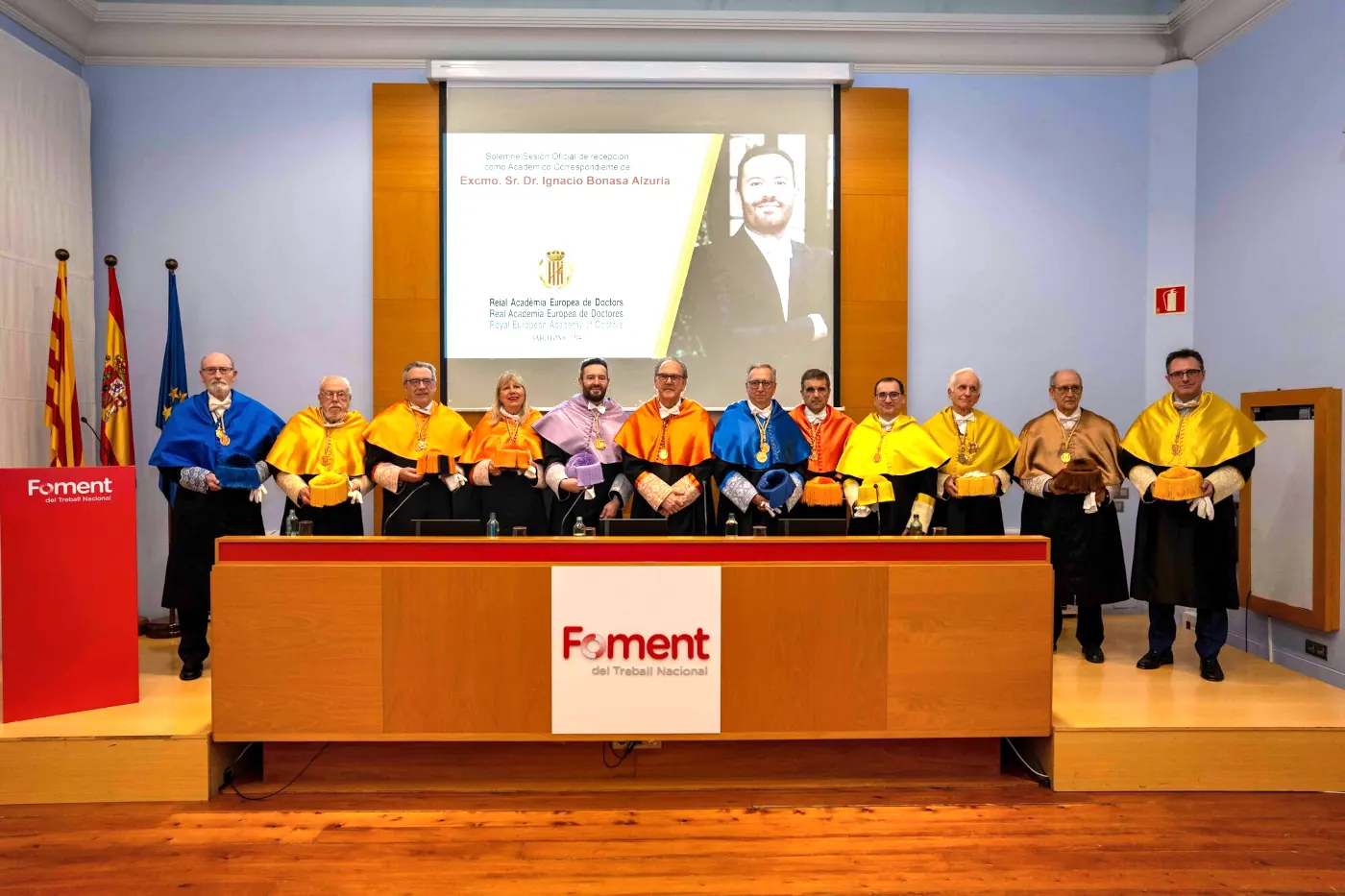



Ignacio Bonasa, PhD in Psychology and President and Founder of the firm Liderarte Talent Management, was inducted as a Corresponding Academician of the Royal European Academy of Doctors (READ) during a solemn ceremony held on 14 January at Foment del Treball, the Academy’s headquarters. The new academic delivered his inaugural address, «Organizations with Soul: the New Paradigm of Humanistic Leadership in the 21st Century», in which he proposed a radical shift in the way leadership and business management are conceived, placing human teams at the center and replacing profit and loss accounts as the primary focus of corporate strategy. He was formally welcomed on behalf of the Royal Corporation by Full Member and Vice President Joaquim Gironella.
In his address, the new academic argued that companies and other organizations managing resources and services must cease to be understood as efficiency-driven machines and instead become living systems, where human relationships, well-being, and ethics form the core of their functioning. In this regard, Bonasa maintains that business leadership can no longer rely exclusively on financial metrics, hierarchical control, and technical optimization. In contrast, he introduces the concept of leadership with soul, a model that places self-knowledge, self-management, empathy, and ethical commitment at the pillars of management. According to the author, in a context of increasingly informed and socially conscious consumers and users, this approach is now strategic and essential for organizational sustainability.
 In his speech, the inductee emphasized that well-being is not an accessory to productivity, but rather its enabling condition. For the expert, organizations that care for their teams generate greater trust, lower turnover, and more innovative cultures. To assess this process—defined by the author as organizational humanization—Bonasa proposes specific indicators such as the Emotional Climate Index, the Ethical Integrity Index, and an Organizational Humanization Index that links well-being to results. Another central axis of his reflection was the impact that artificial intelligence has and will continue to have on the world of work. In this unstoppable evolution toward a new productive model, the principal risk, according to the new academic, is not that machines will replace people, but that people will adopt mechanical logics and lose ethical judgment, sensitivity, and moral responsibility. Artificial intelligence, for Bonasa, can be an ally of progress, but only if it is governed by clear humanistic criteria and conscious deliberation.
The author also stressed that leadership with soul has a social dimension, and that organizations must become agents of collective well-being, aligning themselves with the United Nations’ Sustainable Development Goals and contributing to more just, supportive, and cohesive communities. The company thus ceases to be an end in itself and becomes a means at the service of the common good, since the creation of organizations with soul does not represent a merely cosmetic change, but a structural one. It entails modifying ways of deciding, communicating, and measuring success, integrating ethical coherence into every process. This new paradigm represents a true civilizing force capable of reconciling economic progress with human dignity in the digital age, the expert added.
«The challenge remains open: to turn every organization into a space where numerical indicators are only one part of the complete map, and where shared well-being, integrity lived day by day, and deep purpose set the true rhythm. Those who choose this path will have to accept constant reassessment, learn from collective experience, and project their actions while always considering their broader impact beyond the present moment. Because if one thing becomes clear from this journey, it is that an organization with soul does not merely produce goods or services; it produces shared meaning, strengthens the social fabric, and delivers a lasting legacy whose value will be measured less by immediate figures than by having been able to improve lives while preserving its own humanity intact», he concluded.
An expert in training, motivation, and talent development, Bonasa brings extensive experience as a business executive and leader of human teams. He has served as President of BBVA Dinero Express, Chief Executive Officer of BBVA Portugal, Regional Director of BBVA in Barcelona and in Asturias and Cantabria, Regional Director of Argentaria in Castilla y León, Asturias, and the Canary Islands, Regional Director of Banco Exterior de España, President of Grupo TEOT, Managing Director of Caja Rural de Aragón, Associate Director of Grupo Actúa, and President and Founder of several real estate companies. An MBA from ICADE and holder of a PDG from IESE, he has received prestigious awards such as the Legal Essay and Research from the Classroom Prize and the Best Idea of the Year Award (BEX). Liderarte, for its part, is made up of a team of experts in talent management, focused on improving performance with a holistic vision of both the individual and the organization, using an innovative methodology. Its programs are aimed at all levels of the company and are led by professionals specializing in people management, results achievement, consulting, and training linked to artistic creation.