

José Antonio López Guerrero, Professor of Microbiology at the Autonomous University of Madrid and Numerary Member of the Royal European Academy of Doctors (RAED); Jordi Martí, Professor of Economics and Accounting at the University of Barcelona, Director of the Master’s Program in Verification of Non-Financial Information at the same university, Numerary Member and Member of the Governing Board of the RAED; and Josep Moya, psychiatrist specializing in people in situations of vulnerability and Elect Member of the RAED, took part on October 23 in the conference “Una sola salut en un món canviant: és inevitable una nova pandèmia?” (One Health in a Changing World: Is a New Pandemic Inevitable?) organized by the Catalan Institution of Agrarian Studies and the Academy of Veterinary Sciences of Catalonia, with the support of the Royal European Academy of Doctors, the Royal Academy of Medicine of Catalonia, the Royal Academy of Pharmacy of Catalonia, and Abat Oliba CEU University.
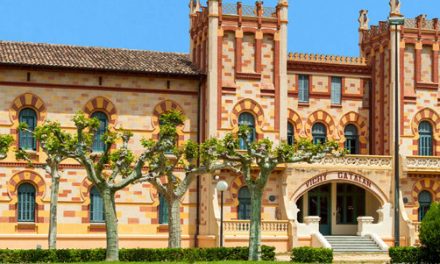
The event was held at the headquarters of the Institute for Catalan Studies and was presided over by Nuria Montserrat, Minister of Research and Universities in the new Government of Catalonia, researcher at the Catalan Institution for Research and Advanced Studies (ICREA) and the Institute for Bioengineering of Catalonia, and Numerary Member of the RAED; Jordi Sala, President of the Catalan Institution of Agrarian Studies; and Maria Àngels Calvo, Professor at the Faculty of Veterinary Medicine of the Autonomous University of Barcelona, President of the Academy of Veterinary Sciences of Catalonia, Numerary Member of both the Royal Academy of Medicine of Catalonia and the Royal Academy of Pharmacy of Catalonia, and Numerary Member and Vice President of the RAED.
The session aimed to foster a rigorous, multidisciplinary reflection on what is considered one of the great challenges of our time: preventing or at least minimizing the impact of future pandemics. The approach was based on the integrative One Health model, which recognizes that the health of humans, animals, plants, and the planet are interdependent.
The Covid-19 pandemic exposed the fragility of healthcare systems worldwide, but also demonstrated the strength of interdisciplinary collaboration and science.
“With this session, we wanted to analyze—critically but constructively—what we have learned and what remains to be done. We have brought together a panel of top-level professionals from diverse yet complementary fields, who will help us assess whether a new pandemic is inevitable and what preventive measures we should take to avoid it—or, at the
very least, to minimize its negative impact on the population,”explained Calvo during her opening remarks.
A renowned science communicator and Director of the Neurovirology Group in the Department of Molecular Biology at the Autonomous University of Madrid, as well as of the Laboratory of Neurovirology and New Antivirals Against Human Viruses at the Severo Ochoa Molecular Biology Center, López Guerrero focused on this issue in his lecture “És inevitable una nova pandèmia? Descripció panoràmica a l’àmbit mundial” (Is a New Pandemic Inevitable? A Global Overview). He warned of the risks arising from modern realities such as globalization, climate change, and ecosystem disruption.
“We are still not prepared for the next pandemic, which will come sooner than we think. We have unlearned more than we have learned over these five years of Covid, and unfortunately, human folly continues to prevent us from consciously eradicating infectious agents. The tiger mosquito, which transmits dengue, chikungunya, and Zika, is already endemic in Spain due to rising temperatures. And these are just the first signs of what awaits us if we do not act. The only hope is that such agents gradually adapt and lose virulence, morbidity, and mortality,” warned the expert.
For their part, Martí and Moya participated in the closing roundtable alongside biologist Tomàs Montalvo and physicist Clara Prats, highlighting the crucial role that various scientific disciplines must play in preventing and combating future pandemics. Moya, psychiatrist and psychogeriatric specialist at the Specialized Service for the Care of the Elderly in Baix Llobregat and the Center for Psychological Intervention and Social Analysis, and founder of the Catalan Observatory of Mental and Community Health, stressed the need to strengthen both healthcare and social-health systems to face future crises. Martí, meanwhile, analyzed the economic implications of implementing the One Health model and underlined the critical importance of managing urban wastewater—an area closely tied to environmental protection and diseases involving animal vectors such as mosquitoes.
The session concluded with a discussion between attendees and final remarks by Esteve Fernández Muñoz, Secretary of Public Health of the Catalan Department of Health.