

Dr. Rafael Urrialde
Rafael Urrialde, Professor in the Department of Genetics, Physiology and Microbiology at the Complutense University of Madrid and in the Department of Pharmaceutical and Health Sciences at CEU San Pablo University, President of the Scientific Committee of the Spanish Society of Sports Medicine, Secretary of the Spanish Nutrition Foundation, honorary member of the Spanish Academy of Nutrition and Food Sciences, and full member and Vice-President of the Royal European Academy of Doctors (READ), highlights the still incomplete information provided by food labelling, despite the regulations to which producers are subject, in the article “How Much Ham Is There on a Ham Pizza? Everything Labelling Does Not Always Tell Us”, published on the specialist portal Welife on 31 March.
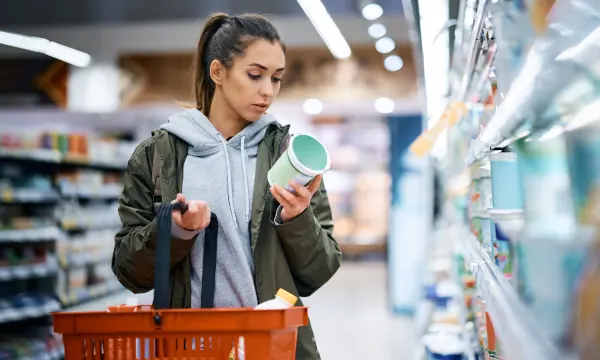
In conversation with journalist Verónica Fernández, the expert states that shopping in the supermarket has in many cases become a genuine puzzle for consumers, who need rigorous and precise information, since although nutritional labelling has been mandatory in the European Union since 2011, there are still many gaps and strategies that make it difficult for consumers to know exactly what they are buying and eating. One of his main criticisms concerns added sugars. While in countries such as the United States, Mexico, Canada and Ecuador it is already compulsory to break them down, in Europe only the total sugars are indicated, without distinguishing those added industrially. This prevents consumers from clearly differentiating between naturally occurring sugars and those incorporated by the manufacturer.
According to Urrialde, there is also confusion in the list of ingredients. Additives usually appear under their Community codes, such as E-100, which corresponds to curcumin, a natural colouring extracted from turmeric, making them seem more chemical and harder to understand. The same applies to ferments and probiotics, since the regulations do not require the exact species of bacteria or yeasts to be specified, nor do they require colony-forming units, which are key data for assessing their real effect on the intestinal microbiota. Other recurring examples are pizzas and chocolate spreads. Although producers are required to indicate the percentage of highlighted ingredients, many omit it or apply it in a non-transparent way. Thus, two apparently similar pizzas may contain very different quantities of the same ingredient, even when both are, for example, ham pizzas. In the case of biscuits or pastry products, sub-ingredients are often broken down without quantifying how much sugar they contribute to the final product.
Urrialde also criticises the legibility of labels. The typeface is usually too small, especially on small packaging, and QR codes do not replace printed information for all consumers, including people with visual difficulties. Marketing, in the READ Vice-President’s view, aggravates the problem, as, for example, energy drinks loaded with sugar and caffeine are advertised by highlighting the vitamins that are said to help reduce tiredness. The expert considers that the current information, based on seven basic parameters — energy, fats, saturates, carbohydrates, sugars, proteins and salt — does not in most cases, allow the nutritional quality of the food to be known accurately, and only infant foods are subject to stricter and more detailed requirements. As a solution, he proposes incorporating added sugars in the short term and moving in the medium term towards a more complete nutritional composition.
 Moreover, Urrialde shares with the academic community the recent decision of the Spanish Agency for Food Safety and Nutrition to award the NAOS Strategy Prize for its work in scientific information, communication, and outreach through the Kómoda News platform, of which he is a member of the Editorial Committee. This specialist portal had already received the Excellence in Public Relations Award in the category “Fighting Fake News” from the International Public Relations Association.
A recognised expert in food regulation, Urrialde is the author or co-author of scientific publications on nutritional education. He was Head of Health and Food Safety at Puleva Food, Director of the Health and Food Division at the Consumers’ Union of Spain, Technical Coordinator of the magazine “Ciudadano”, Director of Health and Nutrition at Coca-Cola Iberia, analyst at the Institute of Cold of the Spanish National Research Council, and collaborator of the Chair of Plant Physiology at the Faculty of Biological Sciences of the Complutense University of Madrid.