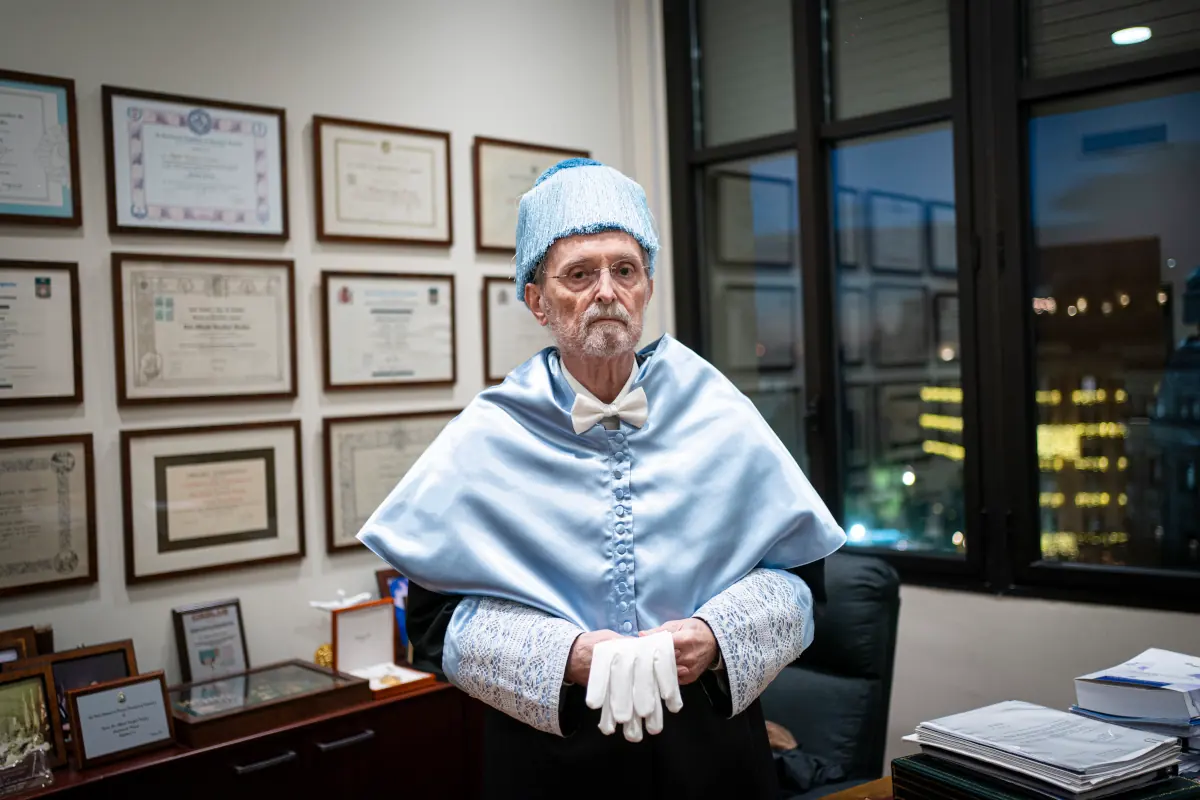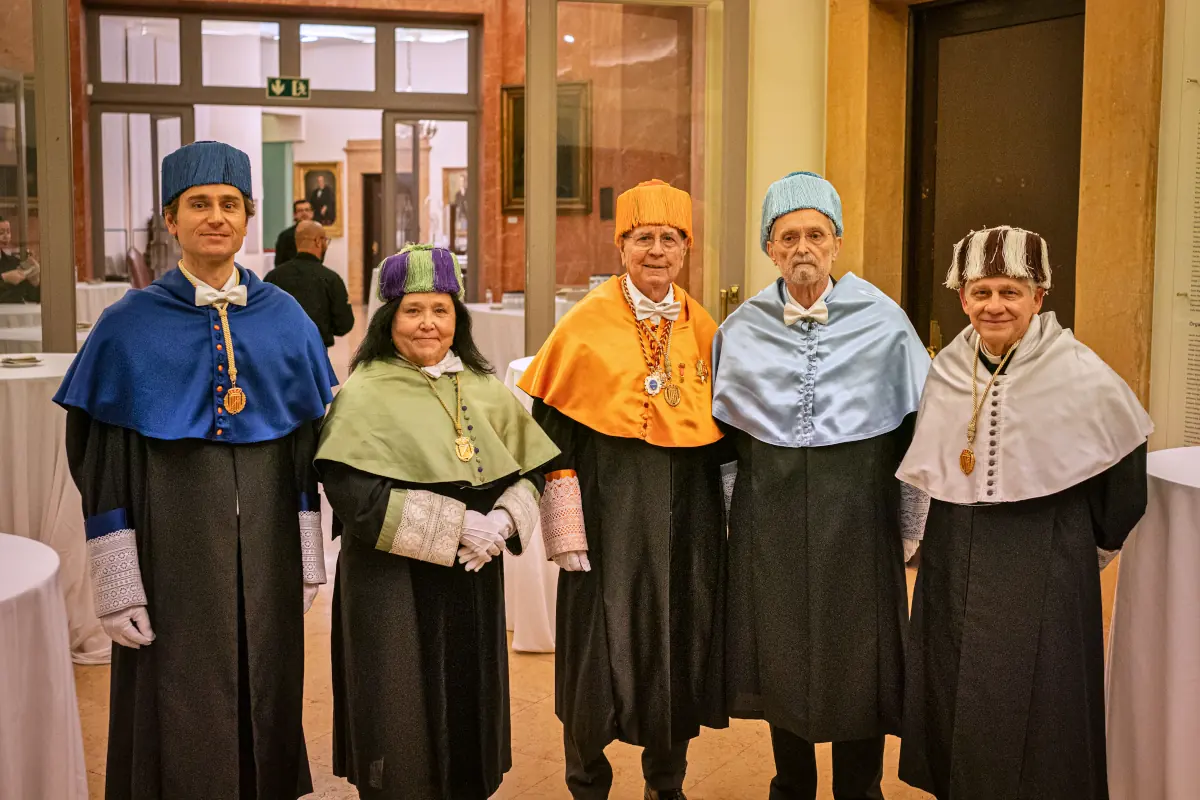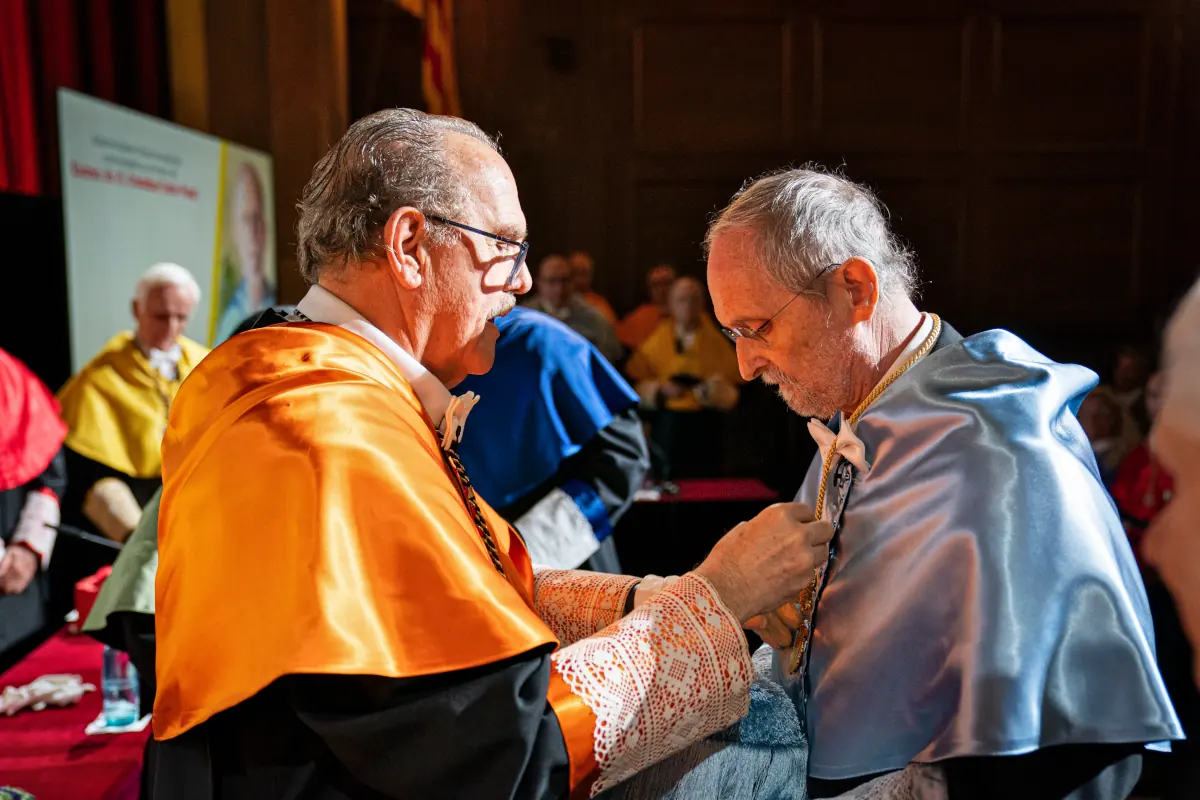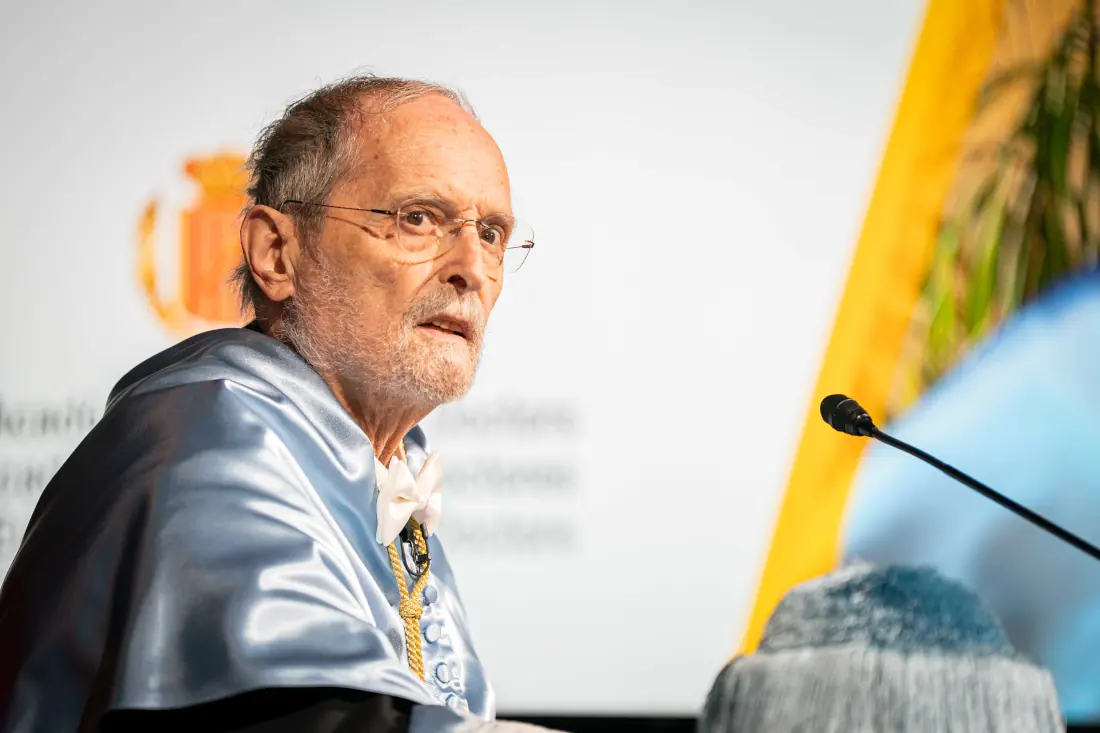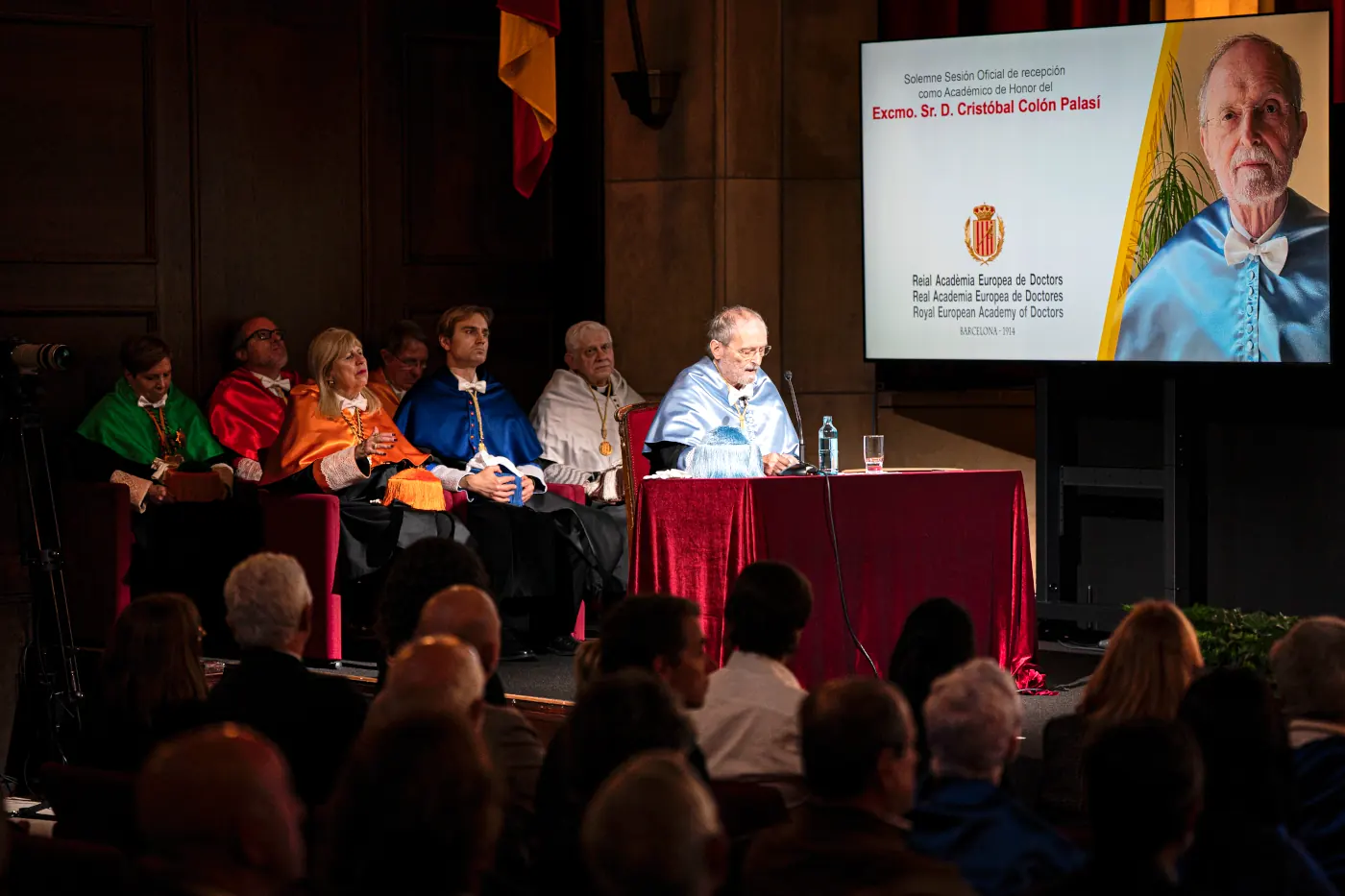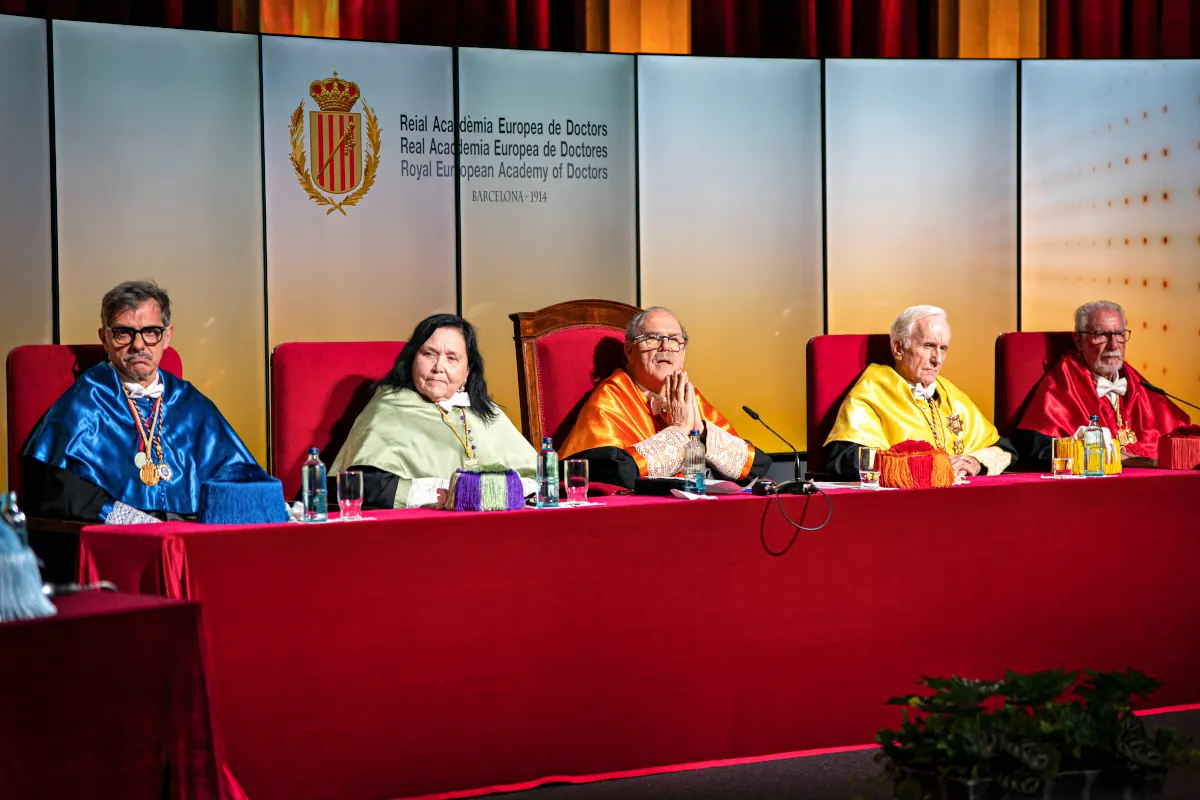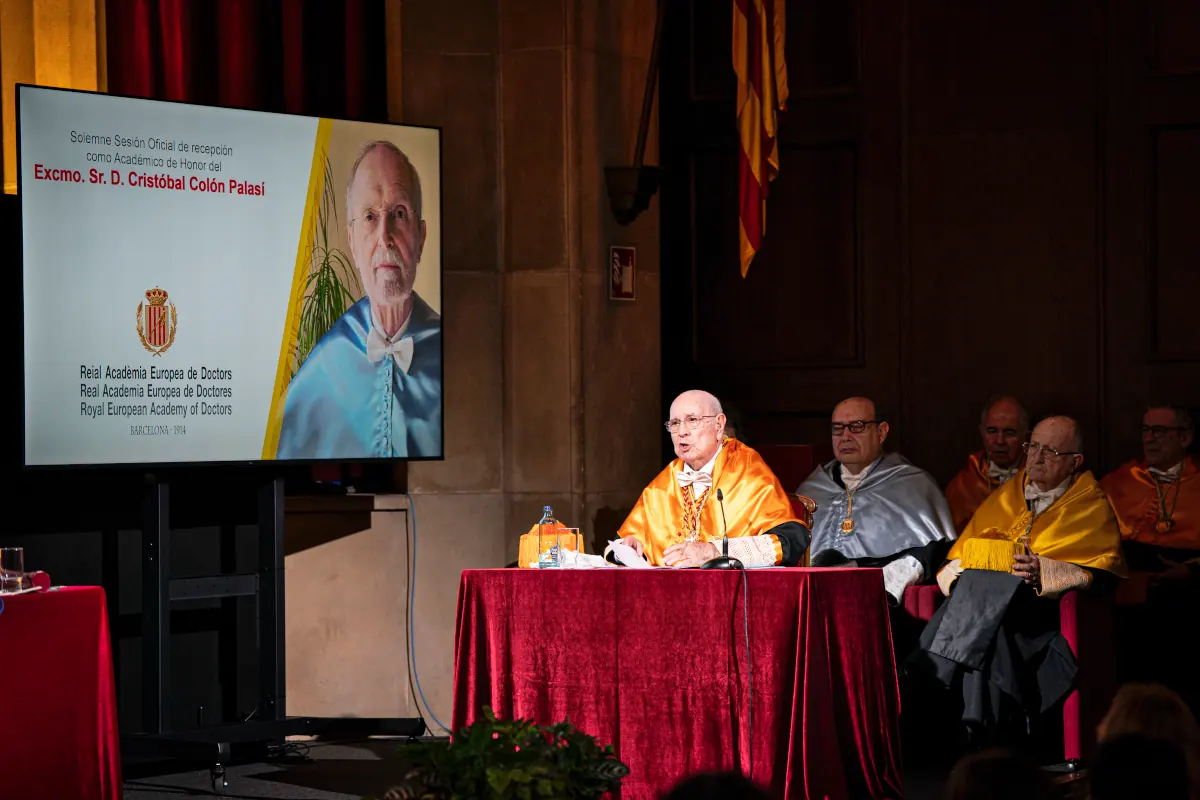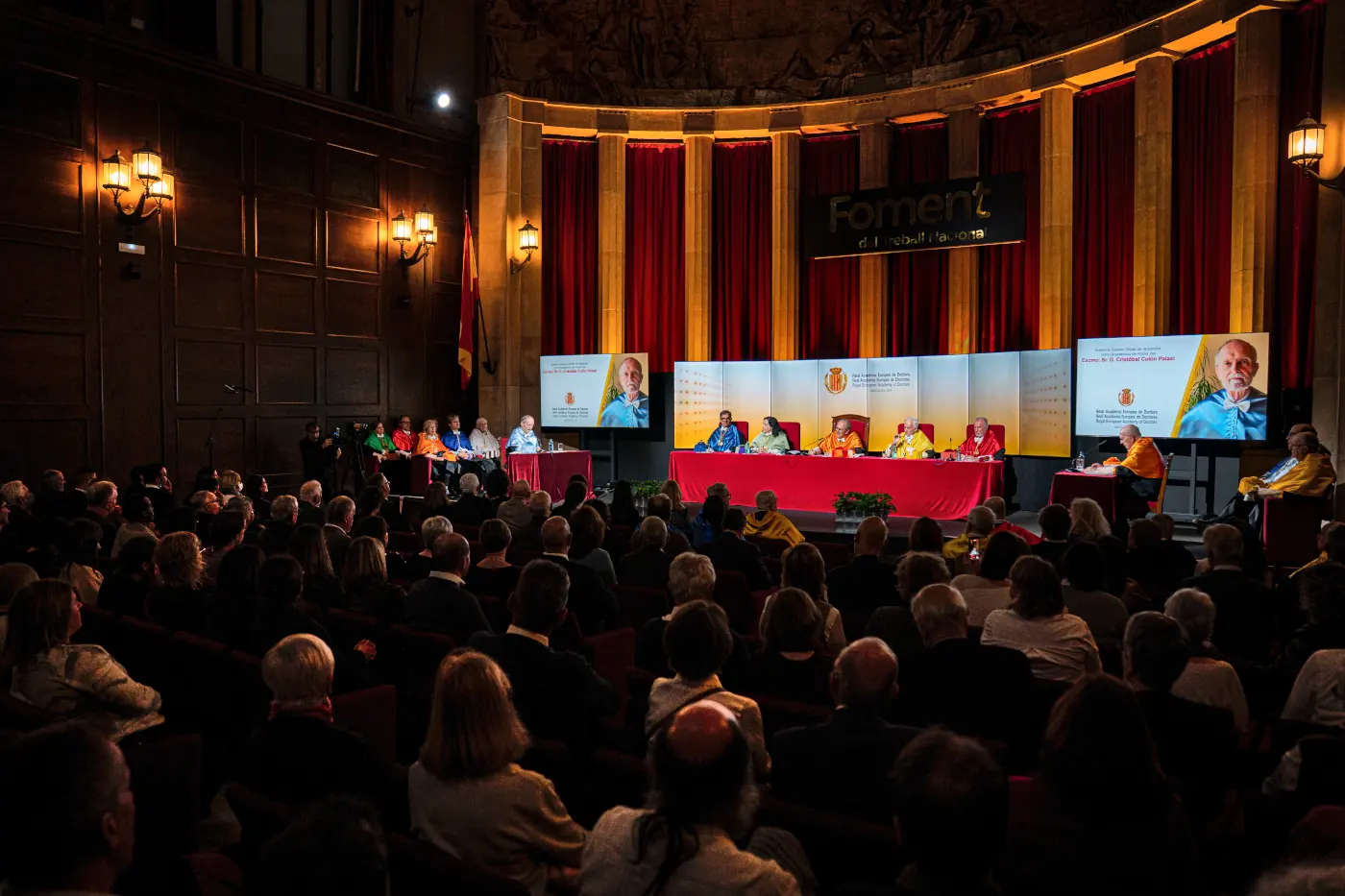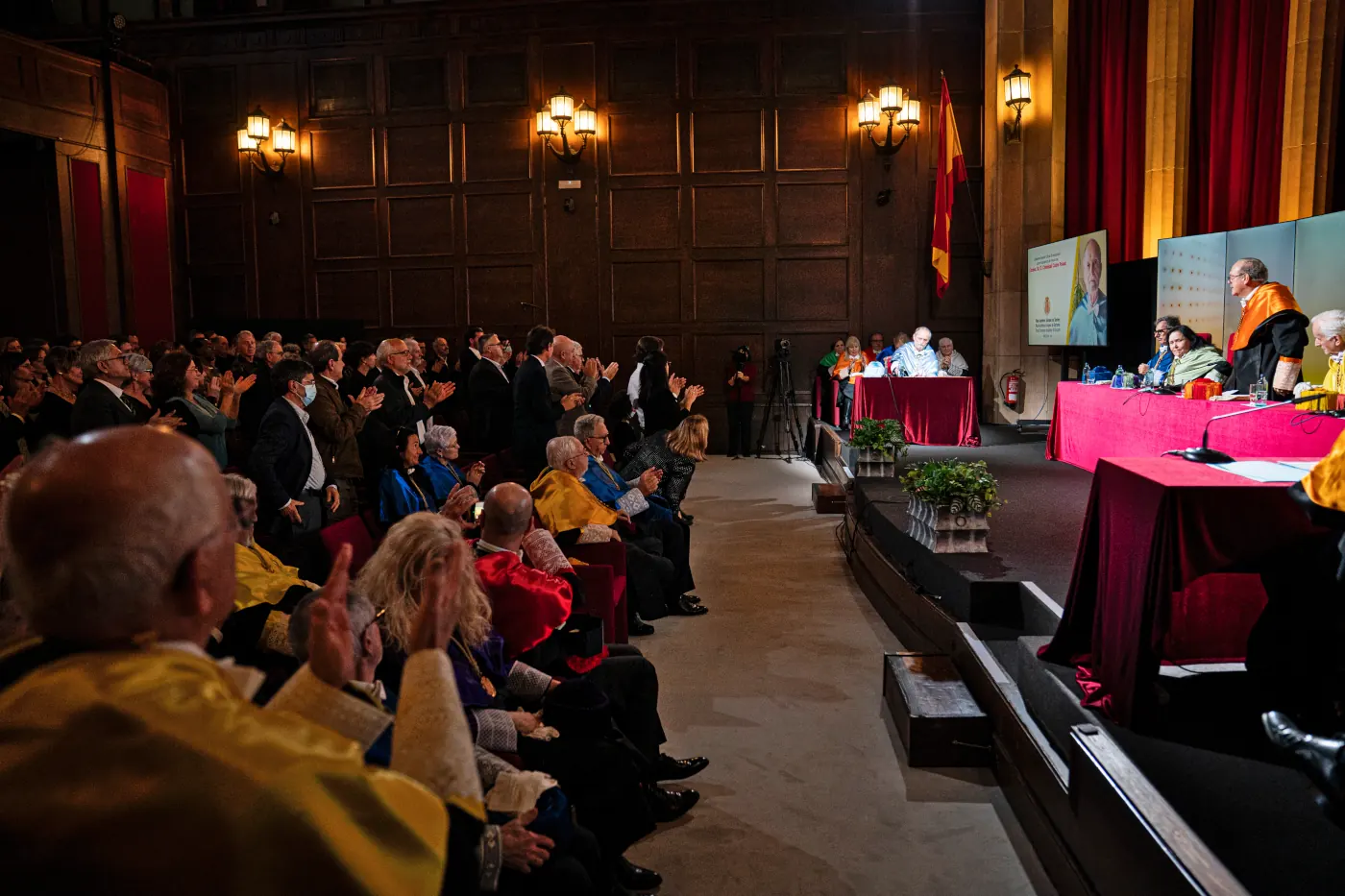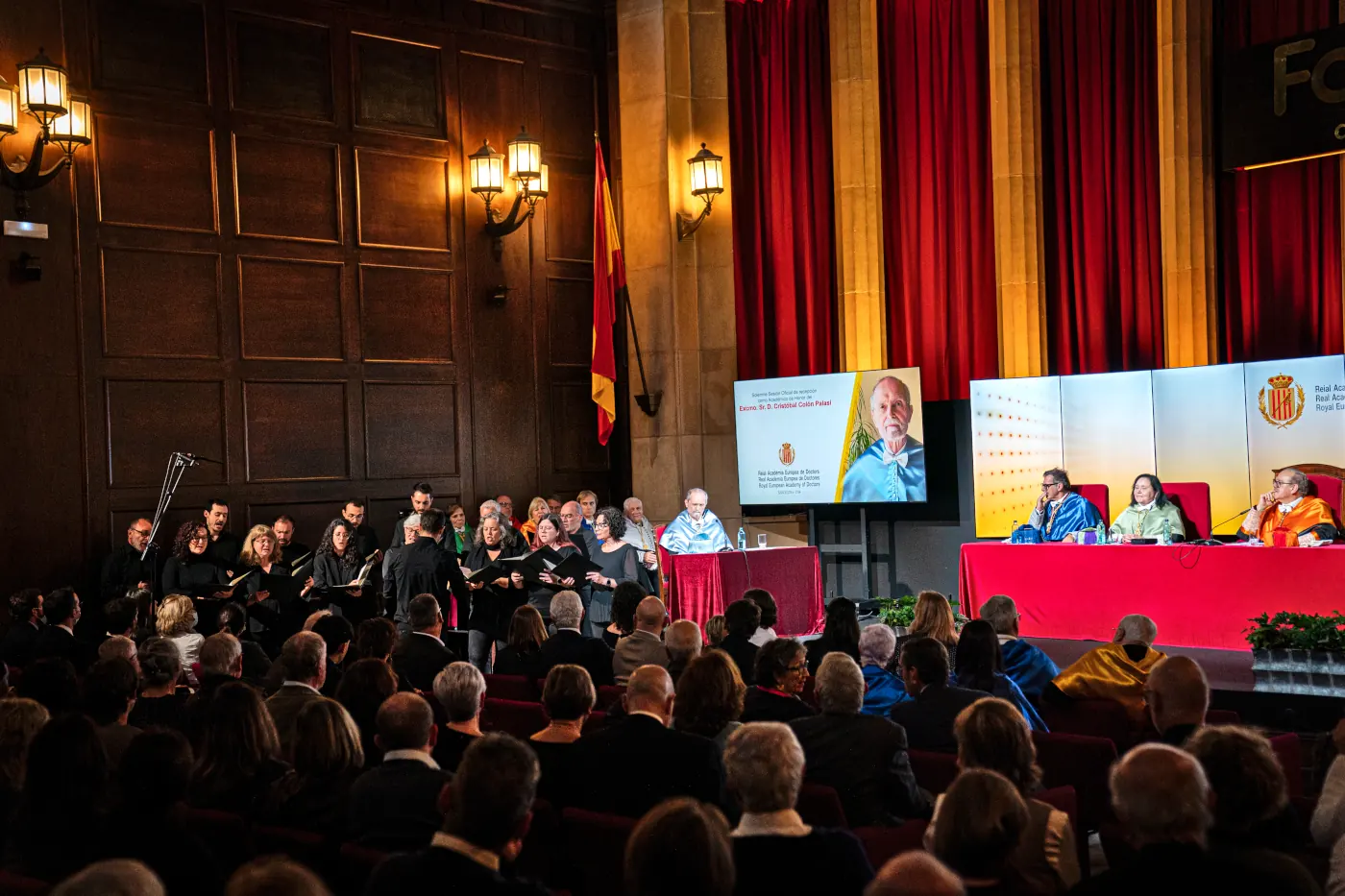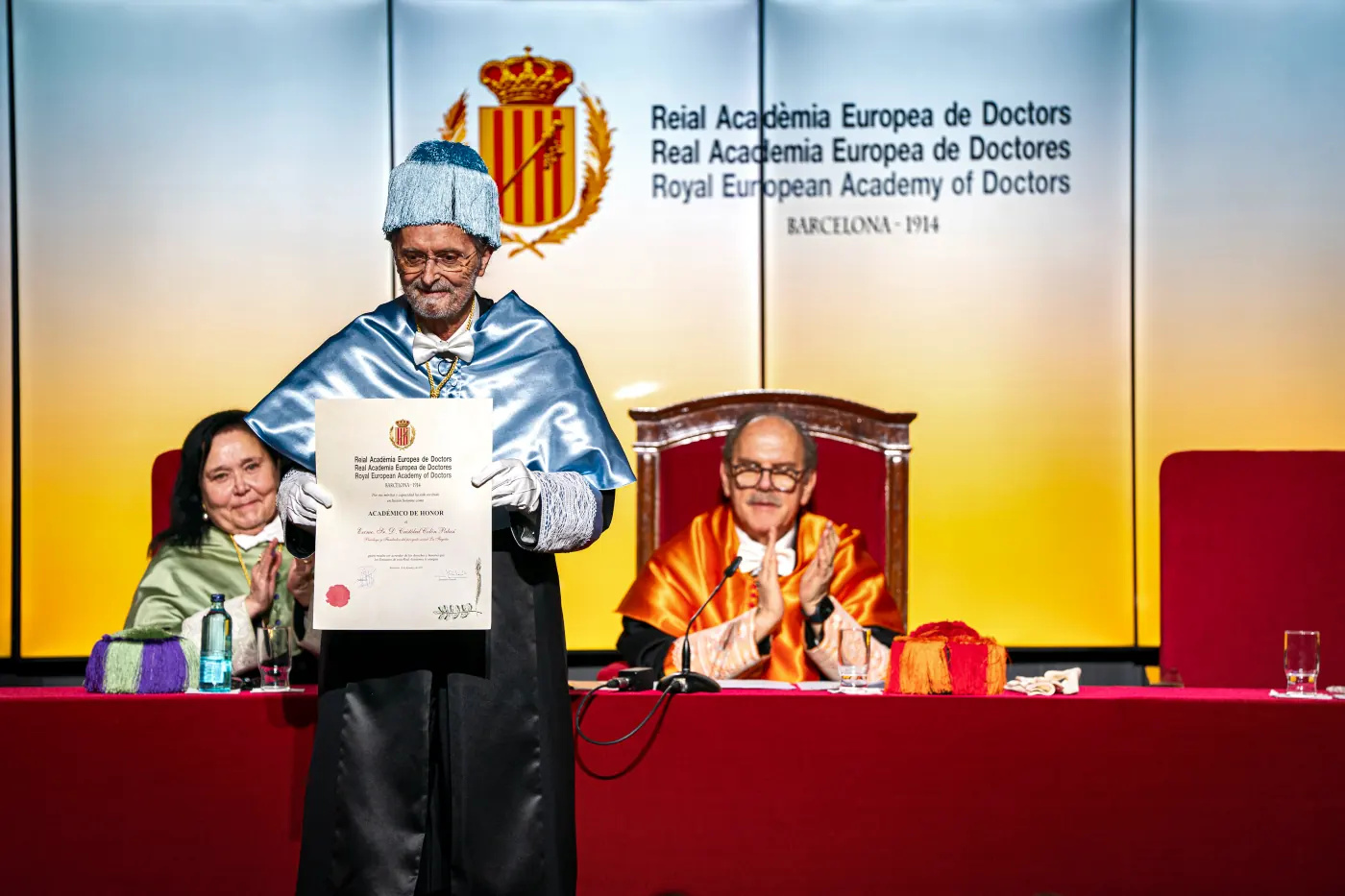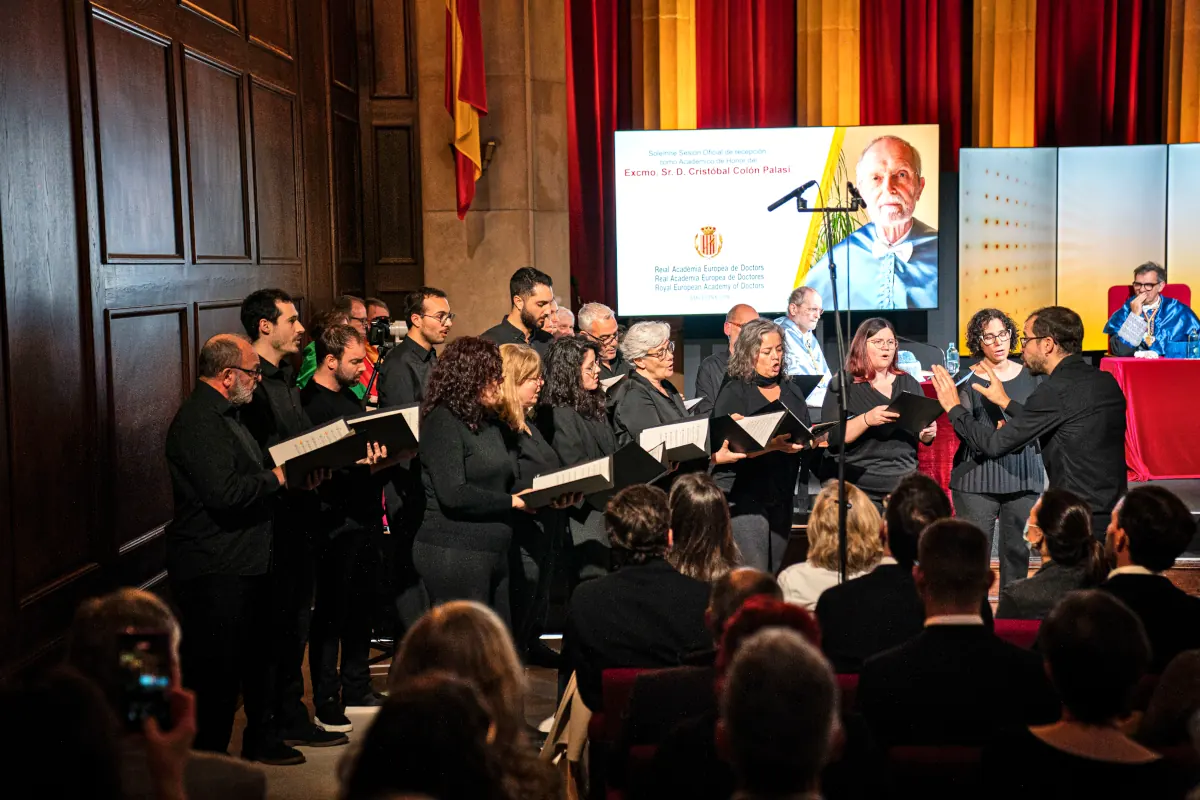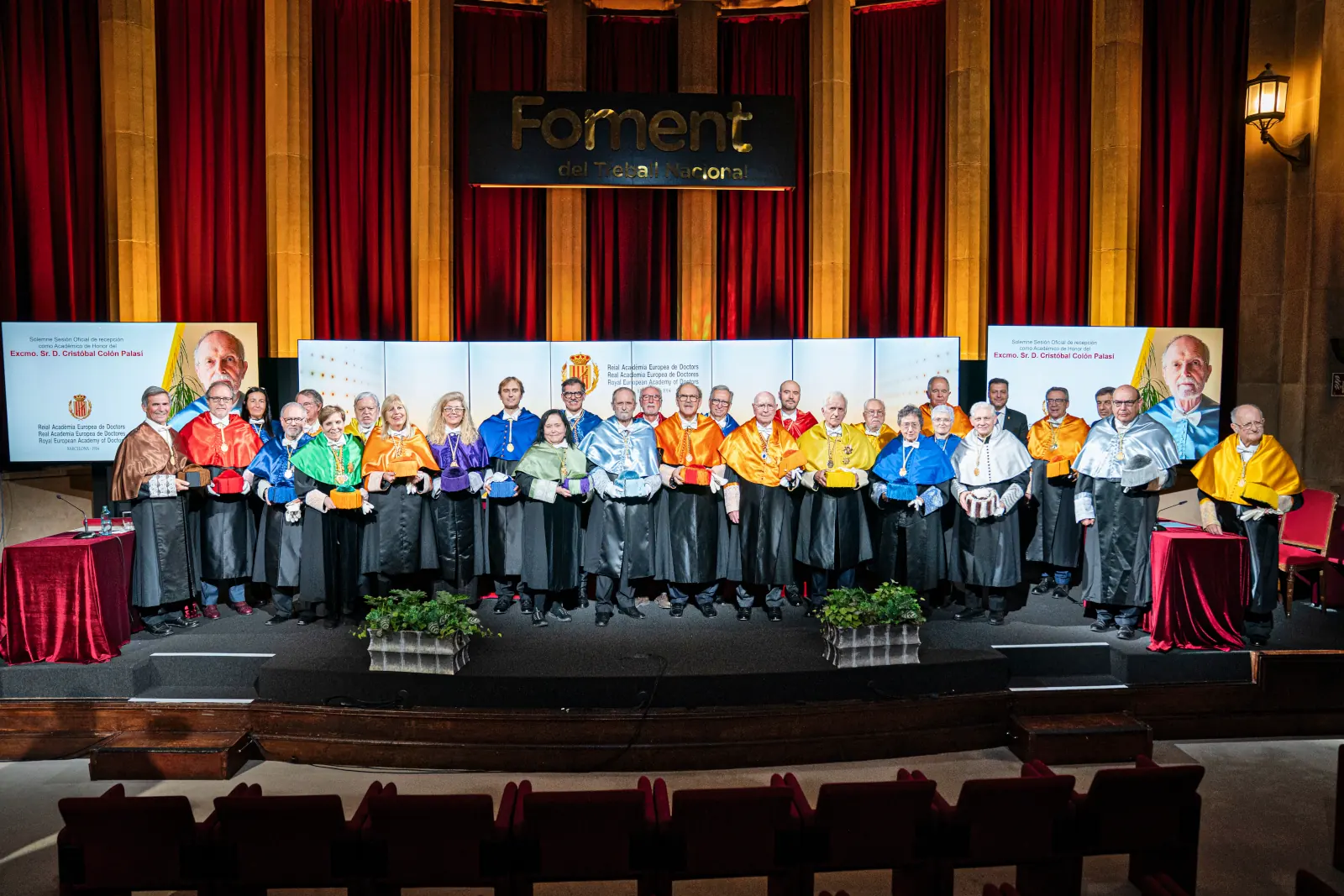



Cristóbal Colón Palasí, founder of the business and social project La Fageda, was admitted as an Honorary Academician of the Royal European Academy of Doctors (READ) during a solemn ceremony held on 18 December at Fomento del Trabajo, the Academy’s headquarters. The recipient delivered his inaugural address, “Del manicomio a la Real Academia: algunas reflexiones sobre las ideas de Platón” (From the Asylum to the Royal Academy: Some Reflections on the Ideas of Plato) in which he explained the origins of the benchmark dairy company, created with the aim of restoring dignity and meaning to people with mental disorders who had no alternative but admission and residence in psychiatric institutions, integrating them into a community where real work enables a full life. He also explored the ideas of Plato—especially his views on knowledge and the soul—which guided the philosophy of the project and continue to inform its decisions. The response on behalf of the Academy was delivered by the Numerary Academician and Vice President, Jaume Llopis.
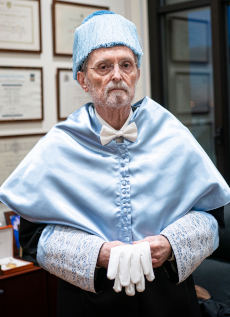 The new academic presented a profound philosophical and ethical reflection inspired by Plato and Socrates that shaped the genesis of La Fageda, together with his own experiences in the field of mental health and a vision of recovery based on dignity, work, nature and respect for the person. This approach moves away from traditional systems and promotes a more humane and community-centred model. Colón referred to the myths of the winged chariot and the cave to illustrate the importance of reason, fidelity to inner truth and the need for a process of self-knowledge and transformation. The exit from the cave symbolises a process of metanoia, in which inner change involves recognising one’s true essence and leaving shadows behind—not as an act of rebellion, but as obedience to a higher calling that seeks light and truth.
The recipient also addressed the ethical dimension and the idea of authentic leadership, stressing that leadership grounded in self-knowledge, responsibility and service strengthens the community and fosters personal fulfilment. In this sense, he highlighted that organisational culture, inspired by the Platonic polis, must be rooted in inner integrity and the capacity for self-governance, promoting an economy centred on human well-being and community, as opposed to unchecked growth and the pursuit of short-term profit. Without departing from Plato, he underscored the philosopher’s three human faculties—intelligence, will and soul—which enable the recognition of truth and what is right.
Colón concluded that genuine social and personal transformation requires a process of recognition and authenticity, in which leadership and community act as agents of change that help others discover their potential and live with purpose. The story of La Fageda exemplifies how philosophy and concrete action can converge to build a more just, dignified and harmonious society, where work and communal life become paths to ordering the soul, cultivating virtues and living in coherence with the most authentic aspects of the human being.
Trained in Psychology at the Autonomous University of Barcelona, Colón began his professional career in various psychiatric centres in Zaragoza, Martorell and Salt. In 1982 he founded the cooperative La Fageda in Olot in response to the living conditions of former asylums. The project combines productive activities—farm work, gardening, the production of dairy products and jams, and guided visits—with a comprehensive support model that includes employment, training, housing, leisure and psychosocial support. Its approach is based on the inviolable dignity of the person and upholds the idea that the meaning of work lies in work with meaning.
The uniqueness of La Fageda has attracted national and international interest and is studied in business schools such as IESE, ESADE and Harvard University. The project welcomes thousands of visitors each year and is recognised as a successful case in the social economy and people-centred management. Throughout his career, Colón has received numerous institutional distinctions, including the Creu de Sant Jordi, the highest honour awarded by the Government of Catalonia, in 2009, and the recent honorary doctorate from the University of Girona.
Speech «Del manicomio a la Real Academia: algunas reflexiones sobre las ideas de Platón»