

Francisco González de Posada, Professor of Physical Foundations at the Polytechnic University of Madrid and honorary member of the Royal European Academy of Doctors (RAED), has been recognised by Cádiz City Council as a Favourite Son of the city, with the unanimous support of the three municipal groups represented on the council: the People’s Party, the PSOE and Adelante Izquierda Gaditana. “A scientist, academic and one of Spain’s foremost intellectuals. Born in 1942 in Calle Junquera, he is the first person in the world to hold nine doctorates in disciplines as diverse as engineering, theology, philosophy, medicine and economics. He served as rector of the University of Cantabria and has published more than one hundred scientific books, proudly proclaiming his Cádiz roots wherever he goes,” states the report issued by the Municipal Committee for Honours and Distinctions.
Alongside the academic, the carnival performer José Luis García Cossío, known as ‘Selu’; trade-unionist Carmen Pérez Fuentes; neighbourhood leader José Rodríguez Vázquez; scientist Carola García de Vinuesa; and basketball player Begoña García Piñero were also named Favourite Sons and Daughters of Cádiz. The title of Adopted Son or Daughter of Cádiz, intended for people born elsewhere who have shown a recognised vocation of service to the city, was awarded to journalist and writer Juan José Téllez Rubio; teacher Ana Rodríguez Penín; former advertising director of Diario de Cádiz, Ildefonso Marqués Clavijo; actress and carnival performer Ana López Segovia; director of the Andalusia Film Office, Carlos Rosado Cobián; and politician Carmen Romero López. The Gold Medals of Cádiz, which recognise institutions of all kinds, were awarded to the shop Casa Serafín, the Tía Norica Company, San Rafael Nursery and Primary School, and the image of María Santísima de las Penas Coronada.
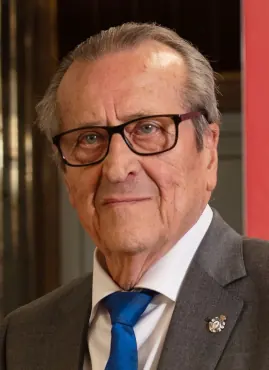
Dr. Francisco González de Posada
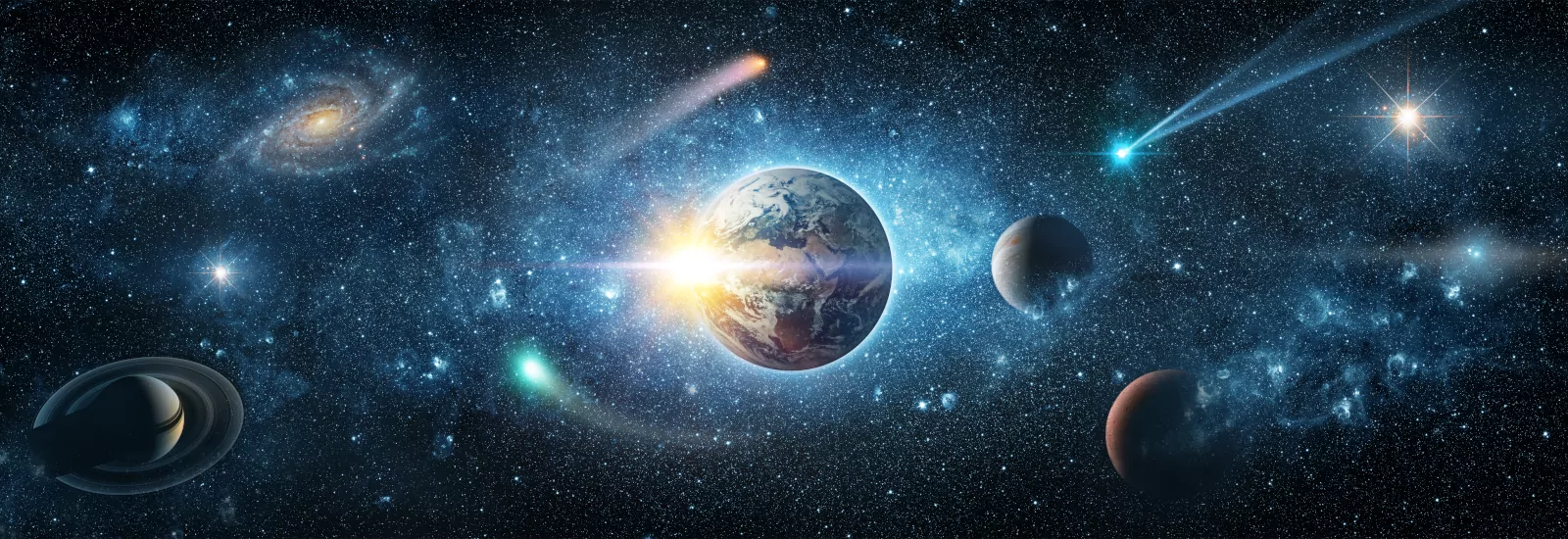
Over recent weeks, the academic has also maintained his intense activity as a populariser of science, delivering his traditional cosmology seminar as part of the University of Cantabria Summer Courses. This year’s seminar was entitled “Contemporary cosmology: science and philosophy”, following earlier courses on “Cosmology: current problems” and “Cosmology: on matter and energy”. The sessions, open to the general public and worth up to one university credit for undergraduate students, were held at the Official School of Languages in the Cantabrian town of Laredo. “The course fully assumes the basic knowledge involved in the relevant areas of physics, but approaches them from the perspective of their philosophical foundations and mathematical formalisation. It therefore offers a historical and philosophical review integrating the intellectual contributions of physics, mathematics and philosophy, while remaining open to the future. In this respect, it focuses on providing a general overview of the problems raised today by the study of the universe, encouraging reflection and facilitating the critical, personal construction of answers to those problems,” the academic explains. In the same field, the expert has delivered the more specialised lectures “The Universe and God” and “The Universe of the Big Bang” in a range of venues.
González de Posada is a civil engineer and holds a doctorate in Civil Engineering from the Polytechnic University of Madrid, a degree in Philosophy and Humanities from the Pontifical University of Salamanca, and a degree in Physical Sciences from the Complutense University of Madrid. He received the Medal of Honour for the Promotion of Invention and also served as rector of the University of Cantabria. He is a full member of the Royal Academy of Doctors of Spain and a member of the World Academy of Art and Science; a corresponding member of the Royal Academy of Fine Arts of Cádiz, the Royal Academy of Fine Arts of San Fernando and the Royal Academy of Sciences, Fine Arts and Letters of Écija; and an honorary member of the Academy of Medical Sciences of Cantabria, the Royal Academy of Valencian Culture, the Royal Academy of Medicine and Surgery of Cádiz and the Royal Academy of Medicine of the Canary Islands. He is also a full member and president of the Academy of Sciences, Engineering and Humanities of Lanzarote.