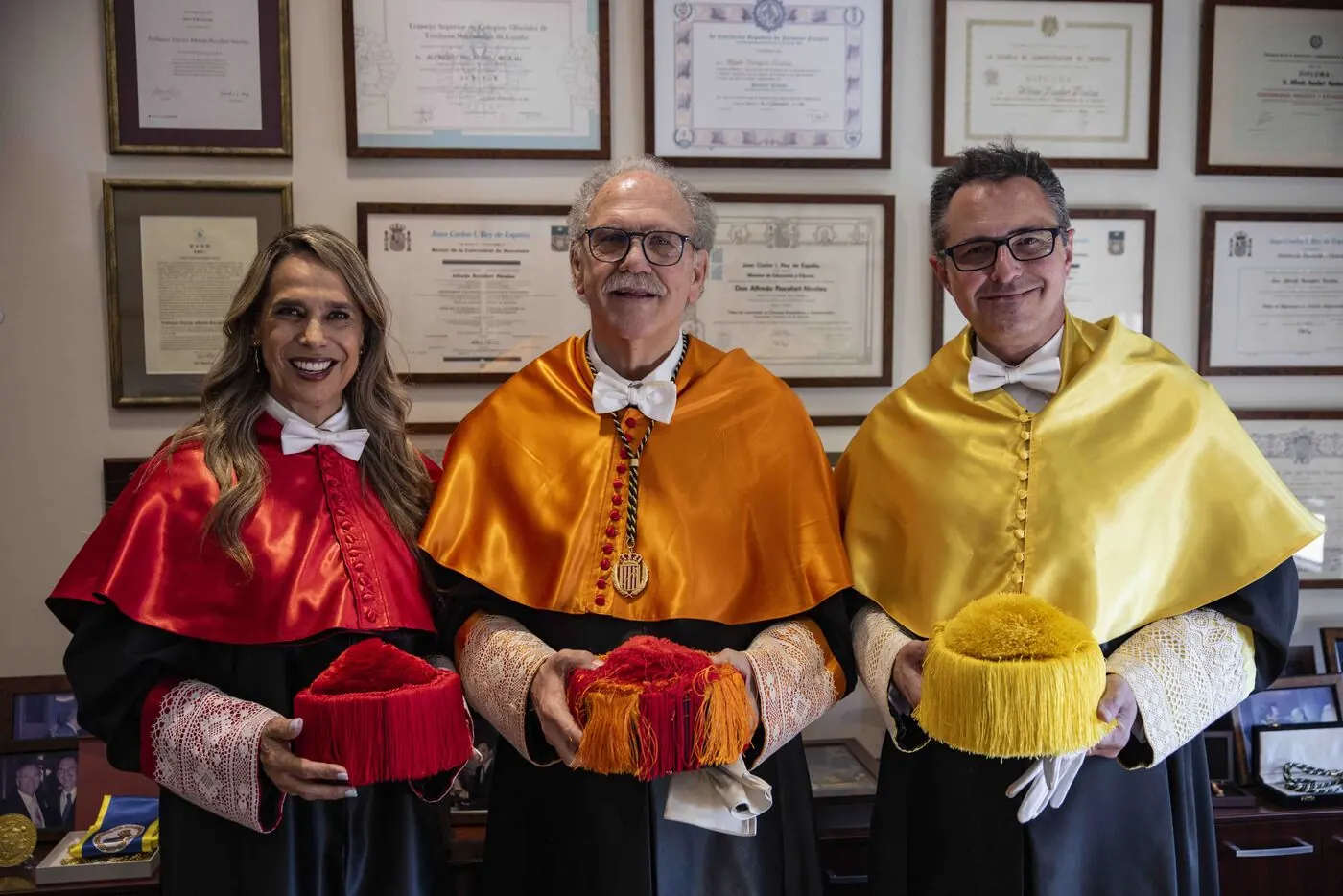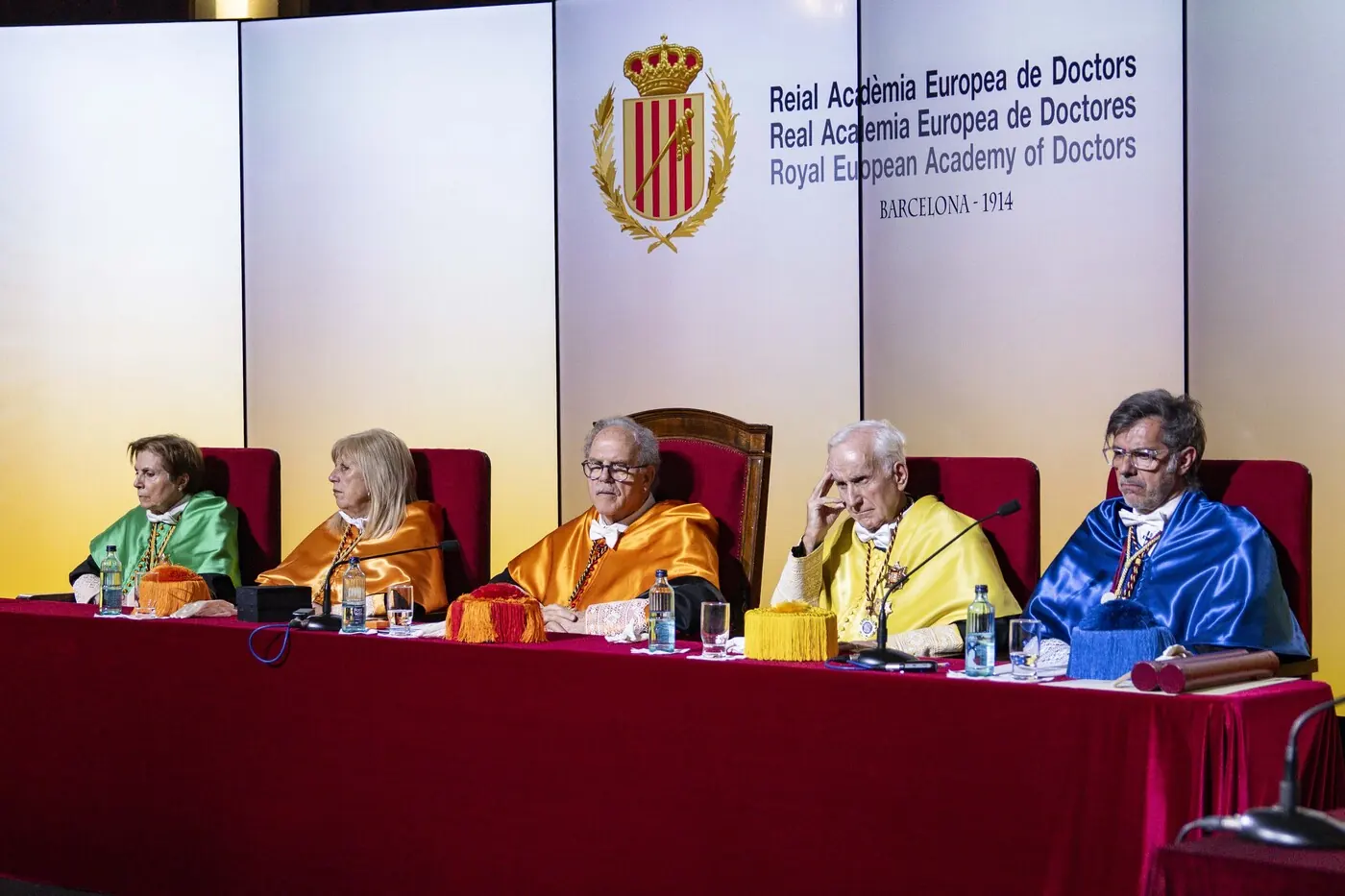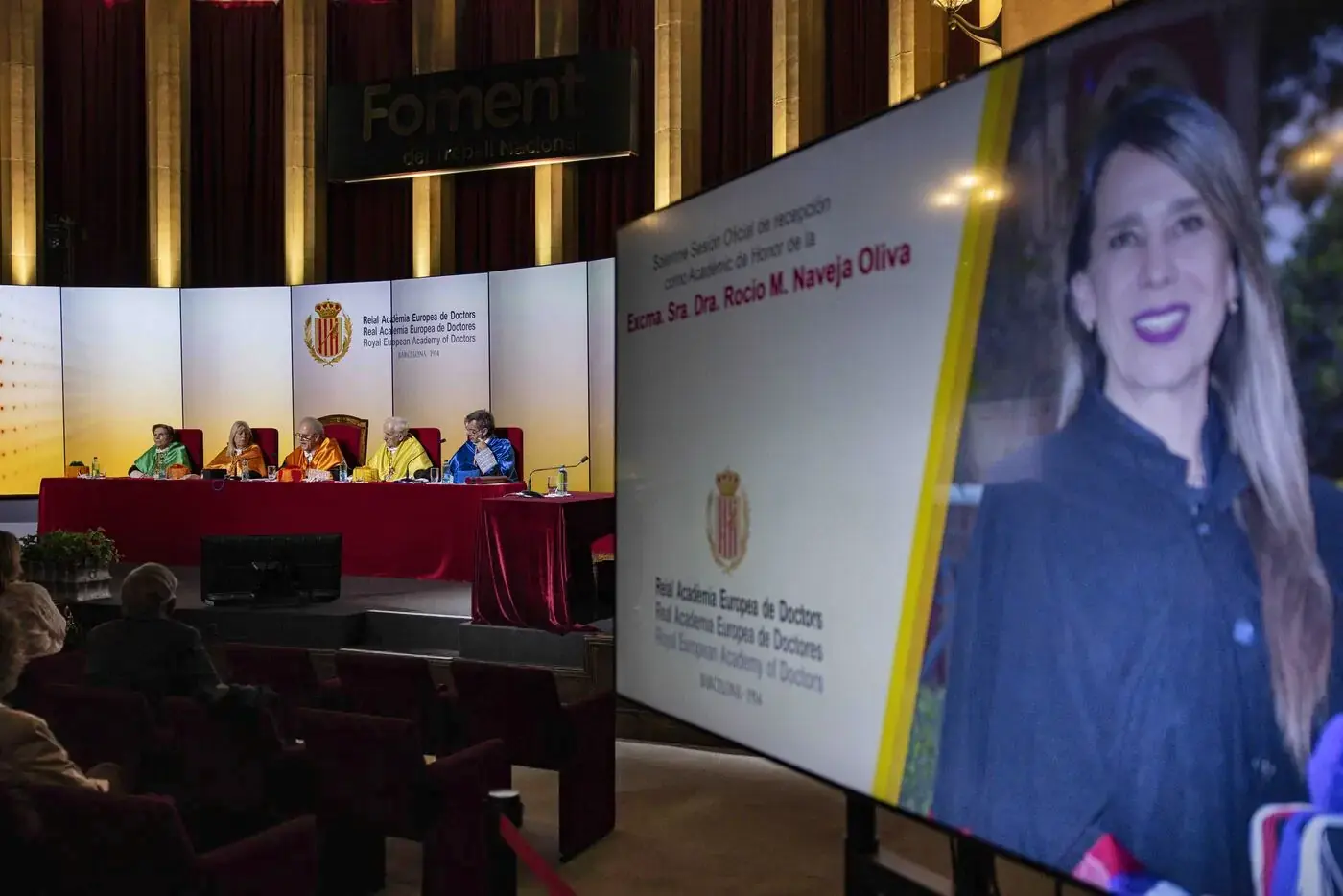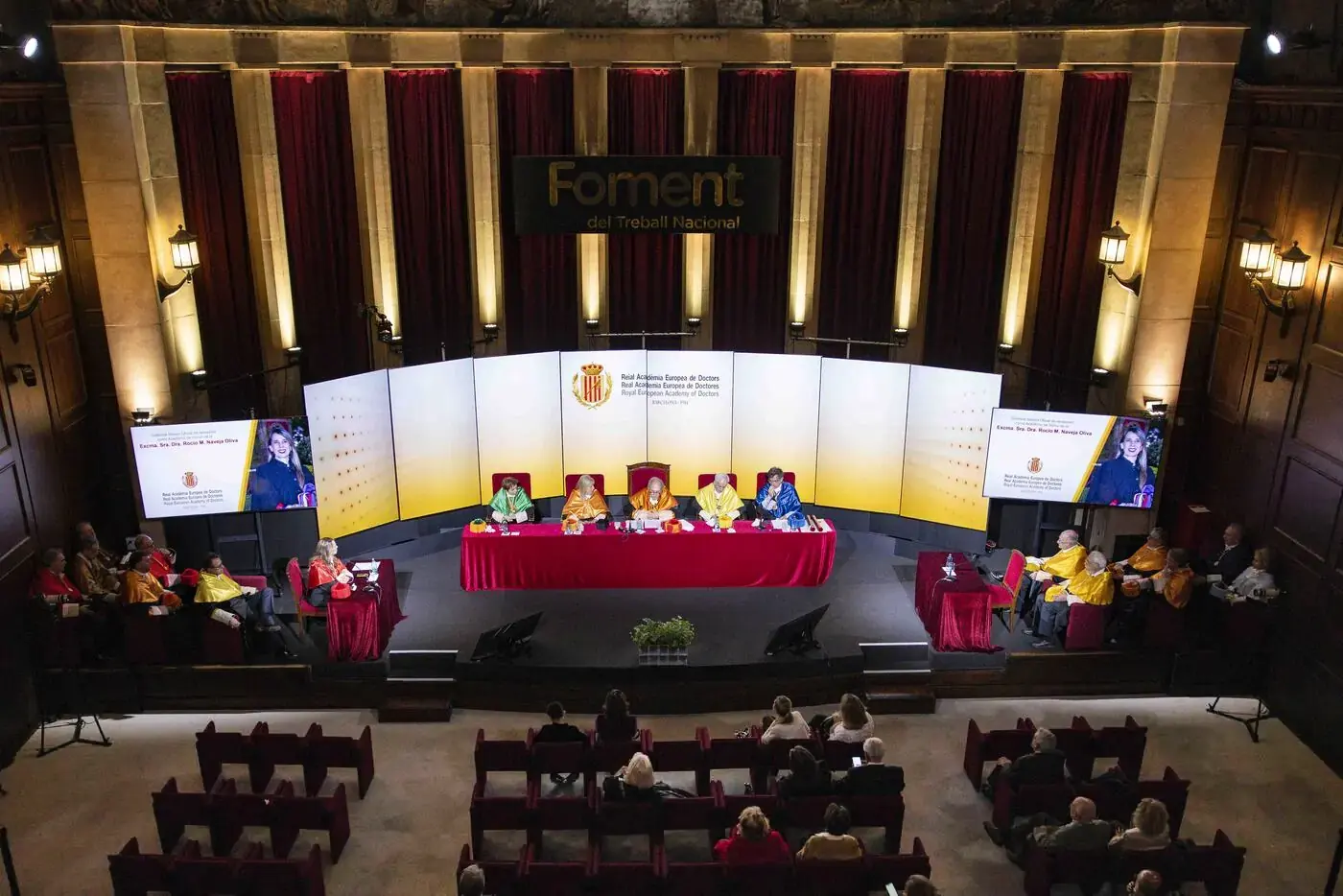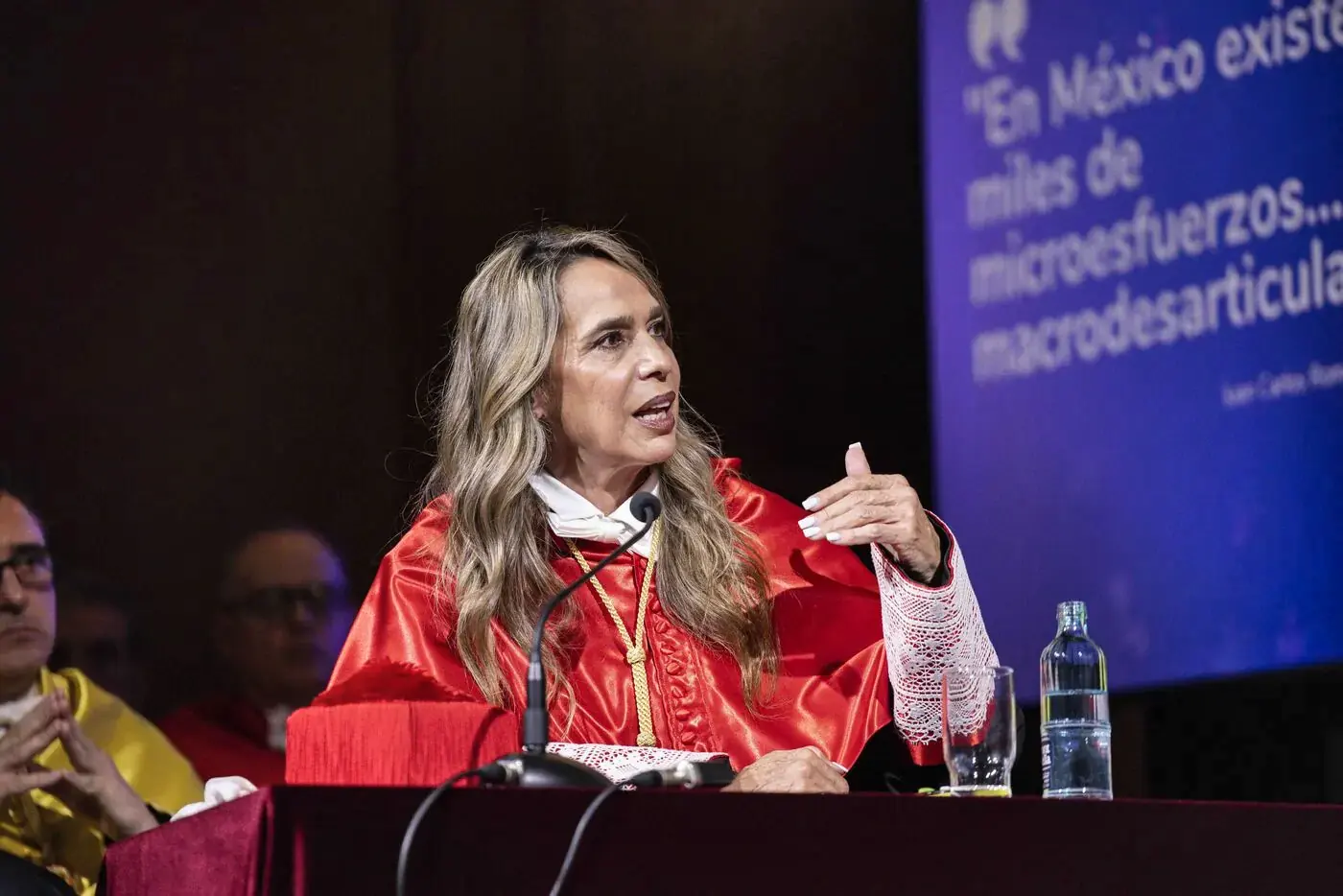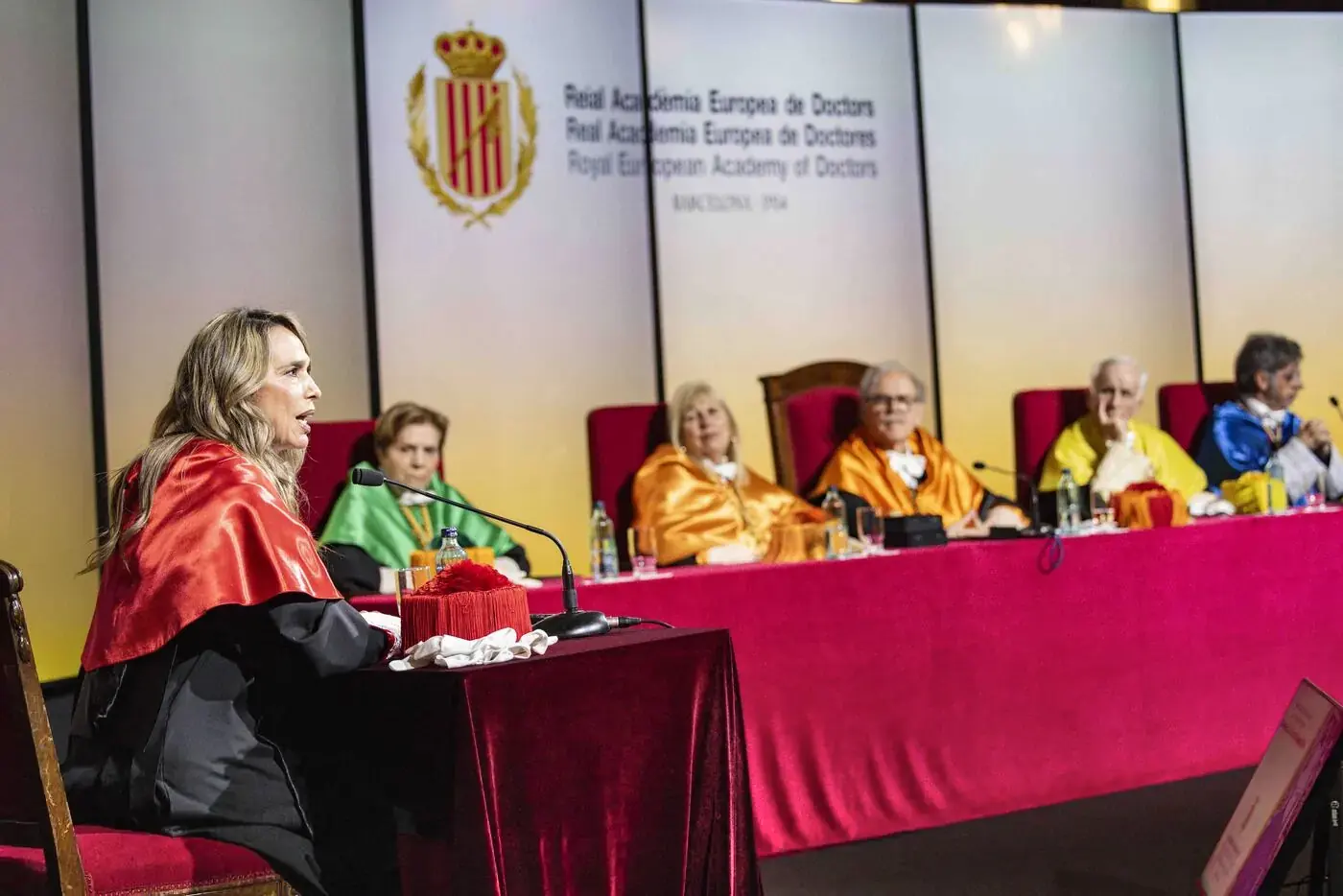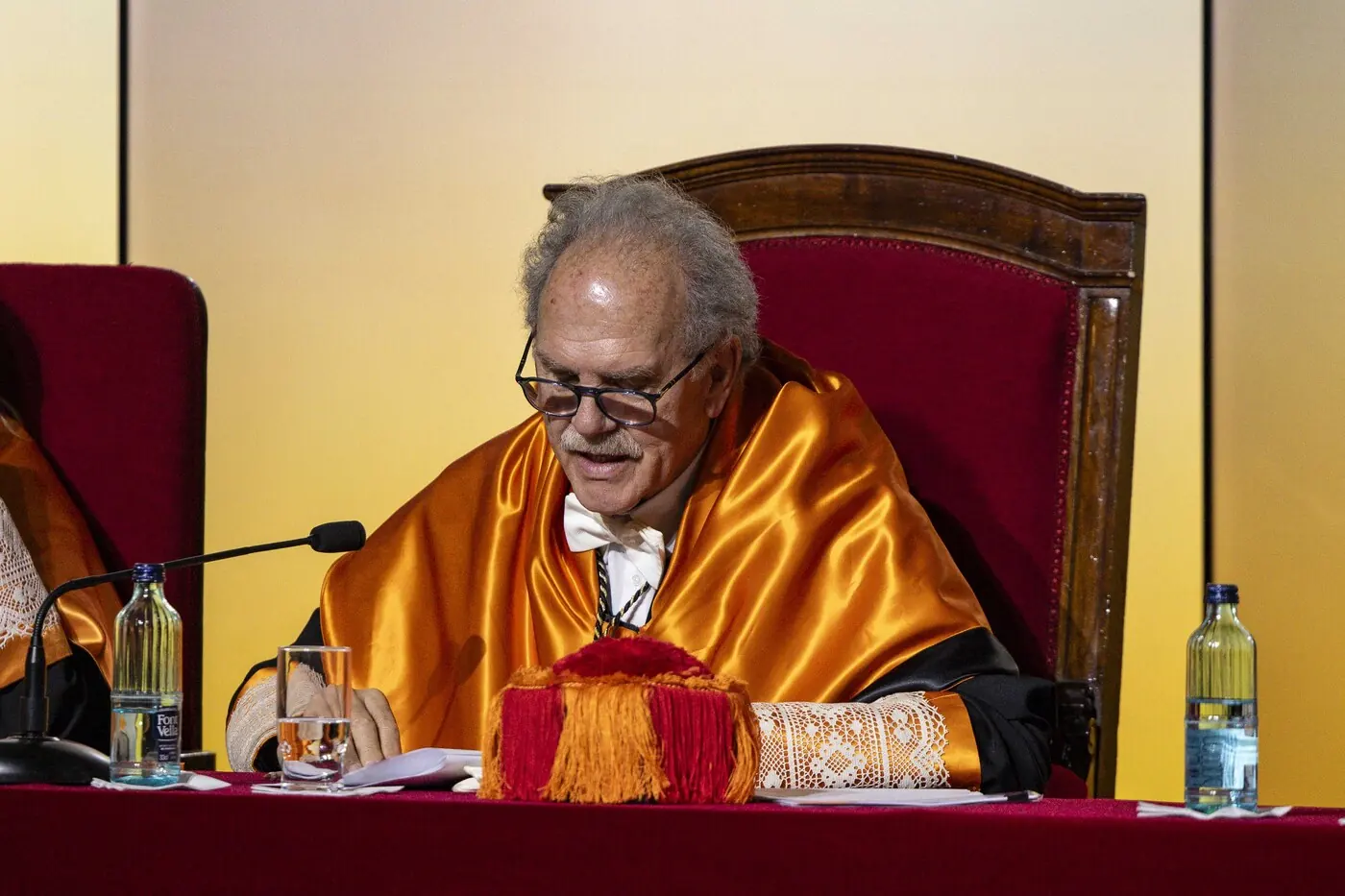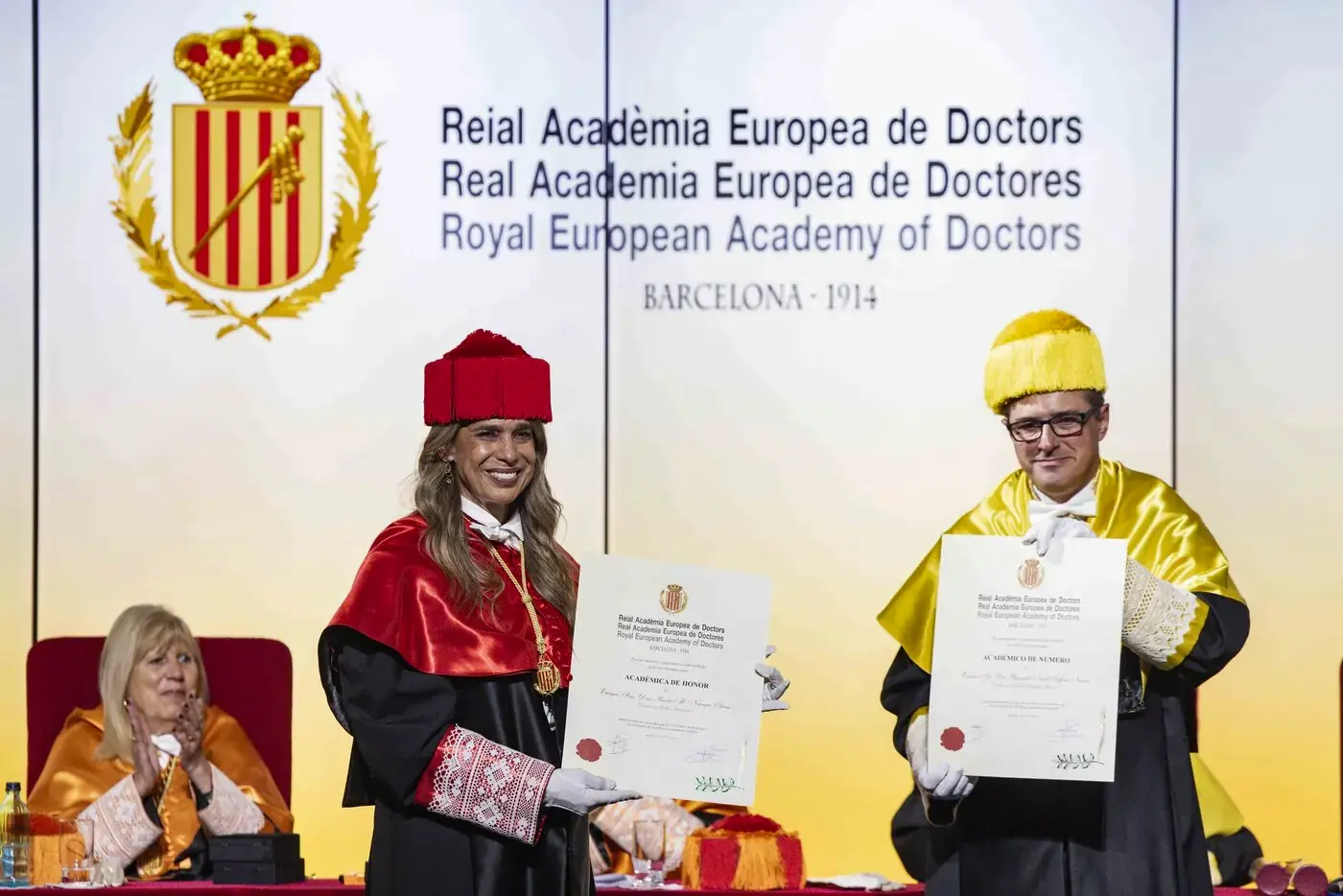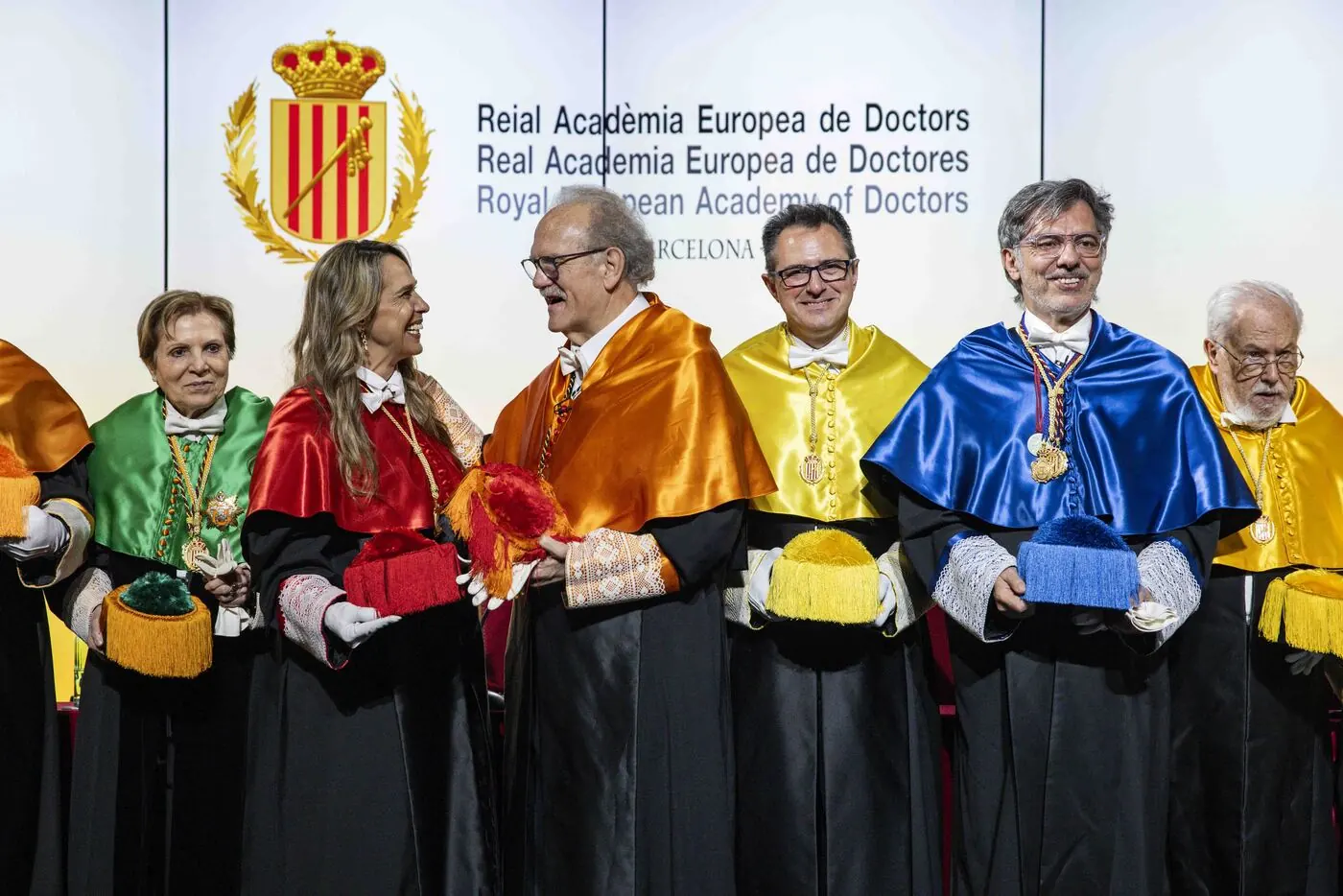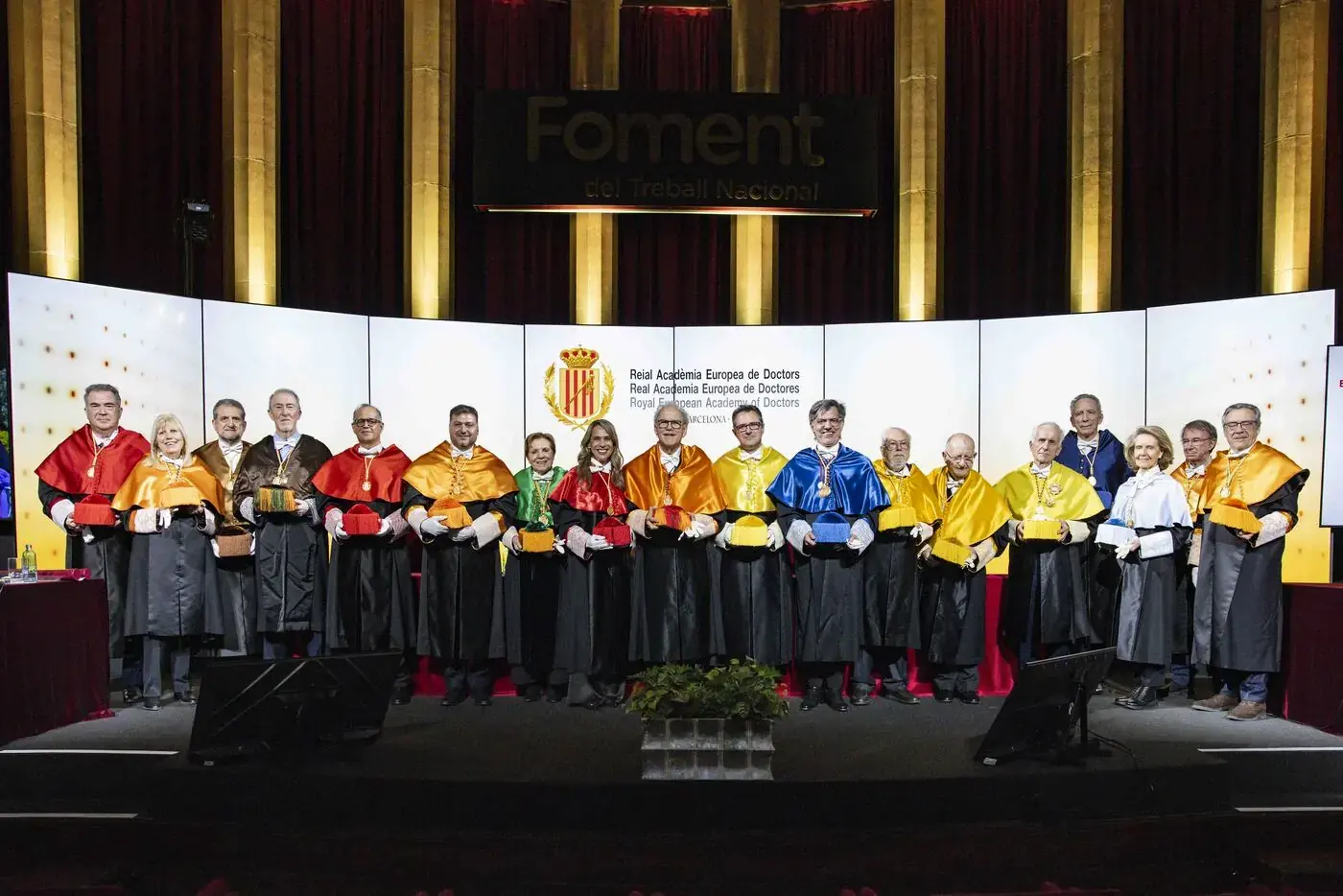



Rocío Naveja, Doctor in Criminal Policy, Rector and founder of the Universidad Humani Mundial of Mexico, has been admitted as an honorary member of the Royal European Academy of Doctors (READ) during a solemn ceremony held on Thursday, 16 April, at Foment del Treball, the Academy’s headquarters. The recipient delivered the admission speech “Progressive Structural Criminological Vulnerability: Analysis of School Disengagement as a Risk Factor for Delinquency”, in which she presented the so-called ALAS Guanajuato model, an innovative crime prevention strategy based on the model of progressive structural criminological vulnerability. She was answered on behalf of the Royal Corporation by the full member and President of the Board of Governors, Alfredo Rocafort.
The new academician explained that, in contexts of organised violence such as those experienced in the Mexican municipality of Guanajuato, which she knows at first hand and on which she has focused much of her criminological research, school dropout is not merely an educational problem, but the main trigger of what she has defined as territorial criminological capture, the moment in which adolescents become exposed to illicit economies that offer them belonging and economic support. Drawing on the principles of neurocriminology, social disorganisation theory and empirical evidence, Naveja argued that secondary psychopathy or environmental sociopathy is malleable during adolescence, and that the school, with extended hours and intensive support, can and should act as the most powerful protective factor against criminal trajectories.
The recipient explained that the core of the model is the “Leaders of Permanence” programme, university mentors who serve as a socio-affective structure, detect early risks through predictive systems, and apply a triple-prevention intervention. The pilot programme already shows concrete results: greater school retention, recovery of institutional sovereignty within schools and a reduction in recruitment linked to school abandonment, Naveja noted. From an economic perspective, the speaker stressed the model’s social profitability, since protecting 1,000 students costs less than maintaining a single prison inmate. In the face of penal populism and prison expansionism, the expert proposed a scientific model of “social vaccine.”
Naveja has chaired the Security and Justice Round Table of León (Mexico), has been President of the Mexican Society of Criminology and President and councillor of the Citizen Observatory of León (Mexico), has served as Executive Coordinator of the Commission for Monitoring Cases of Femicide Violence in the State of Guanajuato, and as a member of the Mental Health Committee of the State Government. She has also served as a member of the Amber Alert programme and of the Interinstitutional Network for Comprehensive Care for Adolescents in Conflict with the Law, has been an adviser to the Employers’ Confederation of the Mexican Republic, a board member of the National Council of Criminological Education Institutions, an adviser to the Ibero-American Network of Criminology and Forensic Sciences, and President of the Vámonos Recio Foundation: Prevention with Reintegration.
Speech: “Progressive Structural Criminological Vulnerability: Analysis of School Disengagement as a Risk Factor for Delinquency”