



Isidro Fainé, President of the La Caixa Banking Foundation, CriteriaCaixa, the Spanish Confederation of Savings Banks, and the World Savings and Retail Banking Institute, Vice-President of the Royal Academy of Economic and Financial Sciences, and Emeritus Member of the Royal European Academy of Doctors (READ), calls for a new model of business management in the article “For a Humanistic Leadership,” published on 22 February in the economic supplement “Dinero” of the newspaper “La Vanguardia.” For this renowned executive and philanthropist, the current social context demands a renewed form of leadership committed to people—one that moves beyond purely technical or instrumental approaches and places the intrinsic value of the human being at its centre. According to Fainé, contemporary leaders must no longer limit themselves to maximizing results or efficiency, but must incorporate exemplary conduct, social commitment, and a clear humanistic orientation into their management.
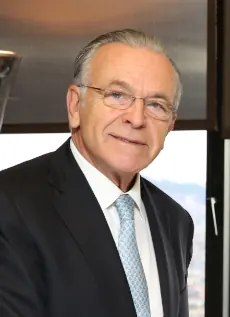
Dr Isidro Fainé – Press Cambrabcn, CC BY-SA 2.0, via Wikimedia Commons
“Those of us who lead organizations must navigate risks and uncertainties without losing sight of opportunities, anticipating market changes without abandoning confidence in our capabilities. In this context, executives and entrepreneurs have the responsibility to exercise conscious, committed, and human leadership. Today, business leaders are expected not only to be efficient but also to demonstrate exemplary conduct and social commitment. The legitimacy of business leadership is increasingly built on this social utility—on its capacity to generate not only economic benefits but also collective well-being. This role of entrepreneurs and executives also requires the support of public policies. We are agents of change who take risks, innovate, and create dignified employment, a cornerstone of people’s well-being,” Fainé argues.
“The emotionally intelligent leader acts with awareness, sensitivity, and long-term vision. Leadership is not about imposing but proposing; not about commanding but listening, persuading, and serving. Positive leadership means opening one’s heart, cultivating good habits, and guiding the team. Leadership is not a position of domination but of service. It is exercised by example. Courage, nonconformity, and well-understood ambition must arise from within. Managerial rigour culminates in decisions that combine intelligence and intuition, realism and imagination, serenity and determination. It implies knowing oneself, recognizing both personal and environmental limitations, and always keeping one’s feet on the ground,” he adds.
The academic identifies several phenomena that mark the beginning of a new cycle that must also be reflected in management practices: the consolidation of European integration, the rise of social inequalities, political polarization, the persistence of geopolitical conflicts, the advance of climate change, demographic transformations, and the accelerating impact of technological revolution. These forces, he argues, are not only redefining the international order but also the way organizations and economies are managed. Added to this is the rapid progress of technology, particularly the growing dominance of artificial intelligence, with the risk of relegating the human being—and human well-being—from the central role in the economy and society. “The future of our companies, and the prosperity of society, will not be determined solely by machines, markets, or regulations. It will depend on our human capacity to think and act with meaning, wisdom, and purpose. Ultimately, it will depend on our willingness to lead with more than strategy and technique—by putting our soul into leadership,” he concludes.




.jpg)
