

Dr Francesc Torralba
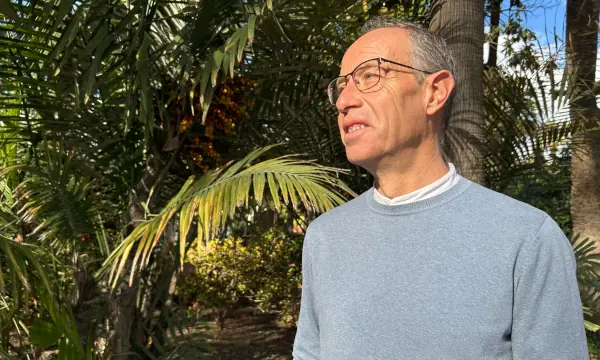
Francesc Torralba, Director of the Ethos Chair of Applied Ethics at the Ramon Llull University and of the Chair of Christian Thought of the Bishopric of Urgell, member of the Dicastery for Culture and Education of the Holy See and a Numerary Member of the Royal European Academy of Doctors (READ), continues to feature in interviews and media appearances after being awarded the Josep Pla Prize, granted by the publishing house Destino, for the work “Anatomia de l’esperança.” On this occasion, the renowned thinker held a conversation with journalists Ricard Maxenchs and Marta Maxenchs in the popular section “Hablando con los Maxenchs” of the newspaper “El Mundo Deportivo,” published on 28 February.
In addition, on 20 February the academic defended his latest doctoral thesis at the International University of Catalonia, entitled “Recepció i interpretació de l’obra de Søren Kierkegaard (1813–1855) en la psicoteràpia existencial de Rollo May.” Supervised by Xavier Escribano and Maria Fernández-Capó within the framework of the doctoral programme in Health Sciences, the defence received the distinction of excellent cum laude. Torralba now holds five doctorates: in Philosophy (1992), Theology (1997), Pedagogy (2018), Art History (2022) and now Health Sciences (2026).
In an interview marked by an intimate and informal tone, the academic defines himself as a professor who seeks to teach how to think. “I believe that philosophy should stand at the centre of the public square as it did in Athens, in the agora. Stimulating critical thinking, the search for truth and the pursuit of happiness constitute the basic tasks of philosophical practice. In an accelerated, dispersed and noisy environment, this task entails a certain complexity.” He also explains how a secondary school teacher awakened his philosophical vocation, just as he himself now tries to do with his students by following the same example in a dialogue that activates intelligence, imagination and memory. In any case, he notes that along this path work, perseverance, the help of others and the practice of self-criticism are essential.
Torralba identifies as one of the most gratifying moments of his life completing the 2024 Barcelona Marathon together with his two daughters, Núria and Anna, and his niece Laia. And, logically, he acknowledges that the most difficult moment has been accepting the death of his son Oriol, who died in a mountain accident at the age of 26 while he himself was accompanying him. “Accepting is not overcoming. It means integrating his absence into one’s own being and learning from an experience as tragic and traumatic as this in order to help those who suffer similar situations,” he explains. The work “Anatomia de l’esperança” is one way of doing so, he reveals, as were his two previous books: “La Paraula que em sosté” and “No hi ha paraules. Com assumir la mort d’un fill,” in which he shares his grief.
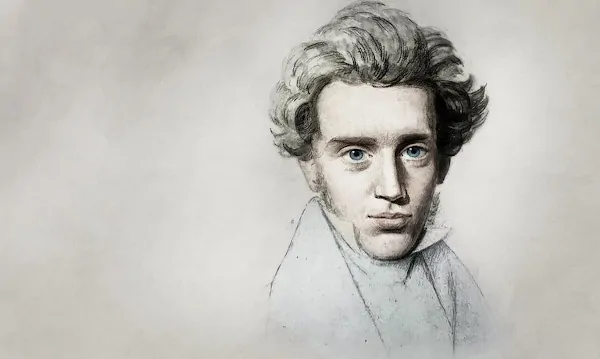
Søren Kierkegaard
Speaking about his daily life, Torralba reveals that one of his favourite moments is going out for a run at six in the morning. He declares himself a supporter of FC Barcelona, explains that his two favourite athletes are Kilian Jornet and Carolina Marín, and says that his impossible dream would be to attend a dialogue between Friedrich Nietzsche and Søren Kierkegaard, to whom he dedicates his latest doctoral thesis and who is one of the figures he has studied most throughout his academic career. He concludes by offering several pieces of life advice: “humility to learn from those who already know, perseverance to improve one’s abilities and hope when starting new projects.” In this regard, he affirms that it is precisely these new projects, such as books and exhibitions, that keep him alive.
A lecturer and disseminator of Christian humanism in major Catalan media outlets such as Catalunya Ràdio and the newspapers “La Vanguardia” and “El Punt Avui,” the academic is the author of notable books such as “El sentit de la vida” (2008), “No passeu de llarg” (2010), “El valor de tenir valors” (2012), “Un mar d’emocions” (2013), “Córrer per pensar i sentir” (2015), “Saber dir no” (2016) and “Món volàtil” (2018). During the pandemic, Torralba published the books “Humildad,” “Paraules de consol. En la mort d’un ésser estimat,” “Formar personas. La teología de la educación de Edith Stein,” “Vivir en lo esencial. Ideas y preguntas después de la pandemia,” and “L’ètica algorítmica,” which received the Bones Lletres Prize for Humanistic Essay awarded by the Royal Academy of Good Letters and the publishing house Edicions62; “La façana de la Glòria de la Sagrada Família. Fonts espirituals i teològiques de l’escatologia d’Antoni Gaudí,” the result of his fourth doctoral thesis; “Cuando todo se desmorona. Meditar con Kierkegaard” (2023), “No hi ha paraules. Com assumir la mort d’un fill” (2024) and “Benaurances per a agnòstics” (2024). He was also recognised with the Ratzinger Prize 2023, awarded by the Vatican Foundation Joseph Ratzinger–Benedict XVI.