


Dr Francisco López Muñoz
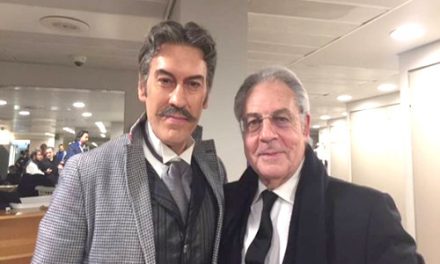
Francisco López Muñoz, Professor of Pharmacology and Vice-Rector for Research, Science, and Doctoral Studies at the Universidad Camilo José Cela, member of the Academia de las Ciencias y las Artes Militares, corresponding academician of the Real Academia de Medicina del País Vasco, and full academician of the Royal European Academy of Doctors (READ), took office as a corresponding academician of the Real Academia de Medicina de Castilla-La Mancha, assigned to the Section of Basic Sciences, at a ceremony held on January 15 at the Diputación de Albacete. The recipient delivered the inaugural address «Under the Shadow of Moria: Cervantes and His Scientific Sources in the Field of the Medicine of the Mind». The laudatio was delivered by José Manuel Juiz Gómez, full academician of this Royal Corporation and Professor of Histology at the Universidad de Castilla-La Mancha.
In his work, López Muñoz analyzed the influence of medical knowledge on mental disorders during the Late Renaissance—a field in which Spain was a true European power—on the literary works of Miguel de Cervantes, as well as the technical sources on which the writer may have drawn. Indeed, in Cervantes’ oeuvre the figure of the madman or lunatic appears as a constant, used as a literary strategy through which the author carries out a distinctive exercise in social criticism. Moreover, his literary works constitute a remarkable mirror in which to observe the social structures, customs, and habits of Spain in his time, and they have also helped to broaden our understanding of how numerous diseases (and their remedies), including mental illnesses, were perceived during that period. According to the academician, Cervantes’ literary portrayals of mental insanity are endowed with clinical connotations that suggest he possessed a not inconsiderable knowledge of medicine, possibly derived from his family environment and friendships, as well as from his particular interest in the mentally disturbed—evidenced by records of his visits to the Hospital de Inocentes de Sevilla.
Likewise, the recipient highlighted Cervantes’ possible familiarity with various treatises related to neuroscientific disciplines, which were very much in vogue in Spain during the Golden Age. He singled out four works in particular: two that the «Prince of Letters» owned in his personal library and occasionally cited in a fairly approximate manner—namely, the popular «Dioscorides» («De materia medica and deadly poisons”) «Examen de ingenios para las ciencias” by Juan Huarte de San Juan; the other two correspond to the medical opuscle «Dignotio et cura affectuum melancholicorum» by Alfonso de Santa Cruz, from which the clinical description of the protagonist of the exemplary novel «El licenciado Vidriera» appears to have been drawn, and «In Praise of Folly» by Erasmus of Rotterdam, whose humanist ideas may have influenced Cervantes’ conceptualization of Don Quixote’s madness.
 The academician further noted that Cervantes’ extensive knowledge of plants—some with curative properties—likely stemmed from reading and consulting the «Dioscorides», as López Muñoz himself has shown in several studies. Evidence of this, within the realm of mental pathology, can be found in descriptions of the effects of certain plants that in some cases almost literally coincide with those provided by Laguna, such as the hallucinogenic effects of witches’ ointments, the narcotic effects of opium, and the effects of certain poisons. «One must always bear in mind that Cervantes’ aim in composing his works, like that of most literary creators, was not to expound on clinical or therapeutic aspects, but rather simple entertainment inherent to an artistic construction, in which technical brushstrokes are merely another ornament and a device to demonstrate a certain learned character. If we ignore this point, we may fall into the fatal error of approaching Cervantine texts as if they were scientific treatises, which would be an absurd way of trivializing science (and, of course, literature as well)», the expert concluded.
The Royal Academy of Medicine of Castile–La Mancha is a non-profit public-law corporation based in Albacete, dedicated to the study, promotion, and dissemination of medical and scientific knowledge, serving as a reference forum for specialists, teachers, and researchers. Its aims include promoting studies, reflections, meetings and scientific sessions, courses, conferences, publications, reports, consultations, and, in general, any activities that may contribute to the progress and dissemination of biomedical sciences, as well as collaborating with authorities and various organizations by formulating proposals on matters of scientific interest. The institution contributes to the dissemination of research on scientific topics and promotes the study of the most relevant pathologies related to the territory and the history of medicine in Castile–La Mancha. Its origins lie in the Society of Medicine and Surgery of Albacete, founded in 1968 as a private association to promote and study medical sciences in all their branches. In 2021 it was awarded the title of Royal by King Felipe VI.
A renowned popularizer of contemporary history, Spanish Golden Age literature, and medicine and pharmacology, López Muñoz holds doctorates in Medicine and Surgery and in Spanish Language and Literature. He is a specialist in Pharmaceutical Medicine and holds a diploma in Holocaust Studies from the Yad Vashem International School for Holocaust Studies in Jerusalem. He is a researcher at the Instituto de Investigación Hospital 12 de Octubre, a member of the Governing Council of the Instituto de Investigación Sanitaria HM Hospitales, and of the Institute of Medieval and Golden Age Studies Miguel de Cervantes at the Universidad de Alcalá. He serves as a member of the Science and Technology Council of the Community of Madrid, scientific advisor to the Ibero-American Committee on Ethics and Bioethics, member of the Monitoring Committee of the Observatory of Human Rights of Spain, of the Spanish Chapter of the Club of Rome, and honorary member of the Fundación Gandhi-Mandela. He has participated in numerous research projects and is the author of monographs and articles in his fields of study. He has recently been honorarily appointed a Kentucky Colonel and Honorary Civil Guard, coinciding with the 25th anniversary of the creation of this distinction—the highest civilian honor of the corps—granted on an exceptional basis.