

Dr Joaquín Callabed
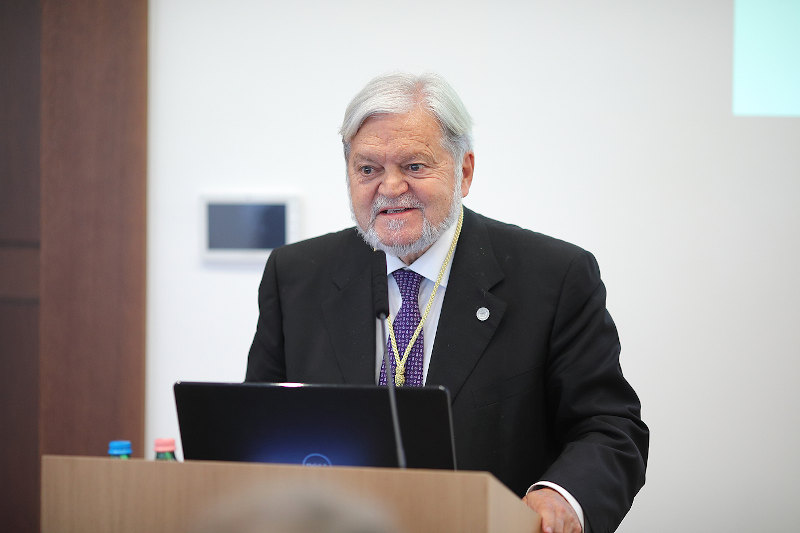
Joaquín Callabed, president of the Club de Pediatría Social, Corresponding Member of the Royal Academy of Medicine of Catalonia and of the Royal Academy of Pharmacy of Catalonia, and Numerary Member and Vice-President of the Health Sciences Section of the Royal European Academy of Doctors (READ), revisits several current issues related to pediatrics in the articles “Emotional Deprivation in Early Childhood,” “Analysis of Child Abuse,” “How to Detect Anomalies in Adolescents,” “How to Detect and Address Grooming,” and “The Problem of Child Sexual Abuse,” published throughout October and November in the “Expert Readers” and “Readers’ Network” sections of the digital edition of La Vanguardia, of whose readers’ community he is an active member.
In “Emotional Deprivation in Early Childhood,” the expert points to the need for specialists in pediatric development to address psychological aspects and evaluate the social environment in which the child develops. “It is a proven reality that pediatric consultations reveal a high incidence of psychological issues arising in highly diverse social and family contexts. Emotional deprivation is not a historical notion but remains fully relevant today, and it is worth reflecting on it to achieve better care for our young patients,” he begins, before outlining several elements that may be considered clear warning signs of psychosocial risk and vulnerability.
In “Analysis of Child Abuse,” Callabed starts from a broad definition to explain that maltreatment inflicted on minors is any non-accidental act committed by a parent or substitute that causes physical harm or illness or places the child at serious risk of suffering it. “Due to its frequency and significance, child maltreatment and sexual abuse have become a key chapter in modern pediatrics. Emotional deprivation sometimes leads to violence and aggression. Child abuse is more frequent in urban environments than in traditional rural families where uncles or grandparents live together, and the child always finds someone to protect them,” he explains.
In “How to Detect Anomalies in Adolescents,” the president of the Club de Pediatría Social introduces the so-called Goldenring survey, which he considers a complement to the medical visit that provides an individualized profile. “The interview with the adolescent must address biological as well as psychological and social aspects within their personal, family and school environment. Medical consultation requires the professional to have precise knowledge of the adolescent, as well as strong competence in this specialty. To establish communication, the physician must adopt an open, respectful and empathetic attitude. They must show interest in the adolescent without being intrusive. The adolescent should be the centre of the consultation, but appropriate space must also be given to their parents,” he notes.
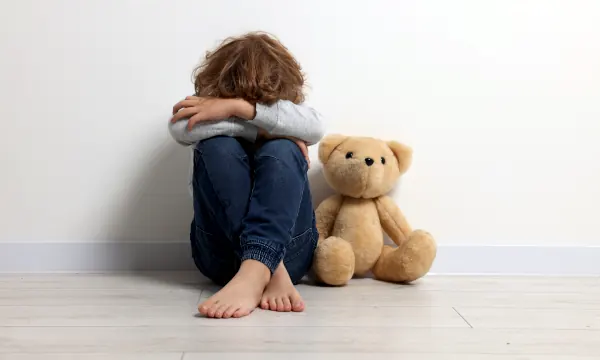 Callabed examines cyber-harassment directed at children and adolescents in “How to Detect and Address Grooming,” which he defines as a series of behaviours by adults, often via the internet, deliberately aimed at gaining the friendship of minors and building an emotional connection in order to win their trust and later blackmail or sexually abuse them. “Grooming is another form of violence, which we define as the use of physical force or power, through direct threats against oneself, another person, a group or a community, with the intent or high likelihood of causing injury, death, psychological harm, developmental disorders or deprivation,” he states.
Finally, in “The Problem of Child Sexual Abuse,” the academic addresses what he considers one of the most serious forms of violence against childhood, often with devastating effects on the lives of the affected children, reviewing both its study and its approaches. “The first major work on this issue was published in Cleveland (United Kingdom) in 1987 by Judge Elisabeth Butler-Sloss, revealing that child sexual abuse was a major social problem requiring strategies for control. The findings, supported by an exemplary research protocol, contributed to the Children Act of 1989, rebalancing the rights of children,” he recalls.