


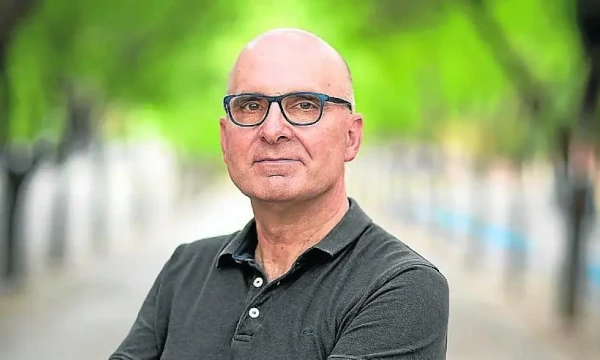
Dr José Antonio López Guerrero
José Antonio López Guerrero, Professor of Microbiology at the Universidad Autónoma de Madrid and full academician of the Royal European Academy of Doctors (READ), presented his latest book, «Good Viruses,” on January 21 at the headquarters of the Real Academia Nacional de Medicina de España. In this work, he offers a new perspective on nano-organisms that have shaped the evolution of life on Earth. One year earlier, the expert was honored with the Award for Health Information, Communication, and Outreach granted by this Royal Corporation, jointly with science communicator Adolfo Albistur.
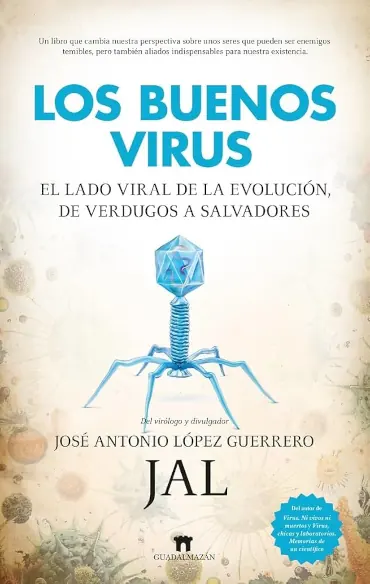 Drawing on his own experience as a researcher, the author seeks to transform the prevailing perception of viruses by highlighting their role in the development of the vertebrate brain and emphasizing their use in cancer therapies, as well as their most innovative applications in biotechnology and medicine. The book aims to shed light on the contributions of these pathogenic organisms to life itself. «Guided by the finest science communicator in our country, we discover how viruses have shaped our evolution, impacted our health, and become crucial tools in the struggle for survival», writes José Ramón Calvo in the book’s introduction. Calvo is President of the Medical Committee of the Cuídate+ section of the specialized portal 65ymás, a corresponding academician of the Real Academia de Medicina del País Vasco, and a full academician and President of the Institute for International Cooperation of the READ.
The expert explained that the emergence of biotechnology has broadened our view of the multiple roles viruses can play—not only as pathogenic agents, but also as allies in disease treatment, agriculture, and the fight against climate change. This vision is reinforced by the central message of his book: viruses are an essential part of life and evolution, and understanding them in all their complexity is key to humanity’s future. In this regard, he noted that in the face of current challenges such as bacterial resistance, food security, and the climate crisis, science—and virology and biotechnology in particular—plays a decisive role. Against catastrophist narratives, López advocates a balanced approach that acknowledges threats while also recognizing the opportunities offered by scientific knowledge.
López Guerrero joined the Real Academia Europea de Doctores last October in a ceremony held precisely at the headquarters of the Real Academia Nacional de Medicina de España, delivering an address along the same lines, «Viruses as Drivers of Life and Evolution». In it, he recalled the personal experiences that led him to train as a virologist, including his studies in Germany following his family’s emigration, and explored the role biotechnology can play in enabling viruses to transcend their pathogenic capacity and contribute to disease treatment.
A renowned science communicator, López Guerrero is Director of the Neurovirology Group in the Department of Molecular Biology at the Universidad Autónoma de Madrid and of the Laboratory of Neurovirology and New Antivirals Against Human Viruses at the Centro de Biología Molecular Severo Ochoa. His most recent line of research focuses on neuropathology associated with herpes simplex virus type 1, responsible for cold sores.
 Following the onset of the SARS-CoV-2 pandemic, he also established a new research line on the viricidal and antiviral capacity of both natural compounds and newly synthesized substances against various viruses.
For his work in research and knowledge dissemination, he has received numerous honors, including the Madri+d Foundation Award (2012), the Antama Foundation Award (2014), the Spanish Bioindustry Association Asebio Award (2017), the CSIC–BBVA Foundation Award (2021), the Código Sepsis Award in the category of Research and Scientific Outreach (2024), and the Award of the Real Academia Nacional de Medicina de España (2025). He regularly appears in major media outlets such as Radio Nacional de España, Televisión Española, and the cultural supplement «El Cultural» of the newspaper El Mundo». He is the author of more than a dozen books and 300 articles, both scientific and aimed at a general audience. Notable works include «What Is a Transgenic? (And the Mothers Who Gave Birth to Them)», «I Know What Happened… in Past Courses», «Viruses, Neither Alive nor Dead», «Coronavirus: Anatomy of a Pandemic», and «Viruses, Girls, and Laboratories: Memoirs of a Scientist».