


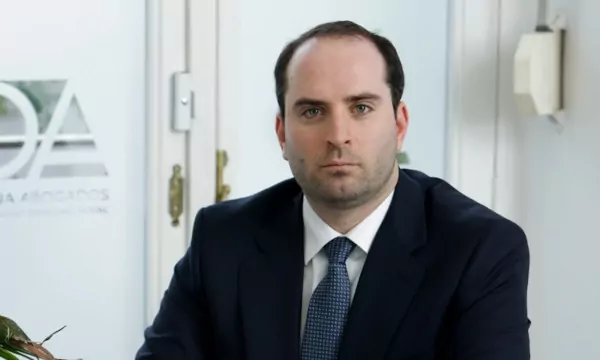
Dr. Luis de las Heras
Luis de las Heras, Professor of Criminal Law at the International University of La Rioja and the University of Valencia, Vice-President of the Institute of Ibero-American Law and a Numerary Member of the Royal European Academy of Doctors (READ), analyses the speech recently delivered by renowned American actor Kevin Spacey at the Oxford Union Society, which quickly spread through social media, in an article published on 21 February on the specialised portal Confilegal under the title “Kevin Spacey’s Speech: From Actor to De Facto Professor of Law.” The actor’s address, marked by a critical and assertive tone, revolves around the impact that public accusations have had on his career and his personal life.
“‘I used to believe that the truth would prevail. That if you stayed calm, quiet and let the system work, eventually the facts would speak louder than the noise, but I was wrong. I am here to tell you, with an authority that very few possess, that once accusations are launched, facts do not matter. They do not want the truth. They want a villain. And I was perfect for that role. I was a legendary star, I was eccentric and I did not follow their rules. The media published headlines saying that I had committed a sexual assault. And then the avalanche: people suddenly coming out of nowhere to say that I was a monster.’ Thus begins the viral speech these days by Kevin Spacey at the Oxford Union Society. The place and the date do not matter. It could have been delivered yesterday, a hundred years ago or fifty years from now,” the expert begins his reflection.
Just as Spacey argues that once accusations are made in the media sphere the facts move to the background and society tends to search for a culprit rather than the truth, the academic denounces the speed with which narratives capable of making an impact and gaining traction in public opinion are constructed, potentially ruining reputations without the existence of a final judicial conviction. For this reason, De las Heras calls for reflection on respect for the presumption of innocence in today’s digital and media environment, in which public opinion acts as a parallel court, generating far-reaching personal and professional consequences before the courts have ruled.
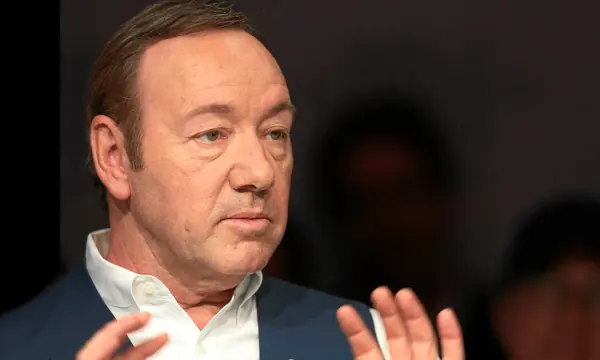
Kevin Spacey. Photo by Jolanda Flubacher / World Economic Forum (Flickr), licensed under CC BY-NC-SA 2.0
For the jurist, Spacey’s speech has reignited the debate on the limits between public accusation, media trials and legal guarantees, as well as on the role played by the media and social networks in shaping reputation and the perception of guilt. “People detest impartiality. Impartiality requires prudence, reflection and, above all, an awareness that none of us is free from slander. The survival of the presumption of innocence depends on the education of a society. The greater the social visceral reaction, the weaker the presumption of innocence. And if we add virality to social visceral reactions, then we have the perfect storm. In fact, we have collectively killed the presumption of innocence because we play at being gods: we condemn or acquit from the sofa in our homes,” the academic concludes.
De las Heras is a partner at the prestigious law firm Ospina Abogados, where he heads the Criminal Litigation department, and is the author of more than thirty publications in the fields of criminal doctrine and criminal policy, personality rights, and Law and Literature. Among them stand out his studies on the protection of the right to honour in the American legal system and in the Spanish Criminal Code, offences against family rights and duties, and the literary corpus of Franz Kafka in the work “The Legal World in Franz Kafka. The Trial,” published in 2019 together with Juan Alfredo Obarrio, Professor at the University of Valencia. He is also a member of the Editorial Committee of the journal “Actualidad Jurídica Iberoamericana” and of the Editorial Board of the “Revista Boliviana de Derecho.”