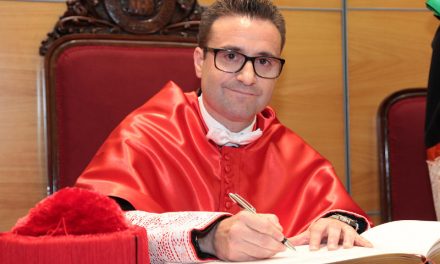



Jesús Alberto García Riesco
Jesús Alberto García Riesco, Colonel of the Spanish Army, member of the Spanish Association of Military Writers and collaborator of the Royal European Academy of Doctors (READ), analyses Russia’s relations with Europe and, by extension, with the West in an article published on 7 February on the portal Cantabria Directa. In his reflection, he notes that from Russia’s perspective, Europe still does not view Russia as an ally or as a continental actor with whom to cooperate, but rather as a transgressor that must be contained or neutralised.
“Russia believes that Europe has spent two centuries failing to treat it as it deserves. Faced with American disdain toward weak European allies, the most Slavophile theses are gaining ground in the Kremlin, viewing the continent as a fragile and hostile entity that must be ignored and sabotaged. Confronted with this threat, Europe lacks the necessary deterrence capacity and must devote its best energies to developing total defence and, once strength has been demonstrated, attempt to restore diplomatic relations with Russia as they existed prior to the invasion of Ukraine,” he begins his argument.
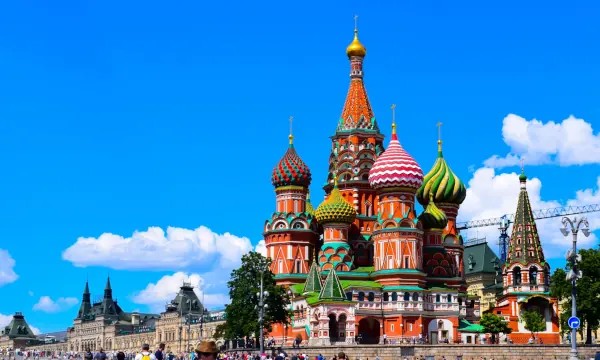 According to the expert, the attempt to build pan-European cooperation in the 1990s, following the fall of the Berlin Wall, failed due to NATO’s eastward expansion and Western decisions, such as the 1999 intervention in Yugoslavia, which Russia interpreted as proof of its marginalisation. From that point onwards, a more nationalist and Slavophile vision consolidated in the Kremlin, perceiving the West as hostile. This sentiment also has historical precedents, such as the Crimean War or Western intervention against the Bolshevik Revolution. In this context, García Riesco notes that the conflict in Ukraine is understood in Moscow as part of this broader confrontation with the West, since Russia justifies its foreign policy as a defence of its security and identity against what it perceives as Western attempts to limit its influence.
The author concludes with a warning that Europe lacks sufficient military deterrence capacity and must strengthen its defence and strategic cohesion, and that only after demonstrating strength would it be possible to rebuild stable diplomatic relations with Russia. “In the absence of a political union capable of supporting a European army, the history of continental defence has been a process of positivist failures; the Klingbeil plan, recently announced as a union of six European countries aimed at strengthening the continent economically and militarily, continues along the same path. However, no society can deter without the intangible virtues that ultimately decide the outcomes of conflicts: an organised and self-sacrificing rear guard, led by the brightest minds, capable of deploying at the front competent and generous soldiers willing to inflict casualties and even die. Europe finds its best reference for achieving deterrence capacity in the Finnish model of comprehensive security, because it coordinates hundreds of public and private organisations in national exercises and requires each ministry to maintain active plans guaranteeing essential services, supply chains and communications,” the expert concludes.