

Dr Francisco Marco
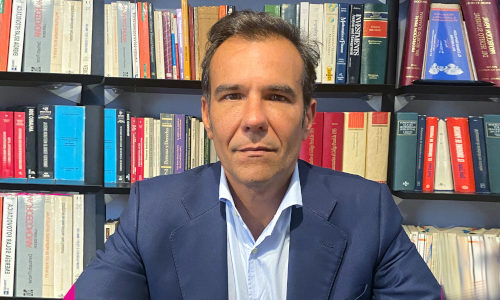
Francisco Marco, a renowned expert in the right to privacy, director of the detective agency Método 3 and Corresponding Academician of the Royal European Academy of Doctors (READ), analyses the role of the detective in criminal defence and how the reform of the Criminal Procedure Act could bring Spain closer to the Italian model of defensive investigation in the article «Mate usted y venga a verme» («Kill and then come and see me»), published on 2 December on the specialised legal portal Confilegal. Since the age of 25, the academic has led one of Spain’s largest corporate intelligence groups. He was a driving force behind the inclusion of the figure of the investigator in the Civil Procedure Act, is a member of the International Association of Certified Fraud Examiners, and the author of more than a dozen popular non-fiction books, three of which reached number one in sales in Spain.
The author takes as his starting point the colloquial phrase “mate usted y venga a verme”, attributed to an Argentine lawyer, to illustrate the perception that in some legal systems the defence has more investigative tools than in Spain, where the public prosecution has traditionally concentrated evidentiary prominence, resulting in what he sees as a notable asymmetry between the Prosecution Service and the defence. The article explains how, in countries such as Italy, the institution of defensive investigation allows defence lawyers to request active investigative measures, question witnesses, and commission their own expert reports, thereby helping to balance the investigative process. In this regard, Marco suggests that Spanish criminal justice could benefit from similar regulatory reforms that would grant the defence more effective investigative powers to counter the evidentiary monopoly of the prosecution.
For Marco, the use of private investigators by the defence should be regulated and strengthened, not merely as an auxiliary instrument, but as an integral part of the proceedings that contributes to uncovering the material truth. The author notes that, while the figure of the private detective is widely accepted in civil or commercial matters in Spain, its contribution to criminal proceedings has been limited by existing legislation and by a traditional conception of procedural roles. The article concludes by advocating a reform that expressly recognises the right of the defence to conduct active investigations, rather than merely reacting to the evidence presented by the prosecution. Such a change, he argues, would not weaken the prosecution of crime, but rather strengthen the fairness of the system and contribute to more solidly grounded judicial decisions. In his view, moving towards greater investigative participation by the defence would be an important step in modernising Spanish criminal procedure and safeguarding the principles of equality before the law and adversarial proceedings.
 Marco was awarded the National Doctrine Prize in 2000 for his work «Monitoring Email in the Workplace». Last March, together with journalist Mayka Navarro, he presented the book «La fugida» (Columna), which recounts the episode of the reappearance in Barcelona of the former President of the Generalitat of Catalonia, Carles Puigdemont, for a political rally, and his subsequent escape without being arrested despite being subject to an outstanding arrest warrant. In this same field of political, judicial, and current-affairs investigation, Marco has co-authored bestsellers such as «El método», «Operació Catalunya» and «La España inventada», and has also published the novels «La preparadora de juicios», «Realpolitik» and «Los secretos de Alba».
A pioneer in work on the protection of personal rights on social networks and digital privacy, Marco was admitted as a Corresponding Academician of the READ in June 2022 with the inaugural address “Dissociated (Split Selves). The Social Future of Humanity”, in which he examined the state of privacy and freedom in the current context of digitalisation and hyperconnectivity, analysing the effective power of technology companies such as Google, major corporations, and governments that have made data processing, management and analysis a central element of their control policies, as in the case of the Chinese regime.