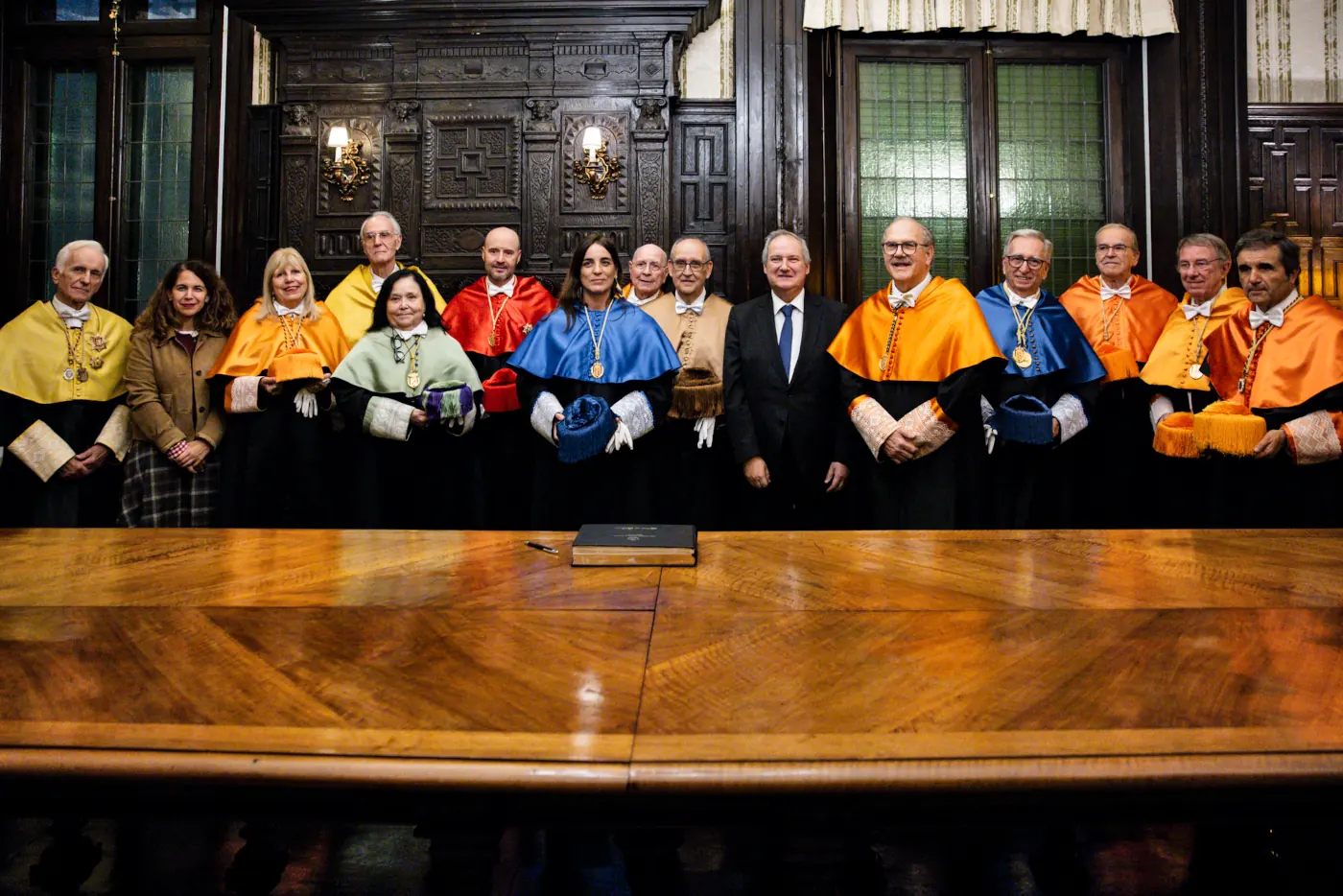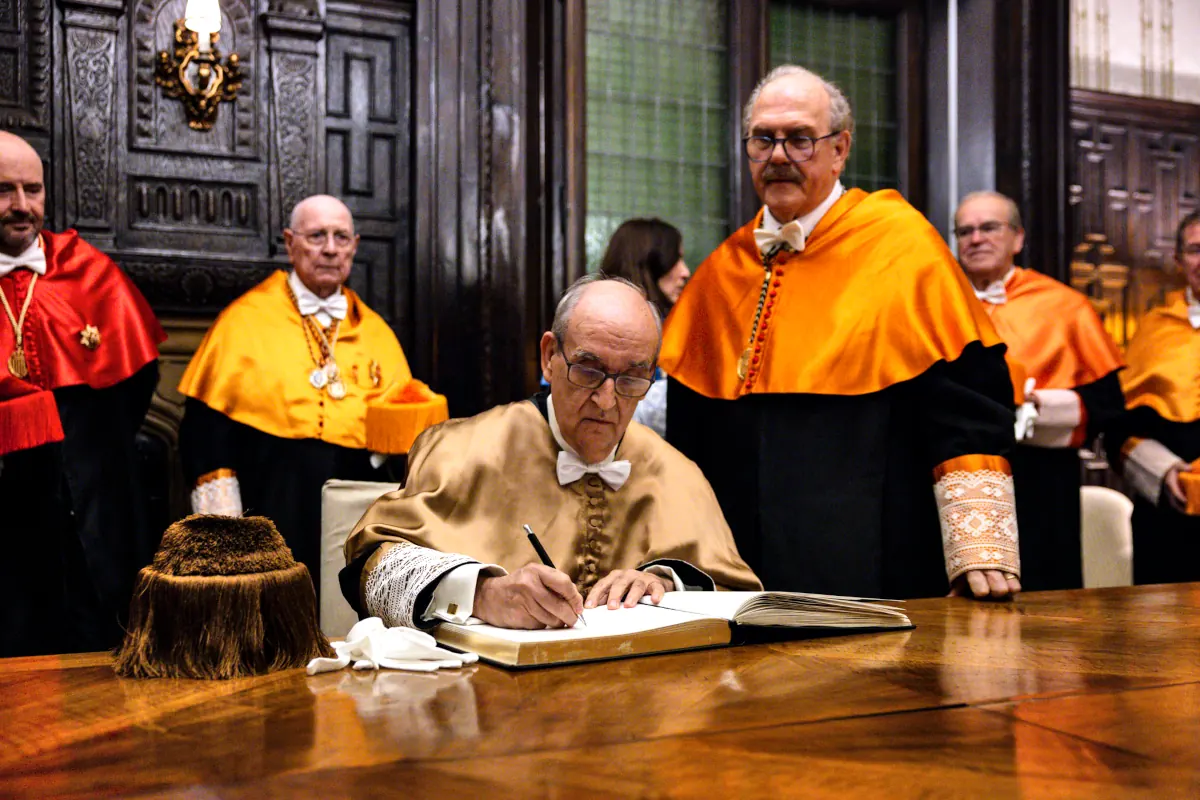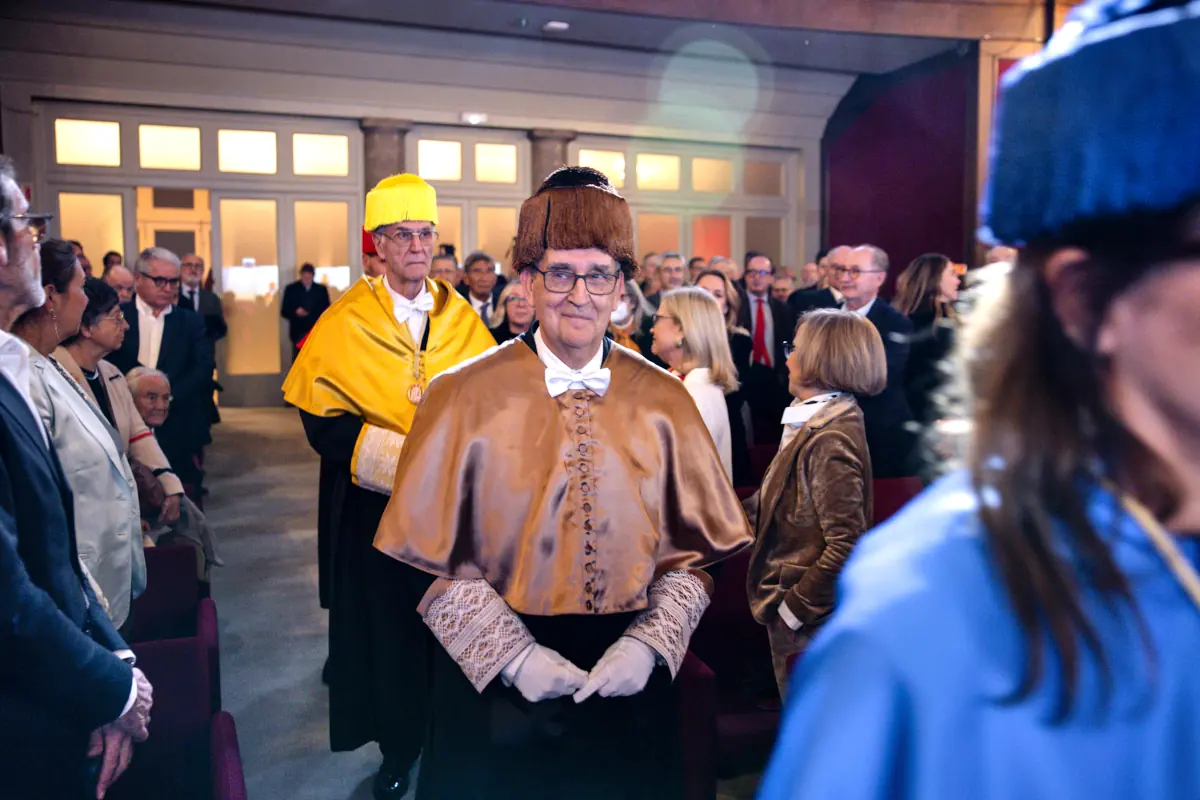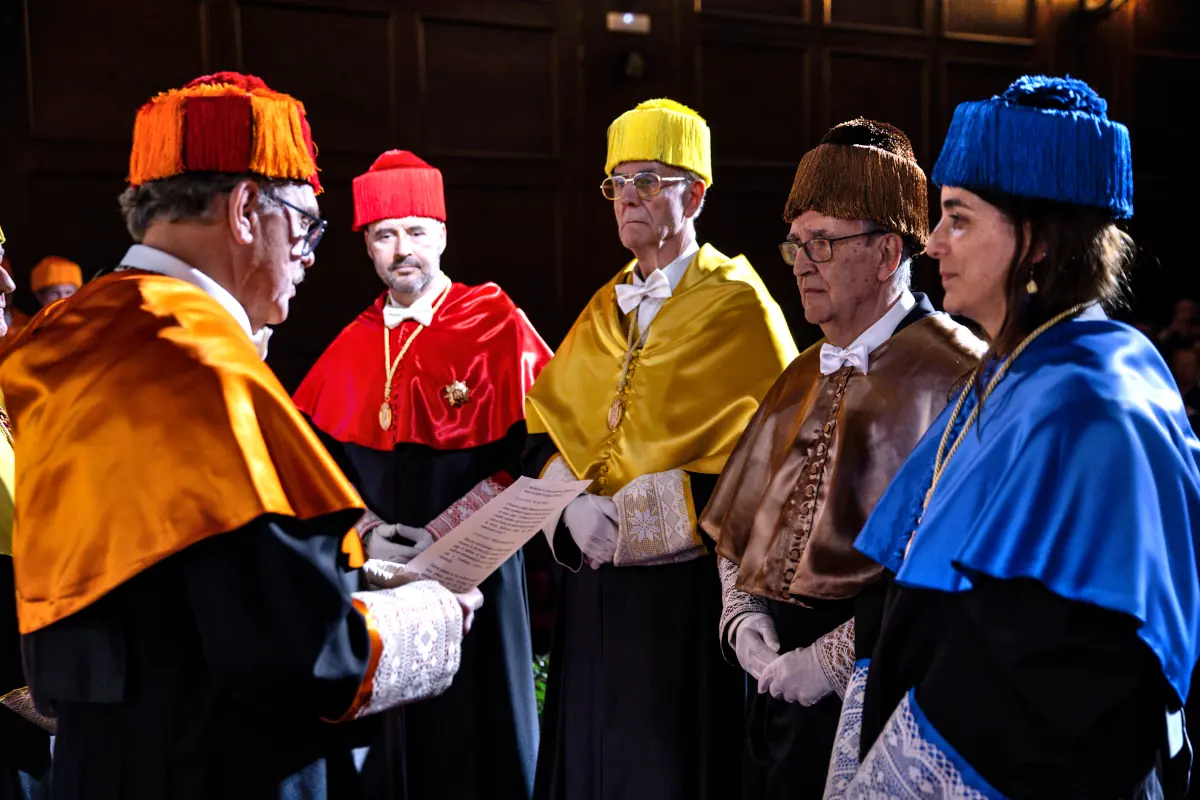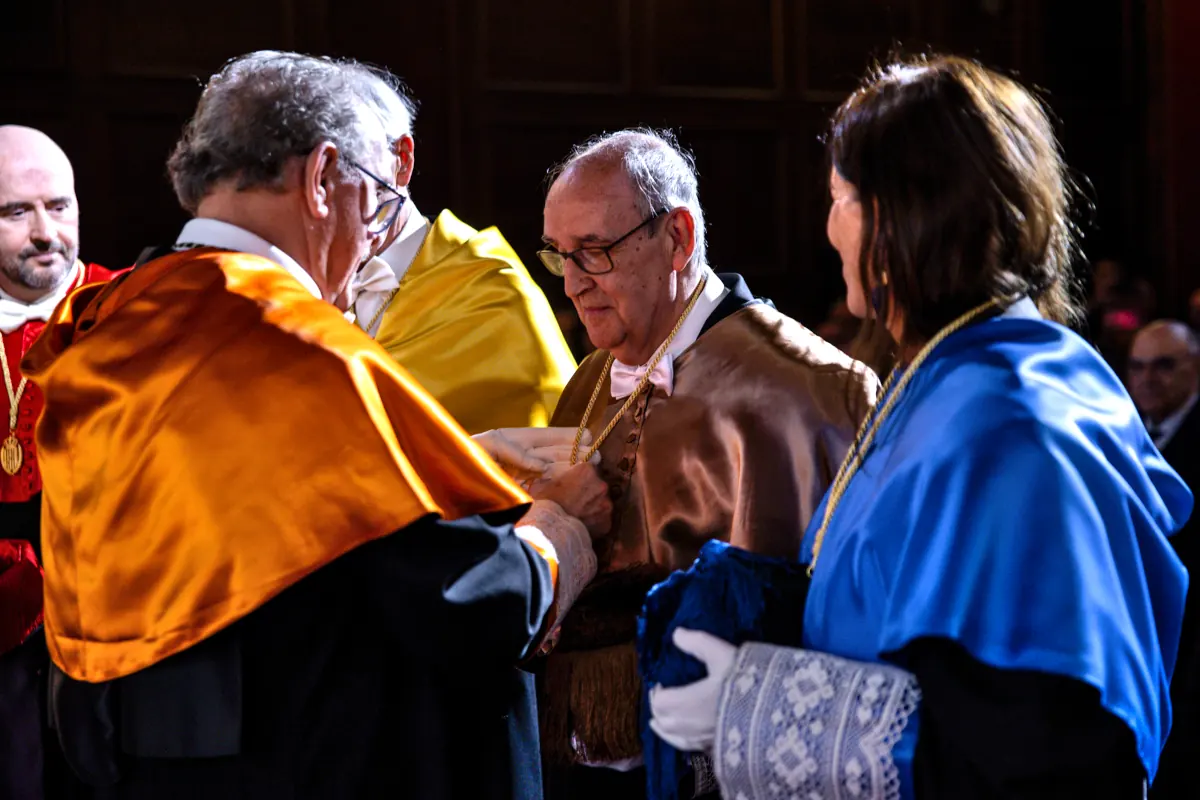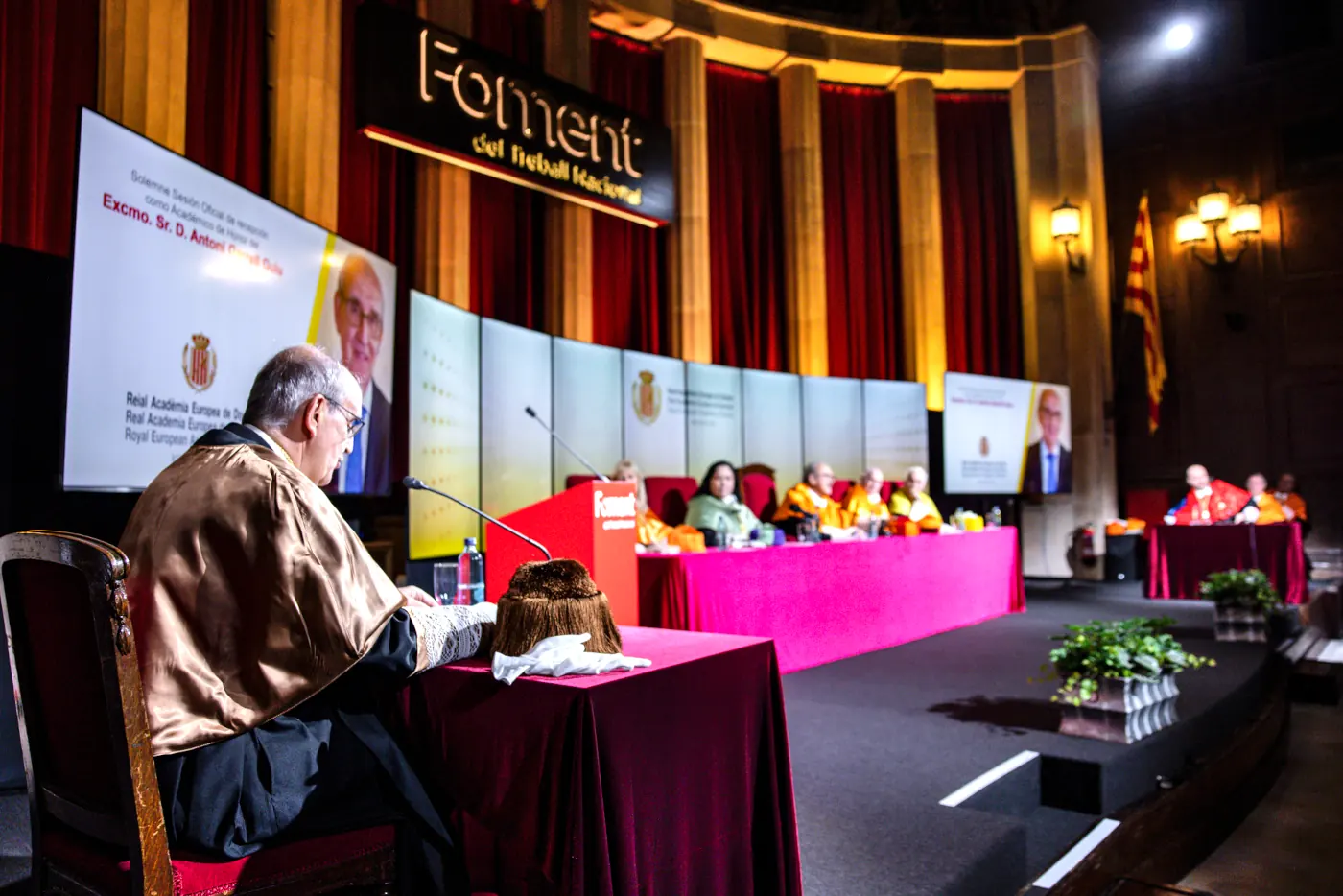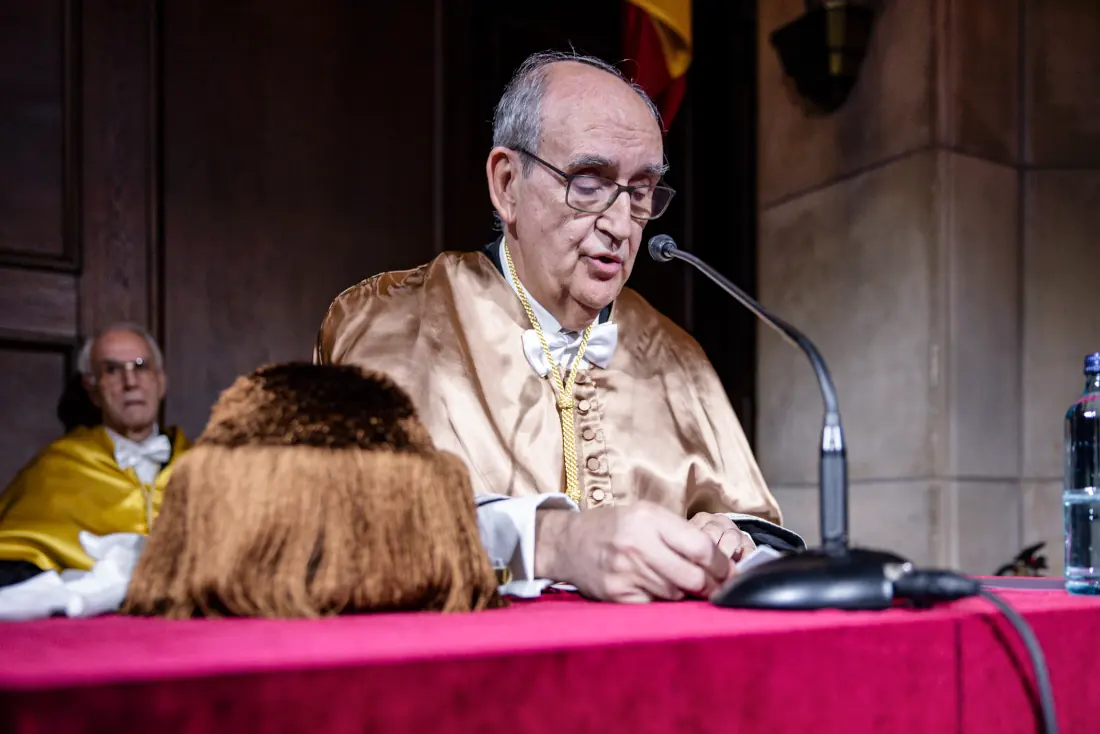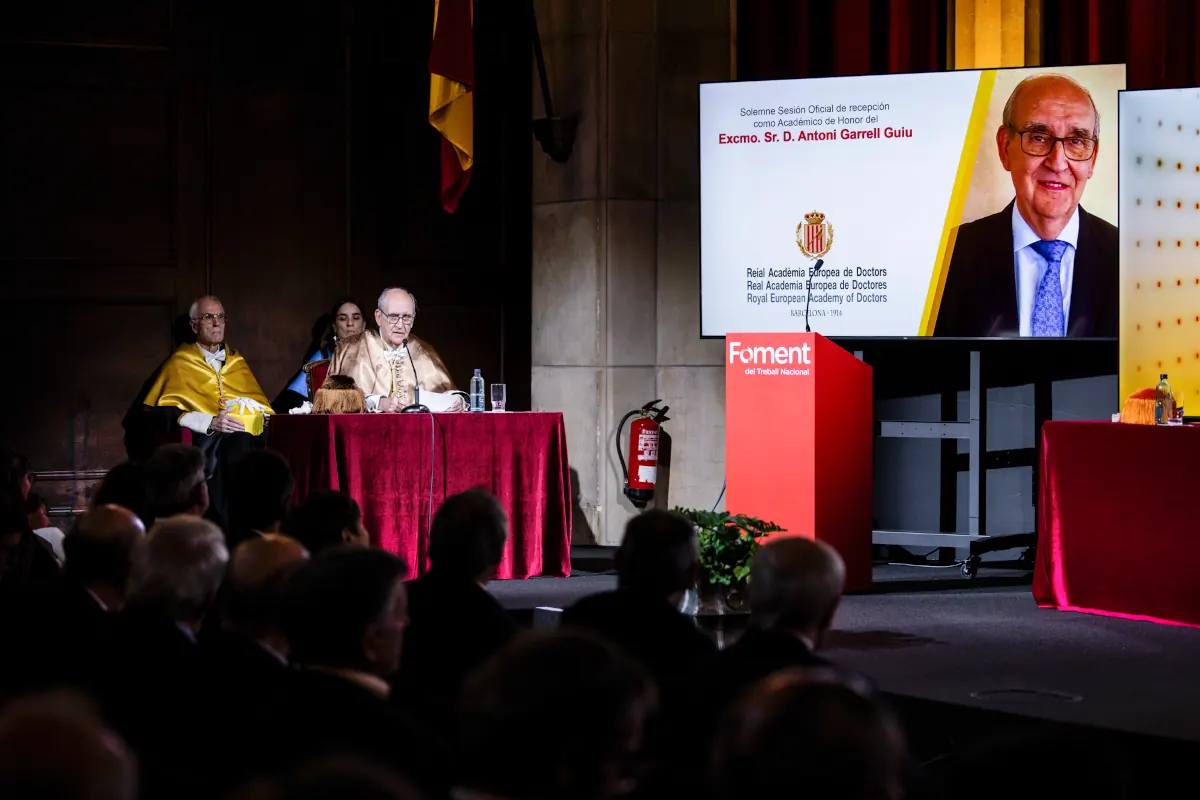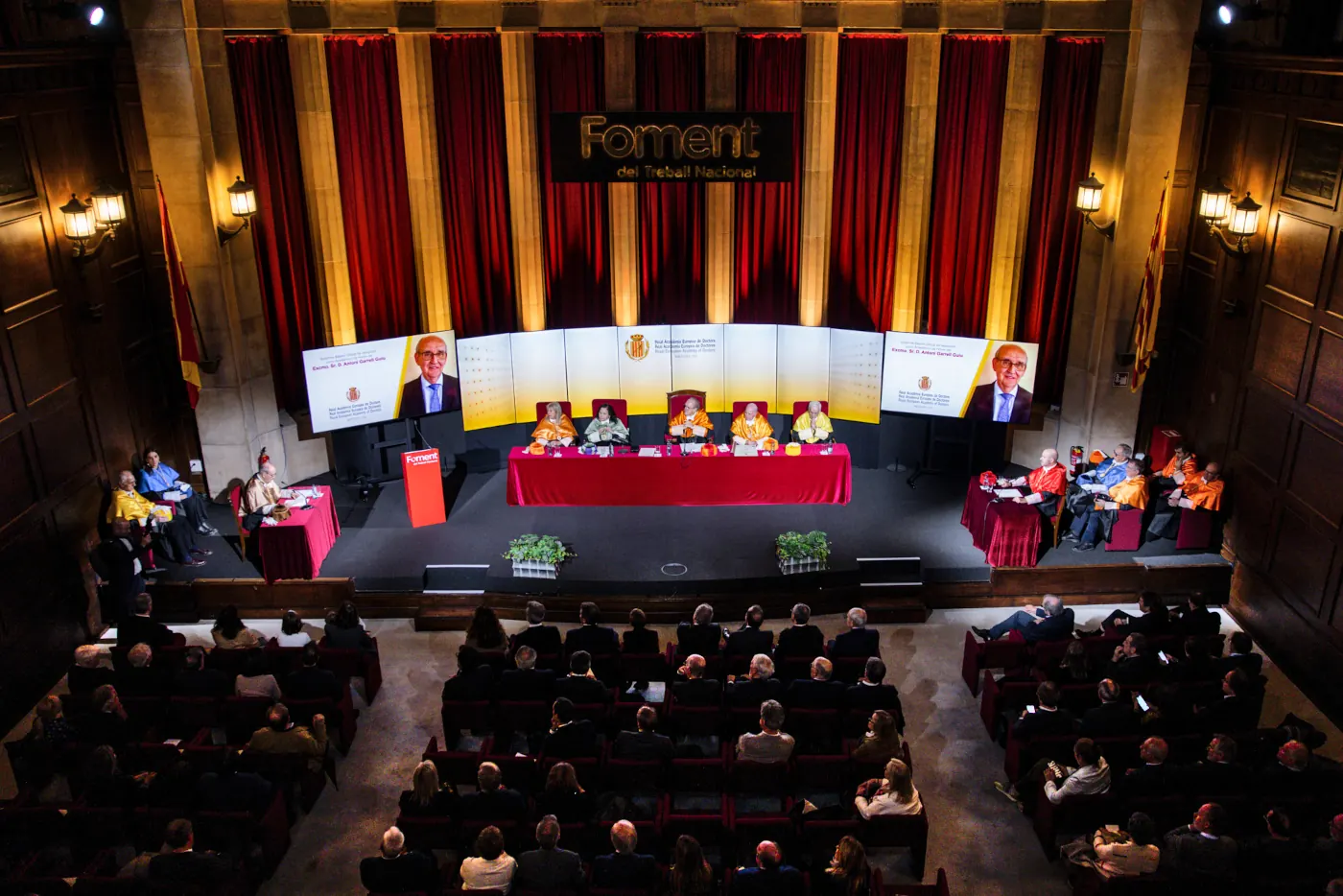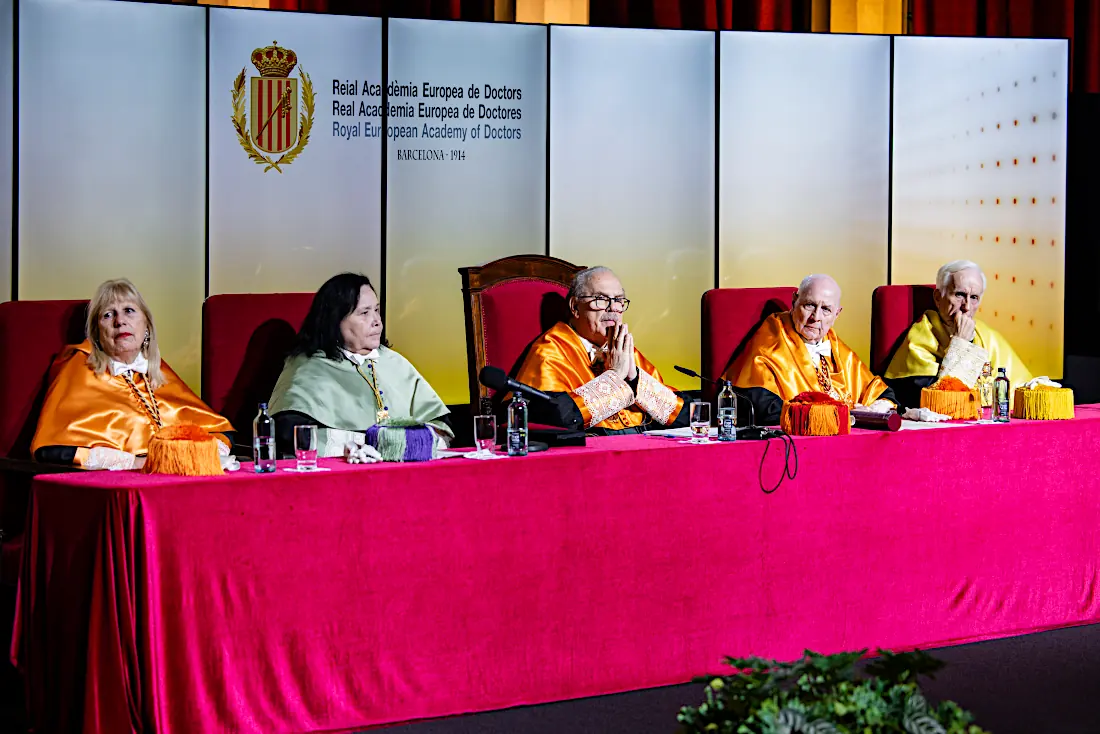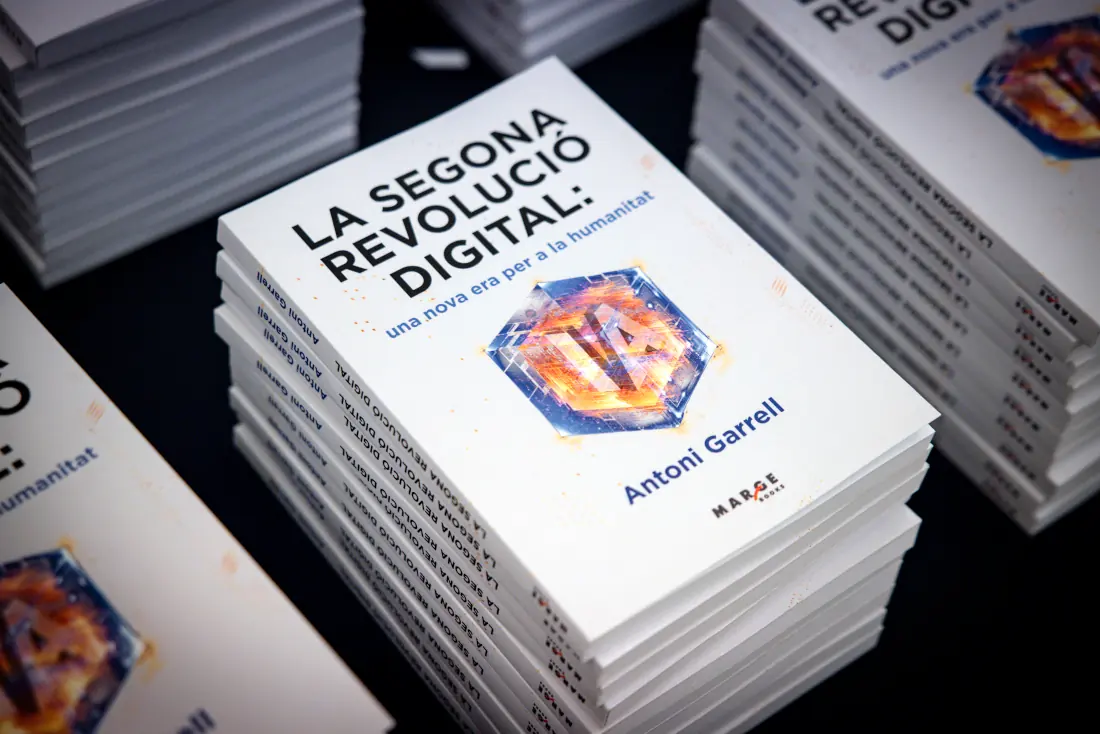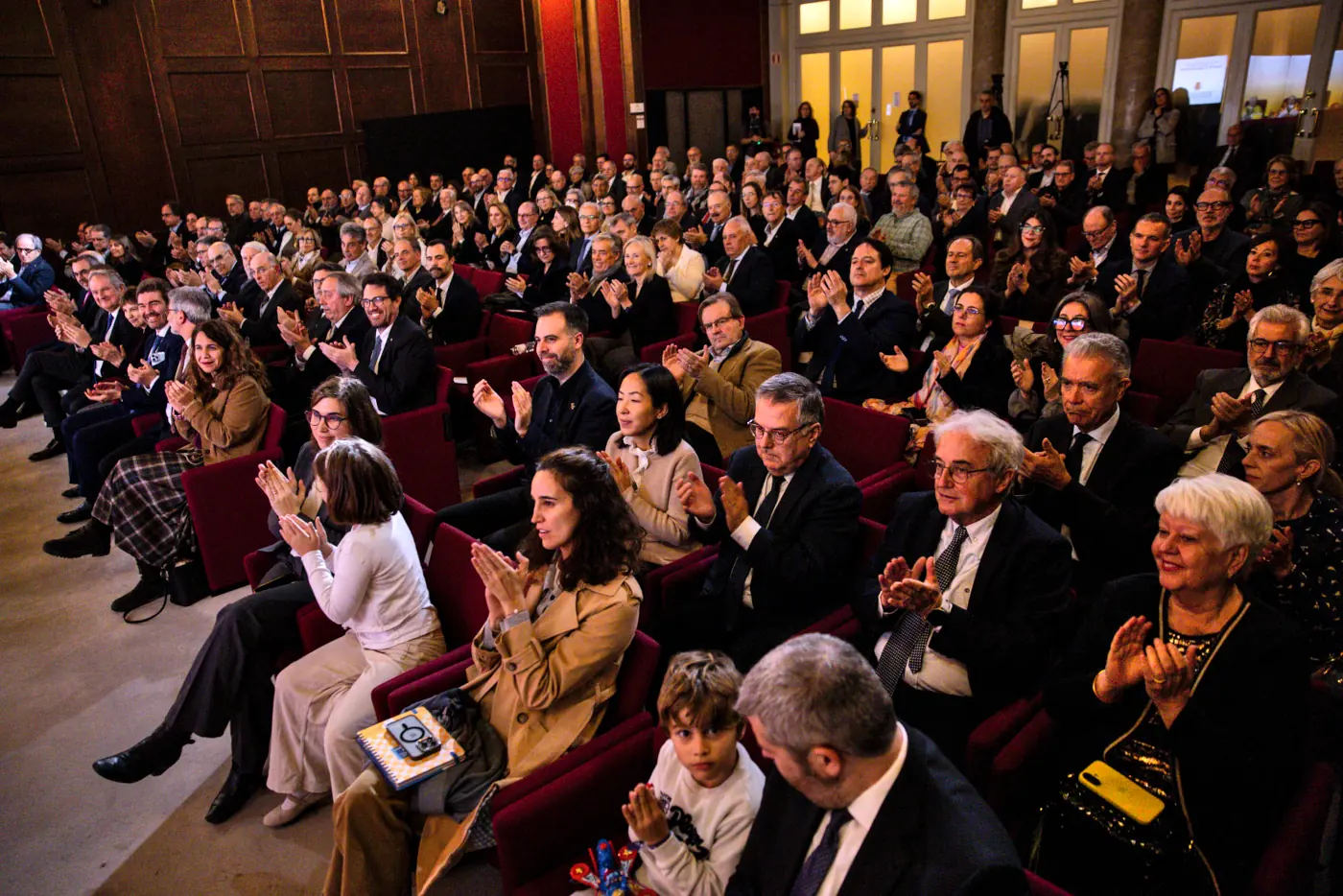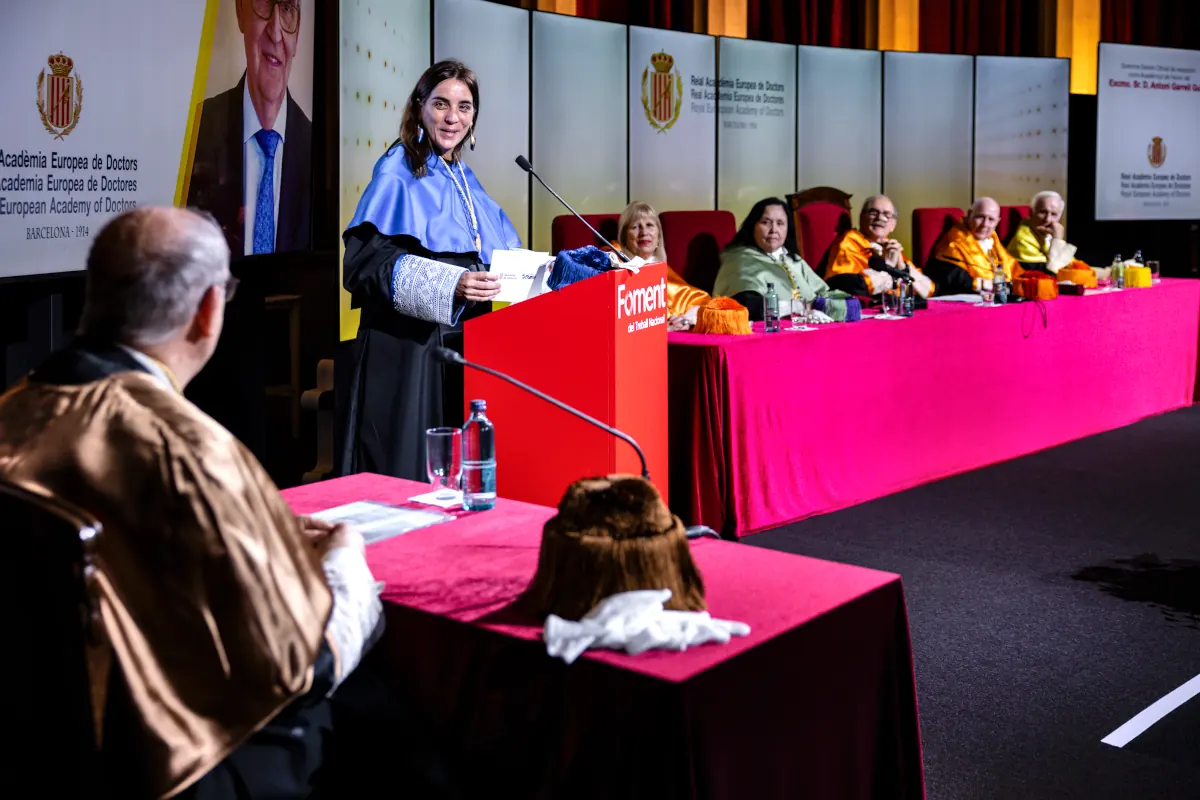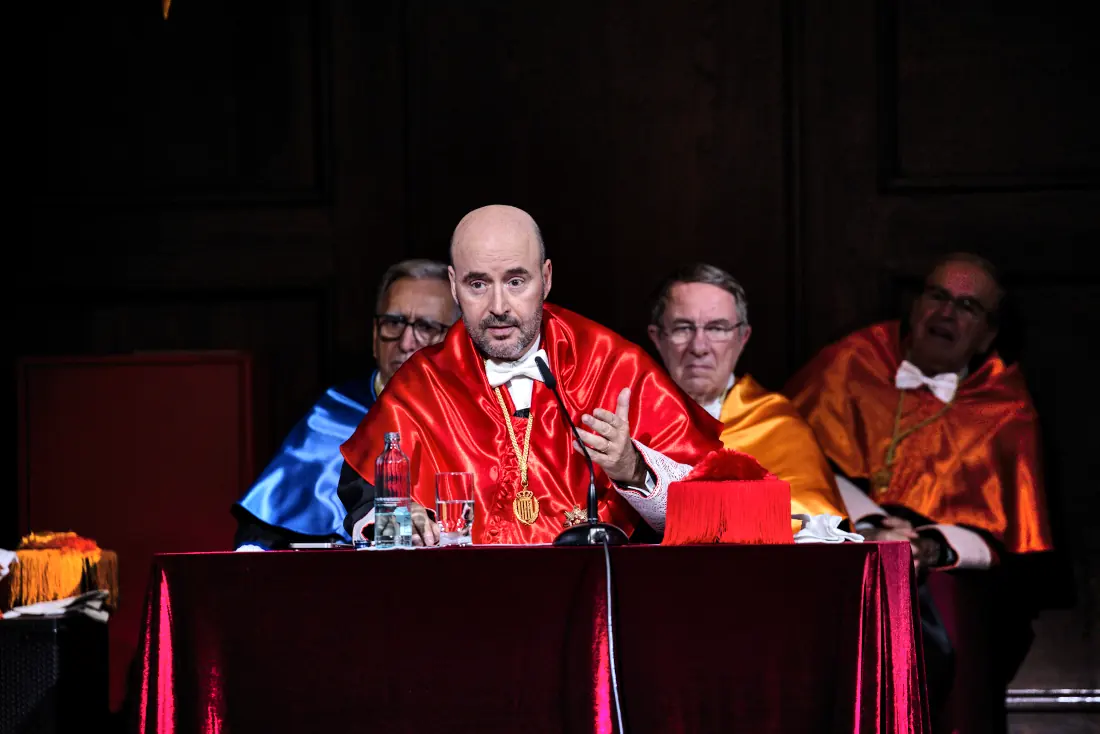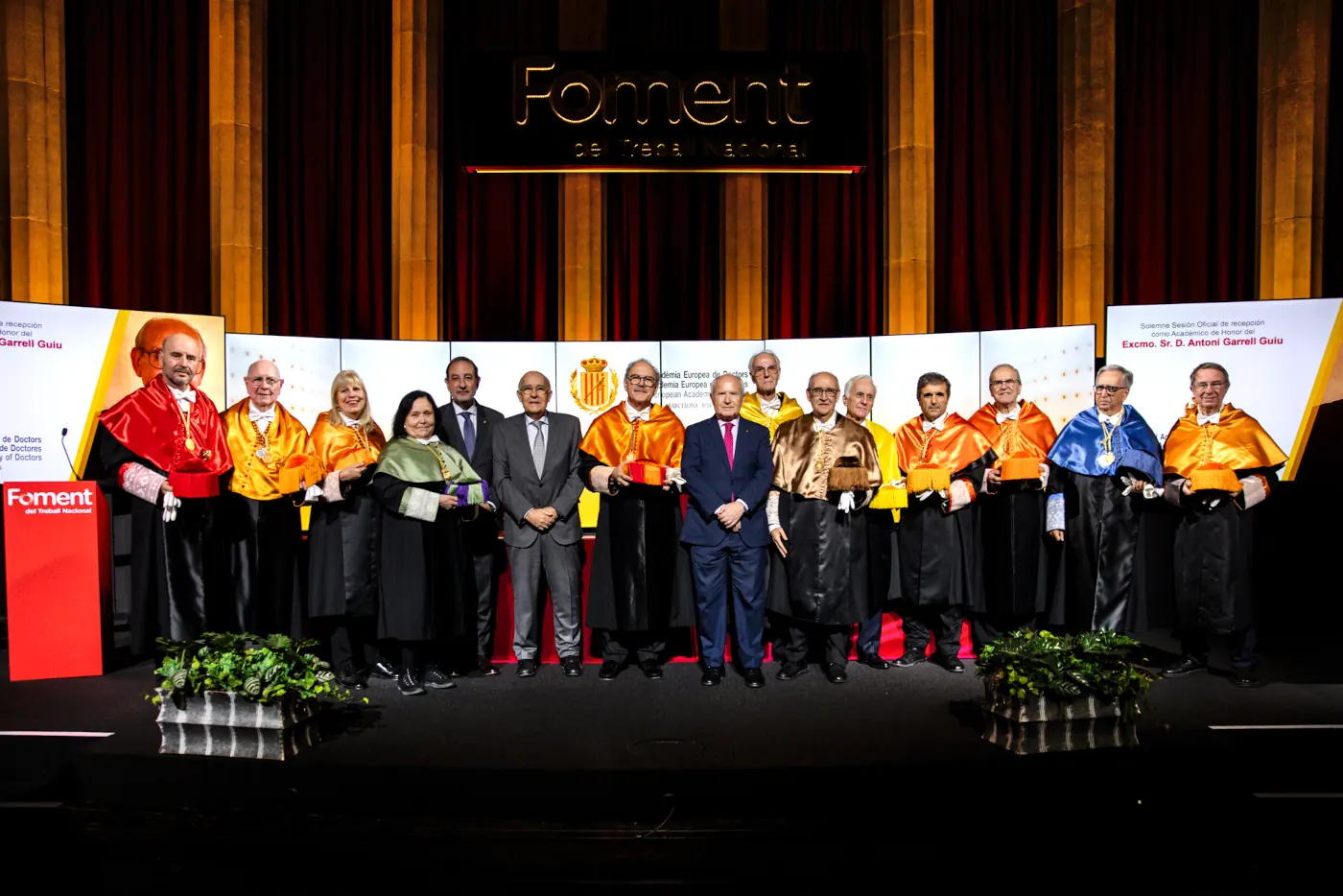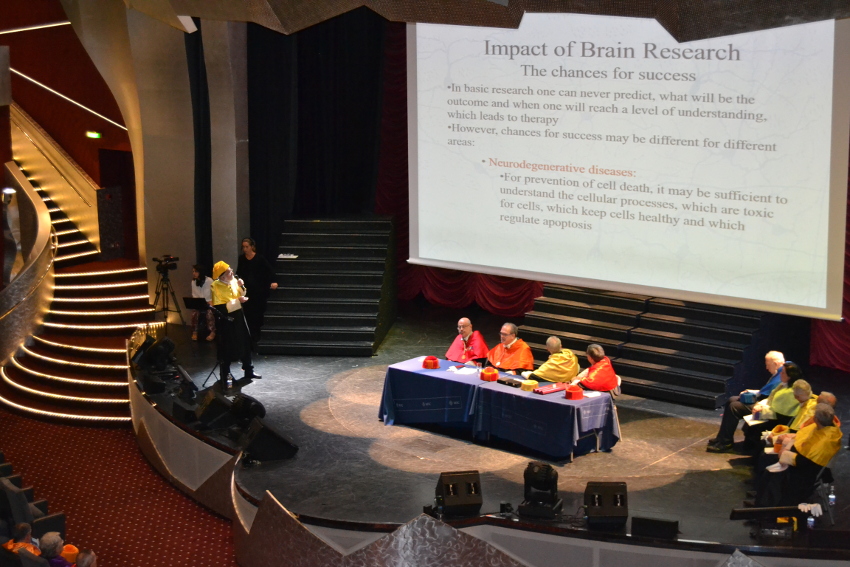



Antoni Garrell, President of HM Hospitales, was admitted as an Honorary Academician of the Royal European Academy of Doctors (READ) during a solemn ceremony held on Thursday, 20 November, at Fomento del Trabajo, the Academy’s headquarters. The recipient delivered his admission speech, “La segona revolució digital: L’economia digital i la intel·ligència artificial ens estan conduint a una nova era de la humanitat?” (The Second Digital Revolution: Are the Digital Economy and Artificial Intelligence Leading Us into a New Era of Humanity?), in which he reflected on the profound changes brought about by the transition toward a disruptive digital age, highlighting both the opportunities and challenges this entails in light of previous transformative revolutions such as the Neolithic, the Industrial and the Knowledge revolutions. He was welcomed on behalf of the Royal Corporation by Rodolfo Fernández-Cuellas, Numerary Academician.
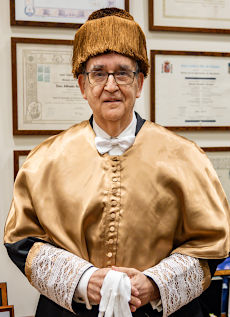
Mr. Antoni Garrell
The new Academician stressed the need to establish governance suited to these new times, grounded in principles such as transparency, digital ethics, sustainability and citizen participation. In his view, such governance must be global, inclusive and anchored in core human values—especially gender equality—in order to build a fair and sustainable future. For Garrell, new technologies, and artificial intelligence in particular, must serve as tools to enhance human talent and collective well-being, but their success will depend on political will, social responsibility and collaboration among all social actors.
In his analysis, the expert also addressed the implications of future self-aware artificial superintelligences, emphasising both their potential benefits—scientific advancement, the resolution of global problems and the promotion of a cooperation-based society—and their associated risks, such as domination, resource tensions, existential crises and ethical and legal questions concerning the rights of this technology and responsibility for potential harm. In this regard, he highlighted the importance of ethical and responsible governance to ensure that technological development remains aligned with human values and sustainability.
Regarding the impact that artificial intelligence will have across various fields, Garrell argued that in the social and labour spheres it is already transforming work models, leading to job displacement, increased inequalities and the emergence of new forms of collaboration such as hybrid work and intelligent robotics. Autonomous mobility, while enhancing safety and autonomy, also raises ethical and employment challenges. In education, he stressed the need to incorporate ethics, the humanities and the arts—alongside the exact sciences—into academic programmes to prepare students for an environment dominated by these new technological tools. “It is essential to train educators and adapt educational systems so that technology serves to strengthen creativity and critical thinking, avoiding a dependence on artificial intelligence that diminishes human cognitive and creative capacities,” he stated.
The expert concluded by affirming that technology itself, throughout history, is neither good nor bad, and that its impact depends on how it is used and regulated. At this point, he warned of already observable negative effects such as the manipulation of public opinion, the creation of substitute communities and the impact on mental health, especially among adolescents. He also noted that cybersecurity and the protection of personal data are global challenges requiring regulation, education and international cooperation. “Collective responsibility, ethics and governance will determine whether this new era leads to a future of progress, justice and sustainability, preventing inequality and social manipulation from limiting its potential. The greatness of humanity will define whether this transformation results in shared well-being or greater inequality,” he asserted.
Antoni Garrell is an industrial engineer from the Polytechnic University of Catalonia, holds a master’s degree in Management and Administration, and completed doctoral studies in Decision Support Systems. A specialist in innovation and the knowledge economy, he has built an extensive professional career in both computational technology and organisational and strategic management, holding executive positions in companies such as Arthur Andersen, La Caixa, the La Salle University and Technology Foundation and the Textile Design Foundation. Since 2021 he has been President of HM Hospitales. He has served on several corporate boards and advisory councils and has held institutional positions such as President of the Circle for Knowledge and of the Executive Council of the Ramon Llull University Foundation. In the academic sphere, he has taught and lectured at international universities and is the author of more than 850 articles on technical, economic and opinion topics, as well as author or co-author of around ten monographs on digital technology, multimedia and industry. He was also the founder of the technology magazine “INPUT”. His two most recent books are “La industria 4.0 en la sociedad digital” (2019) and “Productos y servicios inteligentes y sostenibles” (2021).
Speech “La segona revolució digital: L’economia digital i la intel·ligència artificial ens estan conduint a una nova era de la humanitat?”