

Dr. Joaquín Callabed
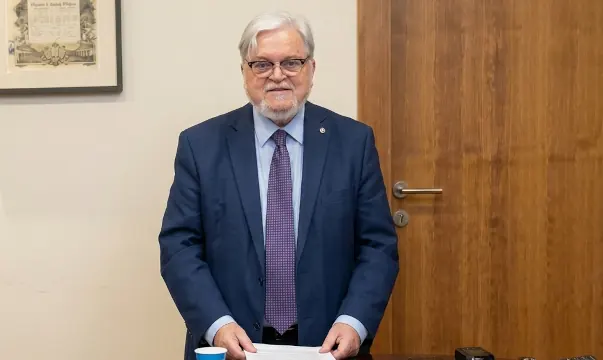
Joaquín Callabed, President of the Social Pediatrics Club, Corresponding Member of the Royal Academy of Medicine of Catalonia and the Royal Academy of Pharmacy of Catalonia, and Numerary Member and Vice-President of the Health Sciences Section of the Royal European Academy of Doctors (READ), continues his work in disseminating the life and legacy of the legendary Aragonese scientist Santiago Ramón y Cajal, Nobel Prize in Physiology or Medicine in 1906. He addressed this topic in the lecture “Santiago Ramón y Cajal. His Decisive Years in Barcelona (1887–1892)”, delivered on 11 February at the Royal Academy of Pharmacy of Catalonia, as well as in the articles “‘The Tonics of the Will’ by Ramón y Cajal,” “Ramón y Cajal’s Disciples in Barcelona” and “The Humanistic Traits of Ramón y Cajal,” published between January and February in the “Expert Readers” section of the digital edition of “La Vanguardia,” where he is an active contributor. Callabed also participated on 24 March in the session “Ramón y Cajal: Scientific and Artistic Creation” held at the Ateneo de Madrid alongside other distinguished experts.
In his lecture at the Academy of Pharmacy, the academic explored Ramón y Cajal’s period in Barcelona as a decisive stage in the consolidation of his scientific career. After arriving as a university professor, the researcher faced a resource-limited academic environment, which forced him to conduct his work with scarce means and strong personal initiative. Despite these difficulties, Ramón y Cajal devoted long hours to studying the nervous system under the microscope, refining his techniques through persistent observation. Although his research initially went largely unnoticed by the scientific community, this period laid the foundations for the discoveries that would later earn him international recognition.
In the article “‘The Tonics of the Will’ by Ramón y Cajal,” Callabed emphasises the perseverance and determination that defined the scientist’s trajectory, referring to one of his lesser-known works, “Rules and Advice on Scientific Research,” a guide for researchers and students focused on ethics, discipline and the cultivation of rigour and willpower necessary for scientific success, based on his own experience as a pioneer of neuroscience. “The book originated from his inaugural address at the Royal Academy of Exact, Physical and Natural Sciences and exalts curiosity, perseverance and passion for science as true tonics for the mind. Its purpose was to train young scientists, instilling the importance of method, ethics and perseverance,” he explains.
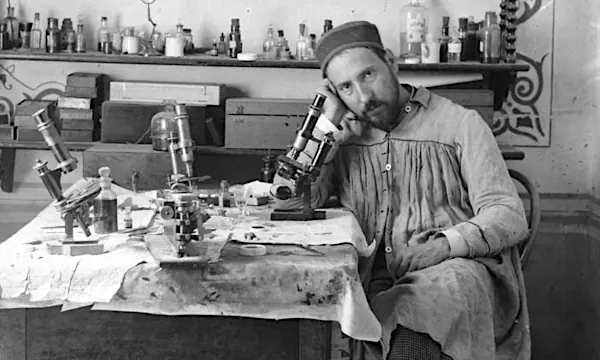
Santiago Ramón y Cajal
In “Ramón y Cajal’s Disciples in Barcelona,” the expert revisits the decisive period between 1887 and 1892, when the future Nobel laureate served as Professor of Histology at the University of Barcelona, laying the foundations of neuron theory and modern neuroanatomy with the support of young students. “Among the professors who shared experiences with Santiago Ramón y Cajal were Jaime Pi Sunyer, Professor of General Pathology; Ignacio Valentí, of Surgery; and Rafael Rodríguez Méndez, of Hygiene, all of whom supported laboratory research. There was also Bartolomé Robert Yarzábal, Professor of Medical Pathology, who later became Mayor of Barcelona. Others included Joaquín Bonet, who became rector, and Juan Giné y Partagás, promoter in 1886 of the Medical Institute of Barcelona.”
Finally, in “The Humanistic Traits of Ramón y Cajal,” Callabed reviews the scientist’s dedication to diverse fields such as reading, writing, drawing, philosophy, photography and even gymnastics—disciplines cultivated from his youth in Aragón. “Wilder Penfield, the great American neuroscientist, said of Ramón y Cajal: ‘He was a multifaceted genius driven by that mysterious whisper that reaches the few chosen by God, pushing them ever forward to explore beyond existing knowledge, without rest and without reward other than knowing they have entered the promised land of discovery,’” he concludes, summarising these multiple facets through this evocative quotation.