


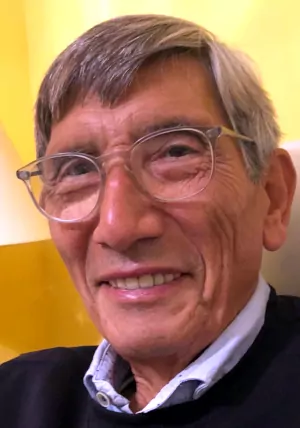
Enric Canela
Enric Canela, Emeritus Professor of Biochemistry and Molecular Biology at the University of Barcelona and collaborator of the Royal European Academy of Doctors (READ), shares with the academic community the latest articles he has published on his blog, enriccanela.cat, an outreach platform devoted to health and wellbeing, together with his most recent pieces in the digital newspaper El Matí, the newspaper “El Punt-Avui” and the specialist portal 7Ciències, where he focuses on education and research. Specifically, these are the posts “ADHD Is Thinking Differently” and “Eating Is Not Always Nourishing Oneself”, and the articles “The Myth of Sugar and Hyperactivity”, “Alternative Protein: An Industrial Opportunity” and “Municipal Neglect”, published between February and March.
In “ADHD Is Thinking Differently”, the expert addresses attention deficit hyperactivity disorder (ADHD) as a brain development condition that affects how a person regulates attention, impulsivity and, in some cases, the level of motor activity. It is not a disease in the classical sense, but rather a different way of functioning that can create difficulties in organising oneself, planning, sustaining attention, and controlling behaviour, he notes. “This different mode of functioning may manifest itself with varying intensities and in different ways. Diagnosis is clinical and is based on standardised criteria, systematic observation and the assessment of persistent interference in academic, social or work settings, given that there is no specific biological marker whatsoever,” he explains.
Moreover, in “Eating Is Not Always Nourishing Oneself”, Canela draws the distinction between eating and nourishing oneself. In the first case, the concept refers to ingesting food and sufficient calories; nourishing oneself, by contrast, means obtaining the essential nutrients the body needs to function properly. “The evolution of the food system has reduced the number of people who go hungry or fail to meet minimum caloric requirements. However, among those who consume enough calories, the proportion with nutritional deficiencies has increased. In other words, people eat more, but their bodies are nourished less effectively. This phenomenon is known as overnutrition-related malnutrition: a situation in which caloric intake is high, but the nutritional quality of the diet is insufficient,” he says by way of introducing a subject that has become one of the challenges faced by developed societies.
 In “The Myth of Sugar and Hyperactivity”, the researcher debunks the commonly assumed connection between sugar consumption and physical performance or even its alleged role in the development of attention deficit hyperactivity disorder (ADHD). “Sugar does not create hyperactivity. Rather, it is children, and also adults, with hyposensitive reward systems, who seek compensation, or hypersensitive ones, who seek intense immediate reinforcement, who tend to seek out sweets. In neither case does sugar appear to be the primary cause of the observed behavioural pattern,” he states, providing scientific data that support this thesis.
In “El Punt-Avui,” Canela devotes “Alternative Protein: An Industrial Opportunity” to outlining the limits of the agri-food system in terms of its viability with regard to resources, costs, and long-term competitiveness, and points to realistic alternatives focused on Catalan society and industry. “Alternative proteins, whether plant-based, derived from insects, algae, fungi or produced by microorganisms, represent an emerging industrial opportunity. Catalonia is now one of the leading agri-food platforms in southern Europe in applied, market-oriented innovation, with national leadership and export capacity. However, it still ranks one step below the leading European clusters in scientific density and patents in the alternative protein sector. According to a recent report by Acció, Catalonia has 103 companies in the field of alternative protein, mostly focused on plant protein and, to a lesser extent, on ingredients derived from algae,” he notes.
Finally, in “Municipal Neglect,” the READ collaborator shifts his focus to emphasise the special attention that municipal authorities, as the level of administration closest to citizens, must devote to protecting them in their most immediate sphere of interaction, such as the public spaces where they move. “Poorly considered or insufficiently assessed actions are often carried out in cities, and these can have disastrous consequences. Surely, those who make these decisions would not do so if they were aware of the consequences of deficient information or a lack of prior analysis, and it must also be added that, for various reasons, essential maintenance in public spaces is often neglected,” he concludes.