

Dr Albert Estrada
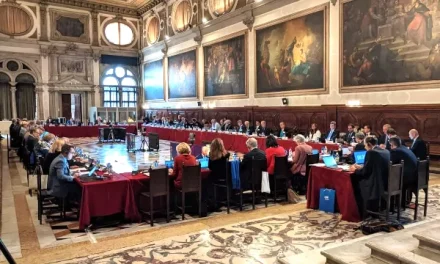
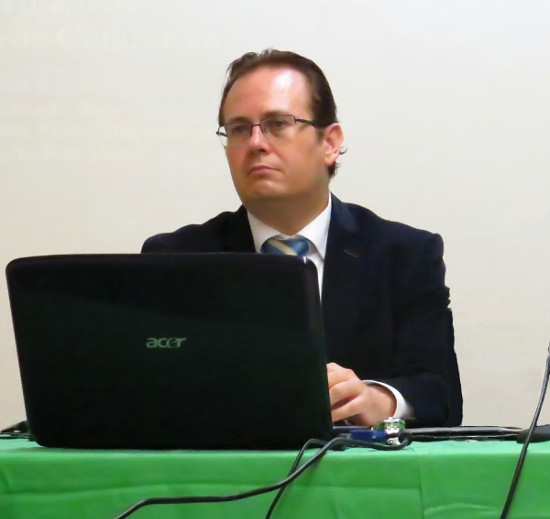
Albert Estrada, Chief Curator of the Gabinete Numismático de Cataluña, member of the Board of Directors of the Sociedad Iberoamericana de Estudios Numismáticos, Honorary Consul General of Slovenia in Barcelona, and full academician of the Royal European Academy of Doctors (READ), coordinated the 27th Course on Hispanic Monetary History, which this year bore the title «The Issuance of Coinage in the Middle Ages: From Thought to Circulation». The sessions were held on December 10 in the Sala Sert of the Museo Nacional de Arte de Cataluña and took place in an in-person format.
«The aim of the course was to highlight some of the key moments in the long process of coin issuance during the Middle Ages and to examine a number of specific cases. First, one must delve into the prevailing ideas about what constituted a good and just coin. This was therefore the domain of jurists and theologians close to the prince, who also had to define, by contrast, what was considered bad or abusive coinage. The position of the ruler was likewise addressed, since minting coinage required securing material resources. Mining and trade were the two principal sources of precious metal at the time. It is also necessary to analyze the material process involved in organizing coin production and its legislative and administrative planning. Finally, one must take into account the qualified testimony of merchants regarding the actual use of money through their account books, as well as numismatic and archaeological evidence, which bring us closer to understanding real monetary circulation», the academician explained in the course presentation.
 Participants in the sessions included Paolo Evangelisti, researcher at the Universidad de Barcelona and the Universidad de Trieste, who examined the figure of the Franciscan friar Francesc Eiximenis and the role of coinage in his political thought; Íñigo Mugueta, professor at the Universidad Pública de Navarra, who presented the paper «Mining Resources and Coin Minting in Medieval Navarre»; Tomàs de Montagut, member of the Real Academia de Buenas Letras de Barcelona and the Instituto de Estudios Catalanes, who spoke on the role of the maestro racional in controlling royal coin issues in the Crown of Aragon; Roser Salicrú, from the Institución Milà i Fontanals de Investigación en Humanidades of the Consejo Superior de Investigaciones Científicas and the Institute of Catalan Studies, who presented «Trade, Merchants’ Manuals, and Coinage in the Medieval Mediterranean»; and Miquel Sánchez Signes, from the Department of Historical Heritage and Archaeology of the Ayuntamiento de Llíria, who presented his research on monetary circulation and hoarding in medieval Valencia. Estrada himself also contributed by introducing the process of coin production, illustrating it with examples from the medieval mint of Barcelona.
The academician also heads the Seminar on the Monetary History of the Crown of Aragon, held annually at the National Museum of Art of Catalonia, as well as the course «The Metal of Coinage: Manufacture, Alloy Characterization, and Conservation–Restoration», an activity with a strong outreach focus. Estrada joined the READ as a corresponding academician in 2026 with the address «Overseas Consuls and Barcelona», highlighting the city’s importance in diplomacy throughout history, and in 2024 as a full academician with «The Prize Medal in Advertising: Major Exhibitions, Brands, and Propaganda in Catalonia (1888–1929)», a comprehensive study on the prominence of medals in exhibitions and the incorporation of industrial awards into the commercial imagery of companies.