

Frigdiano Álvaro Durántez, director of the Chair of Ibero-American and Iberophony Studies at the Ibero-American University Foundation and a collaborator of the Royal European Academy of Doctors (RAED), was one of the leading participants in the first edition of the Summer School organised by the Athena Foundation, held from 26 to 29 June in the Cantabrian municipality of Comillas. The event brought together renowned jurists, economists, academics, intellectuals and analysts under the theme “Rebuilding Democracy and Restoring Trust in Spain”. The sessions also featured Teresa Freixes, Jean Monnet professor ad personam, president of the international organisation Citizens pro Europe, vice-president of the civic platform Catalan Civil Society, and full member and vice-president of the RAED’s Governing Board, who delivered the closing lecture. Other speakers included such prominent figures as Francesc de Carreras, Jon Juaristi, Fernando Savater, Míriam Tey, Félix Ovejero, José Ramón Bauzá and Iván Espinosa de los Monteros, among others.
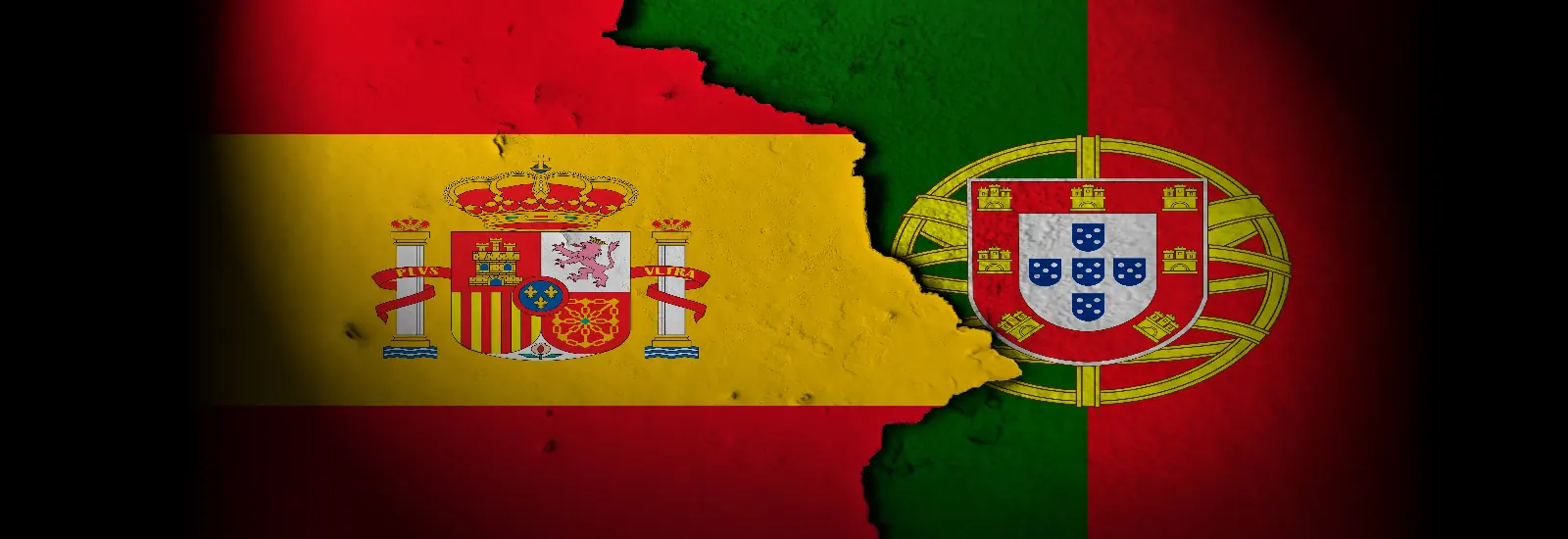
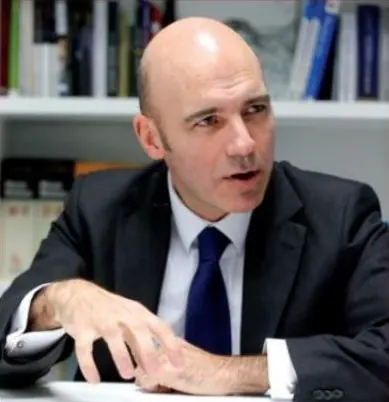 Durántez presented the paper “Iberophony as an Axis of Spanish Foreign Policy: The Pan-Iberian Space”, in which he outlined the context of Iberophony as a major global linguistic and cultural sphere and described the work undertaken by the Chair of Ibero-American and Iberophony Studies to advance its understanding and promotion. He explained that this broad sphere comprises 30 Spanish- and Portuguese-speaking countries and encompasses 900 million people across the Americas, Europe, Africa and Asia, making it one of the largest linguistic and cultural spaces on the planet. Durántez explained that this space is founded on Spanish and Portuguese, two languages with a strong common historical and linguistic basis and the highest level of mutual intelligibility among the world’s principal international languages. Their combination forms the world’s largest geolinguistic bloc when both the number of native speakers and their official status in the international system are taken into account. Beyond the number of speakers, their significance lies in the official presence of both languages in some thirty countries and in the principal multilateral organisations.
From this perspective, the expert stressed that Iberophony broadens the traditional concept of Ibero-America by fully incorporating the Iberophone countries of Africa and Asia, thereby strengthening a sphere of cooperation capable of promoting joint initiatives in higher education, science, culture, economics, diplomacy and development. He also reflected on the expression “historical community” contained in Article 56.1 of the Spanish Constitution, which assigns the King the State’s highest representation in international relations with the nations belonging to that community. From this starting point, he reviewed the historical evolution of the concept, from the creation of the Ibero-American Community to the consolidation of Iberophony as an intercontinental reality. Within this framework, he argued that the Pan-Iberian space offers an ideal platform for strengthening cooperation among Spanish- and Portuguese-speaking states, enabling their political, economic, scientific and cultural capacities to be coordinated more broadly in an international environment marked by growing interdependence.
The collaborator of the Royal Academy also discussed the concept of Iberophony on Radio Intereconomía. “What we may figuratively call the Iberian world, the Pan-Iberian space or, in a more academic expression, Iberophony, is that multinational sphere made up of Spanish- and Portuguese-speaking countries on every continent, without geographical exceptions. We are speaking of thirty countries across all the world’s continents and regions and, at present, 900 million people. That represents one tenth of the world’s population, one fifth of the planet’s land surface and the world’s leading geolinguistic bloc. Why do we integrate or combine the Spanish and Portuguese languages? Because they are precisely the only two major international languages—major in quantitative terms, each spoken by more than 100 million people across several continents and several countries—that are, at the same time and in general terms, mutually intelligible. This natural mutual comprehension between two major languages of this kind occurs in no other case,” he told journalist Rafael Jiménez.