

Dr. Ignacio Buqueras
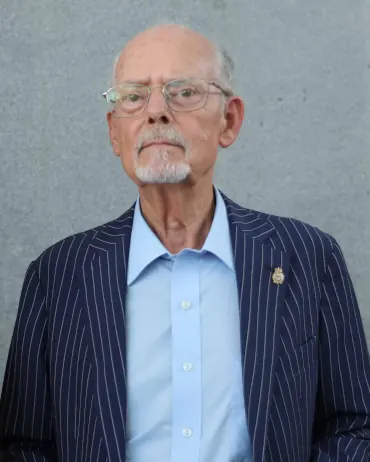
Ignacio Buqueras, President of the Adiprope Foundation for the Dissemination and Promotion of Spain’s World Heritage, Honorary President of the Spanish Confederation of Senior Citizens’ Organisations, Numerary Member of the Royal Academy of Doctors of Spain and Emeritus Member of the Royal European Academy of Doctors (RAED), shares with the academic community the article “Gaudí in Madrid”, in which he discusses the heritage significance of the work of the renowned Catalan architect and the events recently promoted to recognise the international dimension of his figure.
Gaudí in Madrid
Gaudí and Popes Francis and Leo XIV
Antoni Gaudí is the only architect in world history to have had seven of his buildings designated as World Heritage Sites by UNESCO: Park Güell, Palau Güell and Casa Milà in Barcelona, inscribed in 1984; and, in 2005, Casa Vicens, the Nativity façade and crypt of the Sagrada Família, Casa Batlló and the crypt of the Colònia Güell. Gaudí is one of the most important geniuses of European culture, with a strong international profile. His creative, innovative and meticulously designed constructions bring us closer to nature and speak to us, inspire us and invite us to reflect on Gospel values. Gaudí devoted the final years of his life entirely to the construction of the Sagrada Família, which became his home in November 1925.
Pope Leo XIV undertook a historic apostolic visit to Spain, during which he visited the Sagrada Família to inaugurate the Tower of Jesus Christ, the tallest tower in both the basilica and the world. It is half a metre lower than Montjuïc hill. Gaudí did not wish the work of humankind to surpass that of nature. The tower is crowned by a large four-armed cross measuring 17 metres in height and 13.5 metres in width.
It should be recalled that Pope Francis, on 14 April 2025, seven days before his death, signed the decree recognising the heroic virtues of Antoni Gaudí, thereby initiating the process towards his beatification. Gaudí is regarded as God’s architect because of his work on the design and construction of the Sagrada Família. The step taken by Pope Francis is the first on the long, complex and difficult path towards his possible declaration as a saint.
Series of eight round tables commemorating the centenary of Antoni Gaudí’s death
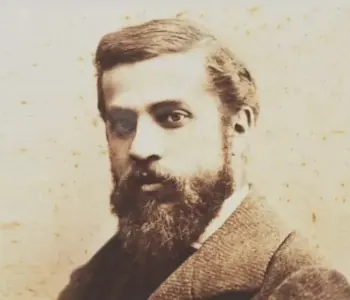
Antoni Gaudí
The Adiprope Foundation’s principal objectives are to improve knowledge, conservation, appreciation, dissemination and promotion of Spain’s World Heritage. In view of the celebration of the International Gaudí Year, commemorating the centenary of his death, it agreed to promote and organise a series of eight round tables on his life, his extraordinary work and his powerful international influence. A significant precedent for this series was the programme of six round tables organised in Madrid in 2002 by the Independent Foundation, which I chaired, to mark the 150th anniversary of Gaudí’s birth.
The series was presented with significant public visibility at Casa Botines, a work by Gaudí in León; the Royal Casino of Madrid; the Centre de Lectura de Reus; and the Royal European Academy of Doctors. The round tables were held at Camilo José Cela University, the Círculo Catalán de Madrid, the Official College of Architects of Madrid, CaixaForum Madrid, the Ateneo de Madrid, the Círculo de Bellas Artes, the Spanish Episcopal Conference and San Pablo-CEU University, in collaboration with the Royal Academy of Doctors of Spain.
These eight round tables will be followed by two important events assessing the conclusions of the series. The first will take place in Madrid, at the Royal Academy of Fine Arts of San Fernando, on 16 June, and the second in Barcelona, at the Círculo Ecuestre, on 28 June. In July, the Adiprope Foundation will publish an important book bringing together the four presentation events, the eight round tables and the two concluding assessments.