

Maria Àngels Calvo, Professor at the Faculty of Veterinary Medicine of the Autonomous University of Barcelona, President of the Academy of Veterinary Sciences of Catalonia, Numerary Member of the Royal Academy of Medicine of Catalonia and of the Royal Academy of Pharmacy of Catalonia, and Numerary Member and Vice-President of the Royal European Academy of Doctors (READ), reflects on the danger of the latest hantavirus outbreak that has affected a cruise ship, as well as on the risk of new zoonoses, in an extensive scientific article published through the channels of the World Federation of Catholic Medical Associations and during her appearance, on 7 May, on the television programme “Tot es mou”, broadcast by TV3 and the 3CAT platform. The expert has also published an article in issue 68 of the specialist journal “IM Veterinaria”, corresponding to the March-April 2026 period, in which she explains the work of the One Health Commission of the Council of Veterinary Colleges of Catalonia as a body that promotes this health approach within the veterinary field.
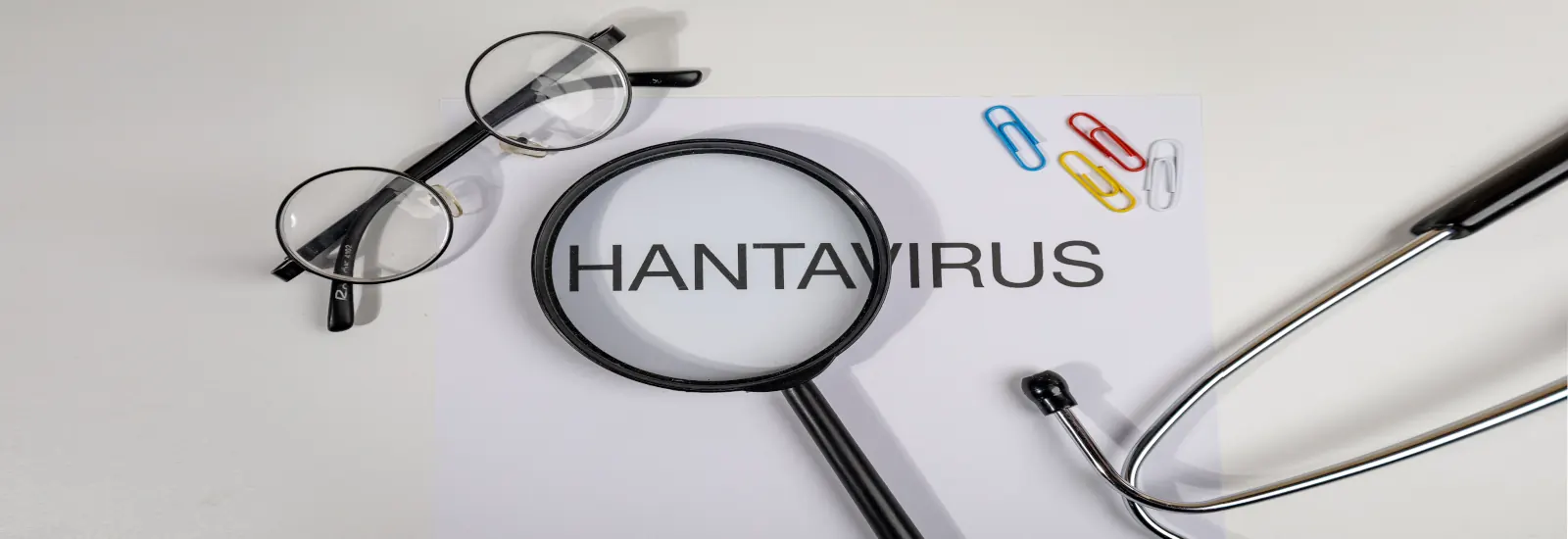
In her first article, the expert explained that the hantavirus outbreak linked to the cruise ship “Hondius” has alerted international health authorities and reopened the debate on the threats posed by zoonoses in a hyperconnected world, revealing the health vulnerability derived from global mobility despite the experience of the Covid pandemic. The Andes variant, endemic to South America and historically associated with outbreaks in Argentina and Chile, is transmitted mainly by wild rodents, and its particularity is that it is the only known hantavirus species with limited capacity for human-to-human transmission, the academic explained. So far, the authorities have reported eight cases linked to the cruise ship, with three deaths and five laboratory-confirmed cases. This led the Director-General of the World Health Organization, Tedros Adhanom Ghebreyesus, to describe the episode as a serious incident, although the overall risk to public health is very low.
Calvo added that the disease associated with this viral infection, hantavirus cardiopulmonary syndrome, presents with acute respiratory failure, pulmonary oedema and cardiovascular involvement. Its fatality rate ranges between 30% and 40%, depending on access to intensive care. There is no specific antiviral treatment or vaccine for general use, which makes prevention essential. For this reason, the expert warned of the need to strengthen global epidemiological surveillance, scientific cooperation, and research on zoonotic pathogens. “In an increasingly interconnected planet, episodes such as this remind us that diseases once considered local can quickly become foci of international attention,” she stated.
For her part, on “Tot es mou”, Calvo emphasised the real risk posed by zoonoses and the globalisation of these infections, which originate in endemic areas of the pathogens and, within days or even hours, spread across all continents, as well as the unpredictable nature of contagion. In this specific case, it was considered that transmission would occur between people in very close contact, although this cruise ship case has shown that simple coexistence can already pose an infection risk. As regards the publication in “IM Veterinaria”, the Vice-President of the READ highlighted the essential role played by the veterinary profession in the prevention and surveillance of zoonoses, food safety, food health control, animal welfare and the monitoring of antimicrobial resistance, as well as its role as a fundamental link between animal, human and environmental health. To consolidate this approach, she called for integrating the One Health concept into public policies, establishing permanent intersectoral structures, strengthening interdisciplinary training, and developing shared information systems capable of anticipating risks.
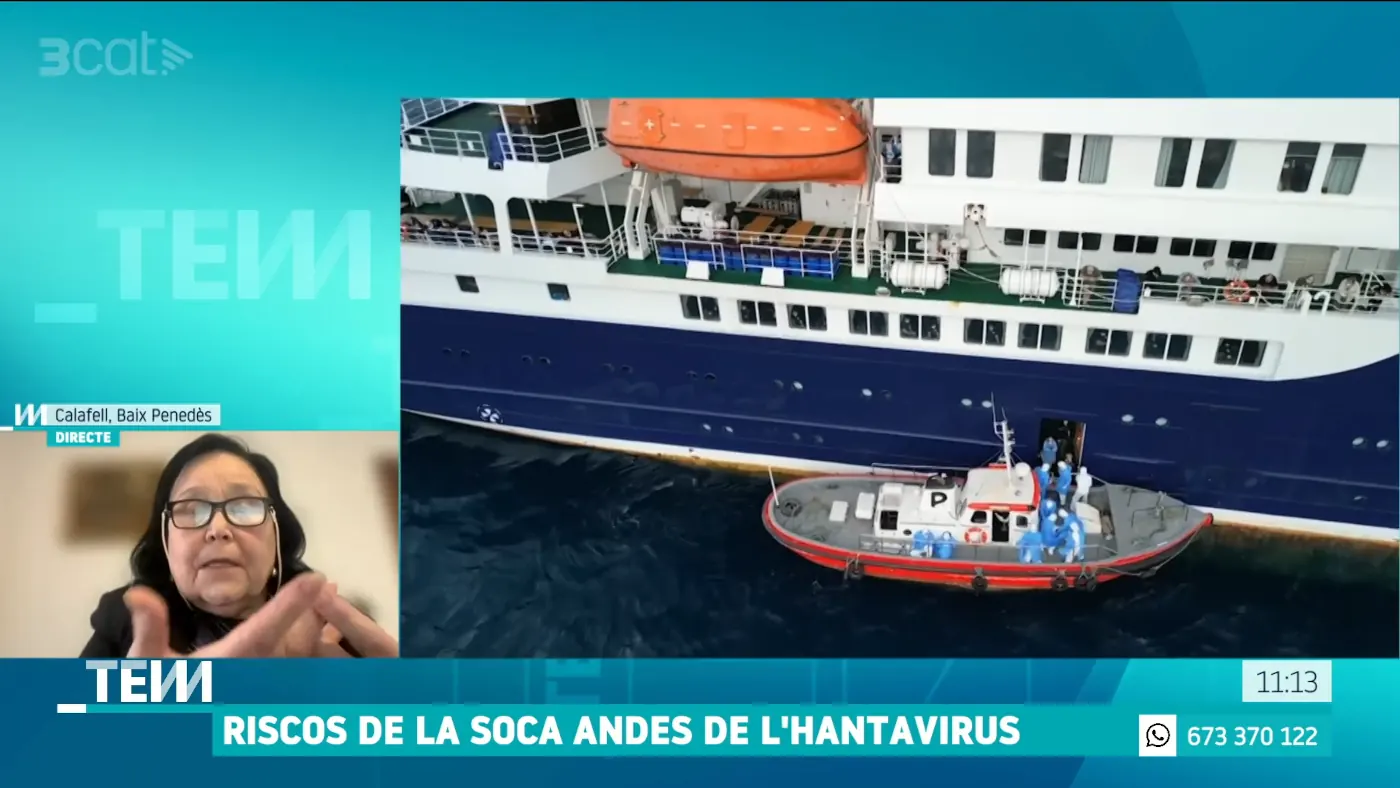
Maria Àngels Calvo during her appearance on “Tot es mou”, broadcast by TV3