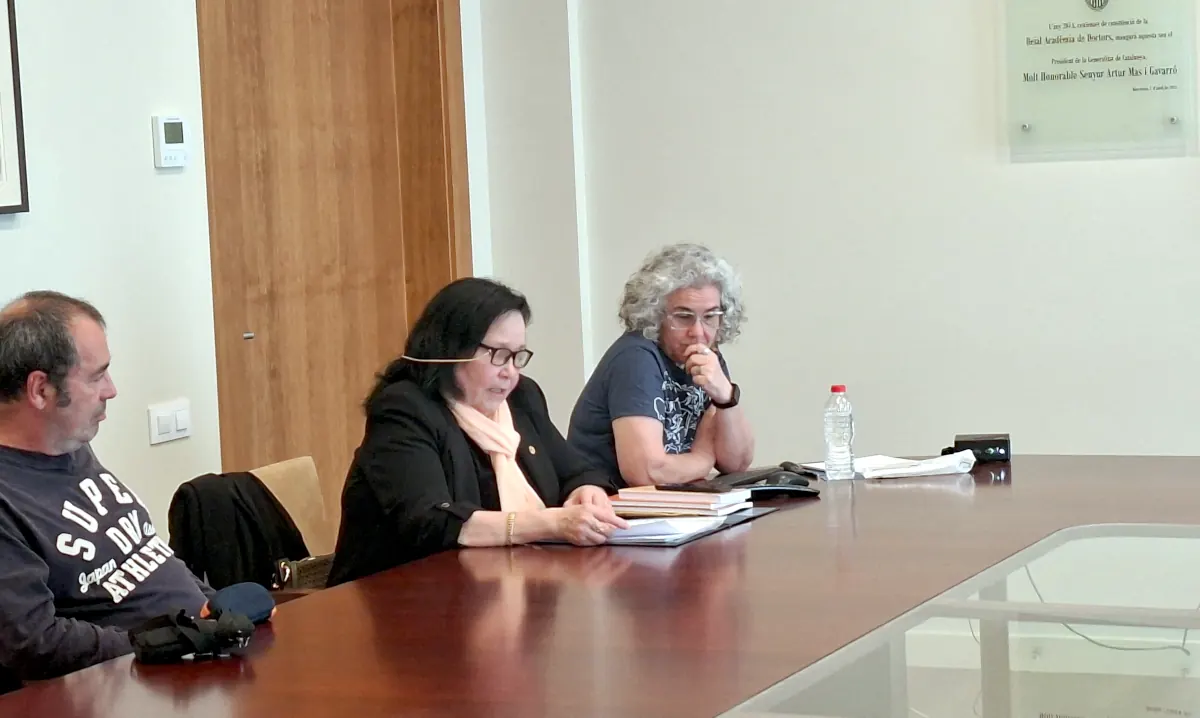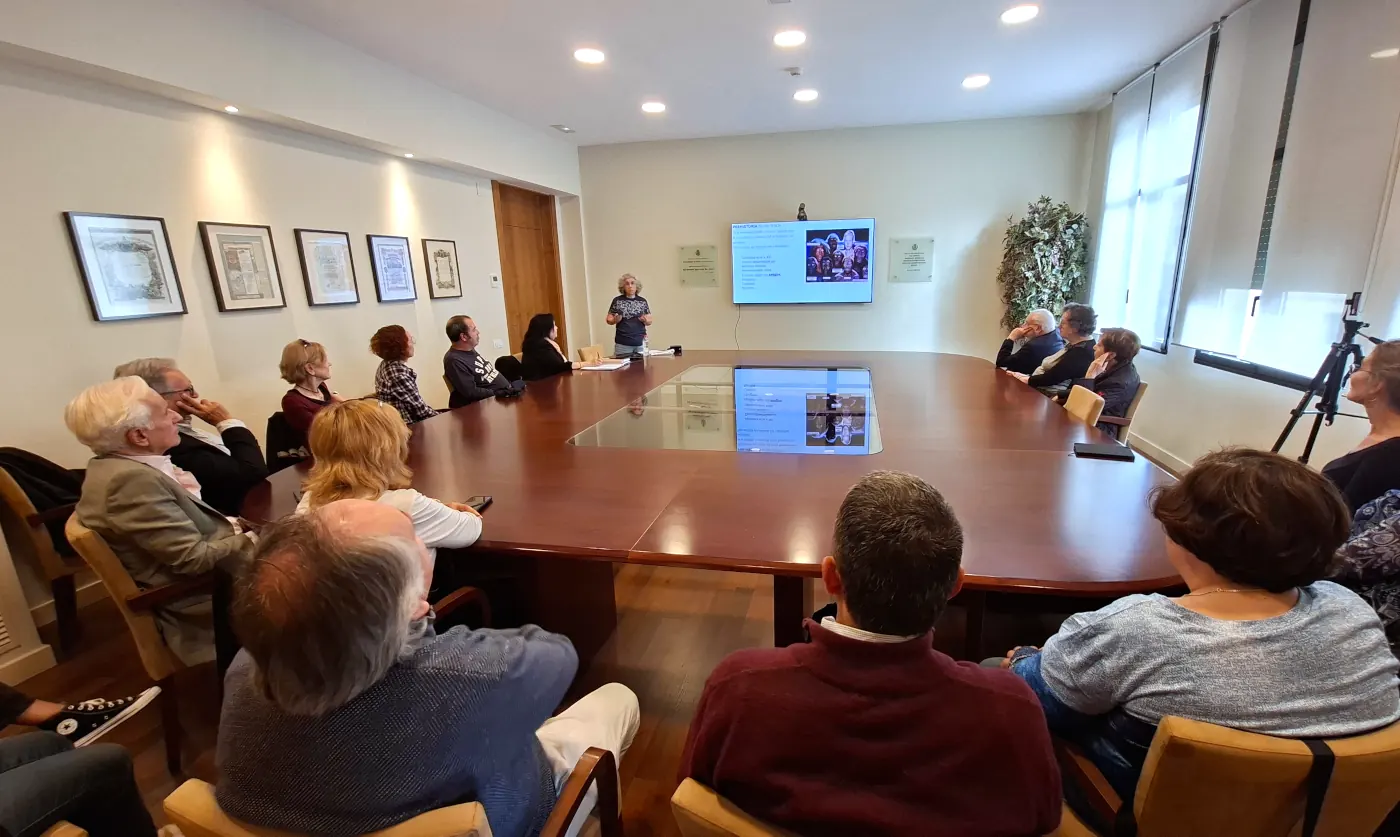


María Jesús Berlana, a historian specializing in Prehistory, Ancient History, and Archaeology, led the academic session “Las cosas no siempre han sido así. Cómo hemos cambiado” (Things Haven’t Always Been This Way: How We’ve Changed) on May 5th. This talk, with a strong focus on popular science, was organized by the Royal European Academy of Doctors (RAED) and the Pro Royal European Academy of Doctors Foundation for the Promotion of Work, the academic headquarters. The event was held in collaboration with the Department of Justice and Democratic Quality of the Government of Catalonia and the Association of Manufacturers and Distributors (AECOC). It was introduced by Maria Àngels Calvo, Professor at the Faculty of Veterinary Medicine of the Autonomous University of Barcelona, President of the Academy of Veterinary Sciences of Catalonia, member of the Royal Academy of Medicine of Catalonia, member of the Royal Academy of Pharmacy of Catalonia, and member and Vice-President of the RAED.
The speaker presented Prehistory as a science dedicated to the study of human evolution up to the development of writing (which can be interpreted), both from a biological and cultural perspective. In this regard, he highlighted bipedalism as a key biological process of hominization, which allowed humans to walk upright, freeing their hands and enabling them to manipulate tools; the increase in cranial capacity and brain mass, facilitating mental development, symbolic thought, and communication; the reduction of jaws and teeth, the loss of body hair, and the acquisition of a more precise opposable thumb for fine motor skills. Regarding their cultural and social evolution, he noted the manufacture of stone tools and the control of fire, which allowed them to cook food to improve their nutrition and protect themselves, and the development of complex language and the capacity for symbolic thought, as well as the importance of cooperation and empathy in this development.
He spoke about the longest period in human history, the Paleolithic, and how, in these different stages, human evolution occurred from the first bipedal hominids to the arrival of AMH (anatomically modern humans) or Homo sapiens, who descended from these early hominids, representing a synthesis of genes from different species. As Berlana explained, human evolution is characterized by the interaction between cultural and technological development and physical changes, demonstrating an adaptation based on knowledge of the environment and technology.
“The constant interaction between biology and culture has given rise to what is known as biocultural evolution. It is a dynamic process that has shaped humankind to reach its current stage. Understanding this process allows us to explain not only our past, but also the unique human capacity to adapt, transform our environment, and generate culture. We are one more being in nature, not the chosen species nor the culmination of evolution, but rather a product of natural selection,” the expert concluded.