


Enrique Sada
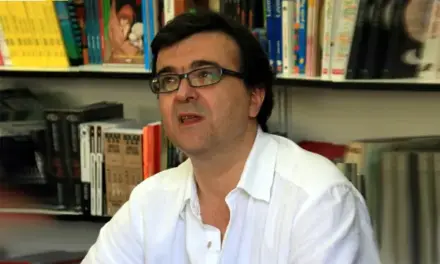
The Mexican historian Enrique Sada, a regular contributor to the Royal European Academy of Doctors (READ), shares with the academic community the articles “Marx’s Rebellion”, “The Struggle for a Free Iran”, “A Sinking Embassy”, and “The Mexican Foreign Service: In Decline”, published between January 3 and 31 on the digital platform Código Libre and in the newspaper El Siglo de Torreón. In these pieces, he addresses various episodes of contemporary Mexican and international affairs and their historical connections.
Likewise, in the December 2025 issue of the journal “Mensajero”, published by the Historical Archive of the Ibero-American University of Torreón, Sada published the study “Historical Preservation and Recovery: Catalogue of Assets of the Sacred Museum of Viesca”, which compiles research on the restoration of the heritage of this “magical town” in the Mexican state of Coahuila.
In “Marx’s Rebellion”, the author refers to the call made by a Mexican communist activist who calls himself Marx Arriaga to initiate a kind of uprising from within the country’s government against the government itself. “The idea of someone who flaunted as a badge of honor having granted a doctoral degree to the former non–First Lady was to rise up against the Ministry of Public Education in order to ‘re-found it,’ in his own words, calling for nothing less than the creation of a new body in charge of education. To that end, he has been calling for the establishment of ‘pro-Obrador defense committees’ to institutionalize the name of the former president and his supposed legacy as part of the curricula, in a style reminiscent of National Socialism or the Stalinism of the former Soviet Union in the last century,” Sada explains.
In “The Struggle for a Free Iran”, the historian praises the mobilization of large segments of Iranian society seeking to put an end to the theocratic regime that has ruled the country with an iron fist since the overthrow of the last Shah of Persia half a century ago. “What was once a peaceful and modern nation, where women could walk the streets wearing dresses and short skirts, driving their own cars through public squares and green gardens with leafy trees, came to an abrupt end with the arrival of the first Ayatollah, who immediately transformed that prosperous and tranquil country into a gloomy republic, intolerant toward its own people and violent toward its neighbors—at a time when many were still celebrating what they called the Arab Spring in the region,” he recalls.
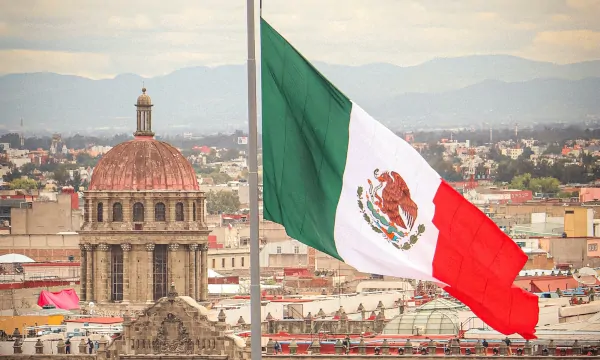
Foto de Luis Ariza en Pexels
In “A Sinking Embassy”, Sada points to the turbulent diplomatic relations between Mexico and the United Kingdom. “After the United Kingdom’s departure from the European Union through Brexit, the Mexican government never took steps to strengthen the necessary diplomatic and economic relations through a new trade agreement, abandoning Mexican entrepreneurs, traders, and exporters to their fate. Since then, they have been forced to pay enormous tariffs and taxes for the exchange of goods and services—a situation that continued due to the ineptitude and ignorance of the former ambassador Josefa González Blanco,” he notes.
Finally, in “The Mexican Foreign Service: In Decline”, the READ contributor focuses on the deterioration of Mexican diplomacy. “Equipped with highly trained professionals, most of them graduates of the Matías Romero Institute, career diplomats and representatives of our country abroad used to be individuals whose defining characteristic was precisely what one would expect from such advanced training: men and women well versed in major fields of general culture, from art and history to politics, economics, science, and the humanities as a whole. Unfortunately for us, this school of training and this hallmark of distinction has ceased to exist since the previous presidential term,” he concludes.