

Daniel Berzosa, Professor of Constitutional Law and Fundamental Rights at Cunef University, the Institute of Stock Market Studies, and IE–Law & Business School; member of the Global Academy and of the Scientific Council of the international collective Citizens pro Europe; and Numerary Member and member of the Governing Board of the Royal European Academy of Doctors (READ), took part as a leading expert in an extensive feature published by the digital daily El Debate in its 6 December edition marking the anniversary of the Spanish Constitution. Judges and former judges, full professors, and experts in constitutional law assessed the state of the Magna Carta in conversation with journalist María Jamardo.
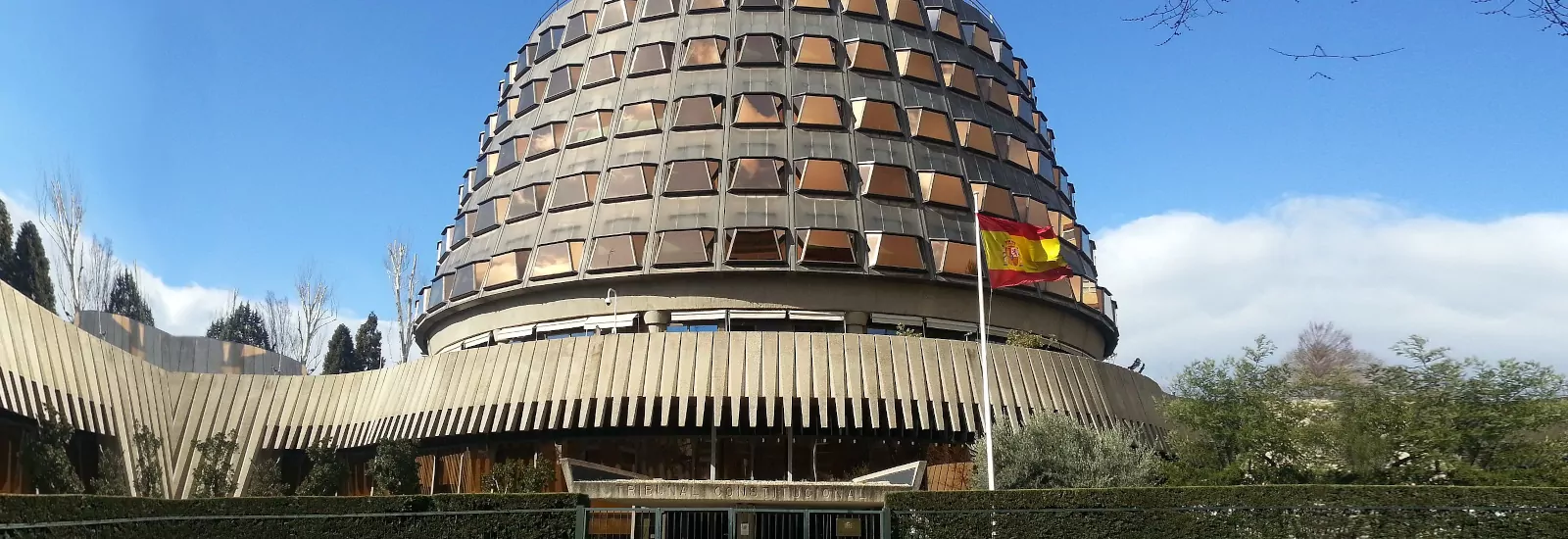
“The health of our Constitution is reflected in the firmness with which it continues to structure our coexistence more than four decades on. Its vitality depends on public authorities strictly observing its limits, on the procedures it establishes being respected without shortcuts, and on citizens perceiving it as a secure and neutral framework. Each time an institution is forced, a safeguard is distorted, or a basic principle—such as the separation of powers, political pluralism, or equality before the law—is relativized, the Constitution suffers. Its strength is not abstract; it is verified in the everyday observance of its letter and, above all, its spirit. Valuing the Spanish Constitution means remembering that it is neither a relic nor a mere accumulation of articles, but a democratic pact that made it possible to overcome historical fractures and to consolidate rights, freedoms, and checks on power,” the jurist observes, in a clear reference to current political affairs.
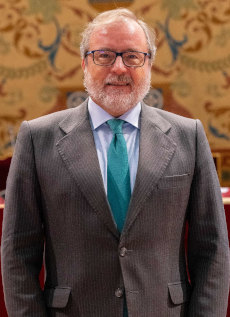
Dr Daniel Berzosa
For the academic, the role of the fundamental text is to ensure that no temporary majority can rewrite the foundations of the system without the qualified consensuses required by the Constitution itself. “Defending it is therefore an exercise in institutional and civic responsibility: it means respecting reform procedures, safeguarding judicial independence, caring for territorial pluralism, and protecting the framework of guarantees that has enabled us to live through the longest period of freedom and stability in our contemporary history,” Berzosa reflects. He concurs with the other experts consulted that there is currently no alternative to constitutional Spain, given the capacity for consensus it has maintained for nearly five decades, with erosion coming only from the political arena.
Berzosa is a member of the Society of Diplomacy and Political Science of the United States; coordinator of the International Observatory on the Regulation of Public-Sector Entities at the University of Santiago de Compostela; a member of the organizing committees of the World Law Congresses of Cartagena de Indias (2021) and Madrid (2019); and the author of books and scientific articles published in leading journals. He is also a well-known commentator on legal and political issues in Spain’s major media outlets.