


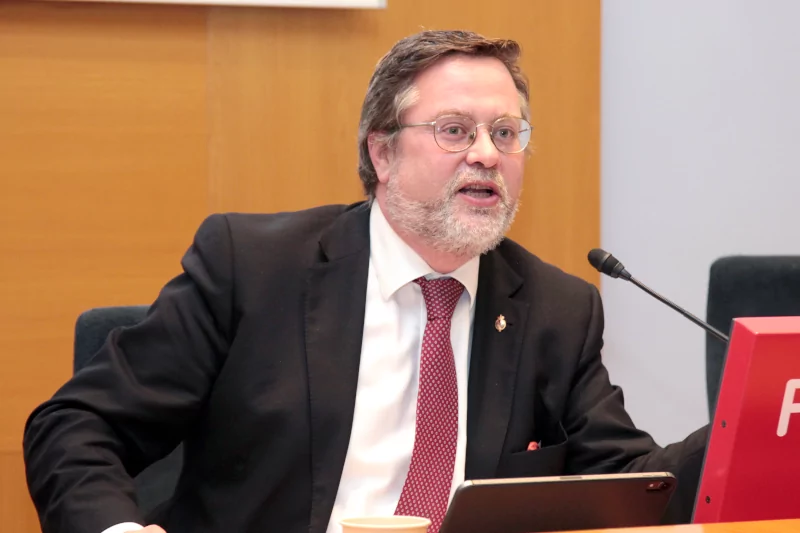
Dr. Santiago Castellà
Santiago Castellà, President of the Port of Tarragona, Director of the Tarragona Smart Mediterranean City Chair and of the Zigurat–University of Barcelona Master’s in Smart City Management, Secretary-General of the Pro Royal European Academy of Doctors Foundation, and Numerary Member of the Royal European Academy of Doctors (READ), was elected on 14 November as President of Barcelona–Catalunya Centre Logístic, with the unanimous support of its General Assembly. This organisation brings together the main stakeholders in Catalonia’s industrial and logistics sectors, with the primary objective of improving competitiveness and promoting the region as a Euro-Mediterranean logistics platform. For the first time in its 30-year history, the presidency—previously alternated between the Port of Barcelona and the Barcelona Free Trade Zone Consortium—will be held by an infrastructure located outside the Catalan capital.
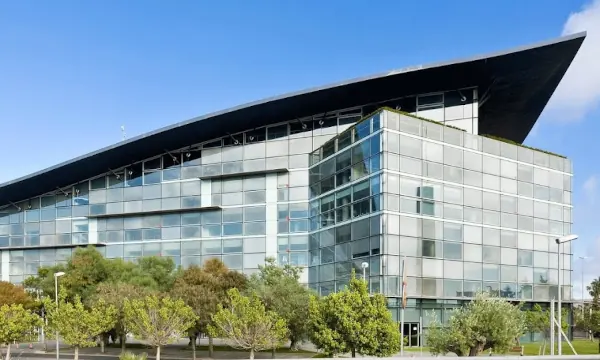
This new phase for Barcelona–Catalunya Centre Logístic is marked by the strong logistics momentum of Tarragona and its area of influence in recent years, driven by the connection between the Mediterranean, Ebro Valley, and Henares corridors, with the Port of Tarragona as a key hub, and the new Logistics Activities Zone in Vila-seca. In addition, the availability of industrial and logistics land, together with the region’s electrical planning for 2025–2030—which guarantees sufficient energy for its development—round out the port’s strengths, as explained by the association’s Director-General, Santiago Bassols, during the assembly. “We need more runways for industrial and logistics sites. In Barcelona, due to the territorial structure of the metropolitan region, we face major challenges, as there is immense pressure from operators who want to be located precisely here. In contrast, in Tarragona, 54 nautical miles and 80 kilometres away, we have opportunities to develop logistics and industrial land for these runways that will later generate jobs and economic activity,” he stated in remarks quoted by Diari de Tarragona.
 “Tarragona is experiencing a very strong investment period. Over recent years, several infrastructures have been created that now must be fully leveraged. I believe the city can greatly benefit from its proximity to Barcelona, the country’s main engine. Catalonia and Barcelona increasingly need a second, powerful engine—and Tarragona can be that engine. In a way, the port is becoming what I like to call the metropolitan engine of the territory’s economic development. Catalonia is beginning to view Tarragona’s position within the country differently; this perspective is changing. In recent months, I have met with the most influential figures in Catalonia’s economic sphere: the president of Foment del Treball, the president of the Catalan Small and Medium-Sized Business Association, the president of the Council of Chambers of Commerce, the Contractors’ Chamber… And you perceive this feeling: not only is the traditionally local view of Tarragona changing, but also, and above all, the recognition—at a national project level—of the need to incorporate its economic strength and the opportunities it opens as a territory,” Castellà concluded in the same forum.
A Doctor of Public International Law from the University of Barcelona, Castellà served for 25 years as a professor in the Department of Public Law at the University Rovira i Virgili, where he also served as Dean of the Faculty of Legal Sciences, Vice-Rector for External and International Relations, and Director of the Master’s in Environmental Law, the Master’s in Global Immigration Management, the Master’s in International Development Cooperation, and the Master’s in International Criminal Justice. He currently combines his responsibilities as Director of the Tarragona Smart Mediterranean City Chair with directing the Zigurat–University of Barcelona Master’s in Smart City Management. Castellà is also Scientific Director of the Observatory of Enforced Disappearances of Minors and Academic Director of the seminar “International Humanitarian Law in Today’s World”, organised by the University Rovira i Virgili, the Catalan International Institute for Peace, and the Tarragona Red Cross Assembly. He is a regular collaborator of the Centre for Legal Studies and Specialised Training of the Government of Catalonia and of the International Criminal Bar. Politically, he serves as First Secretary of the PSC in the city of Tarragona.