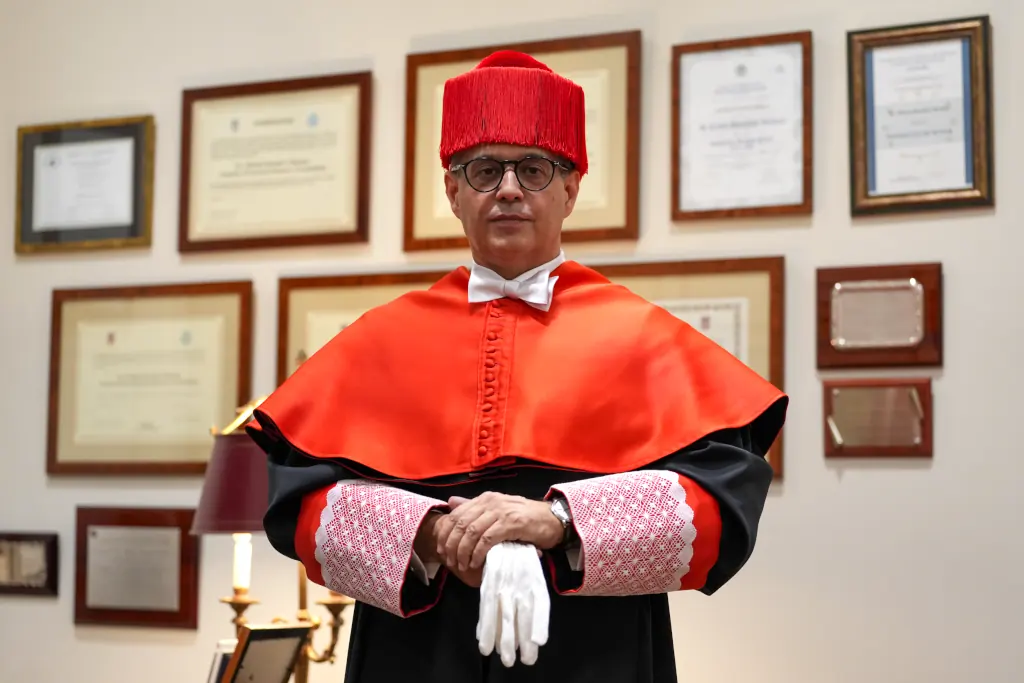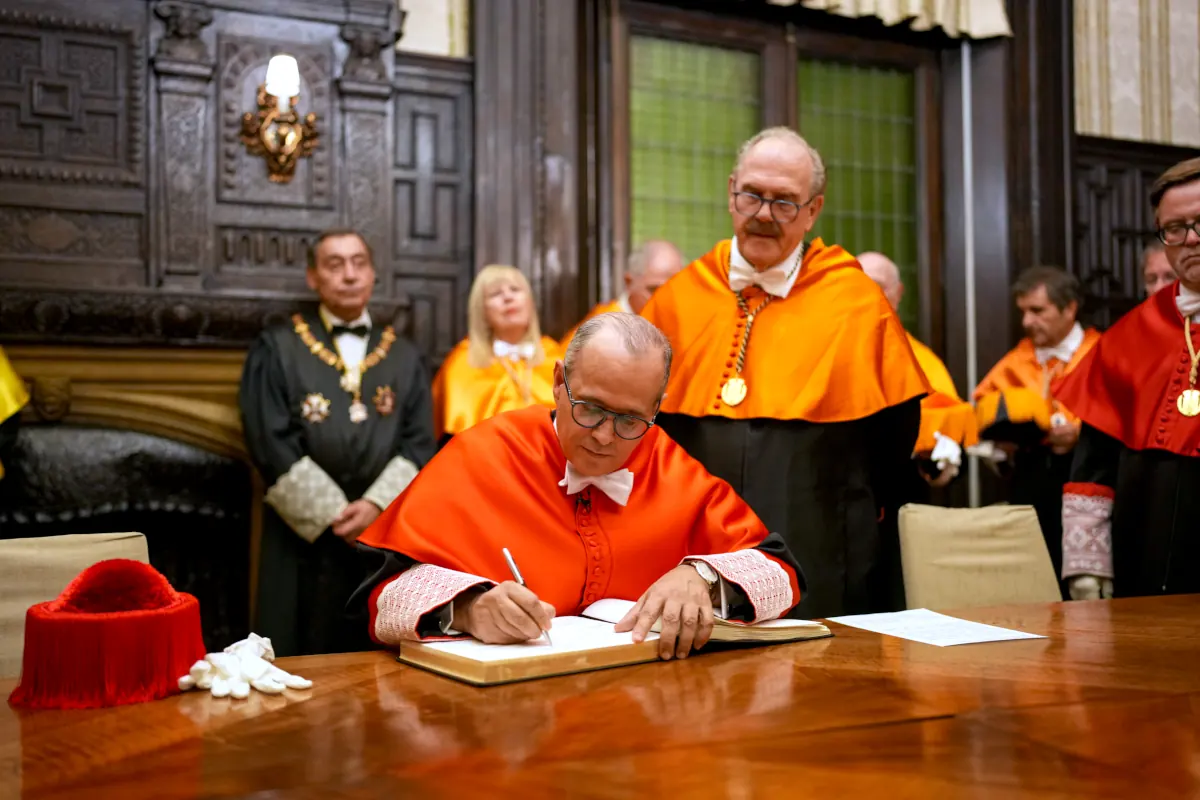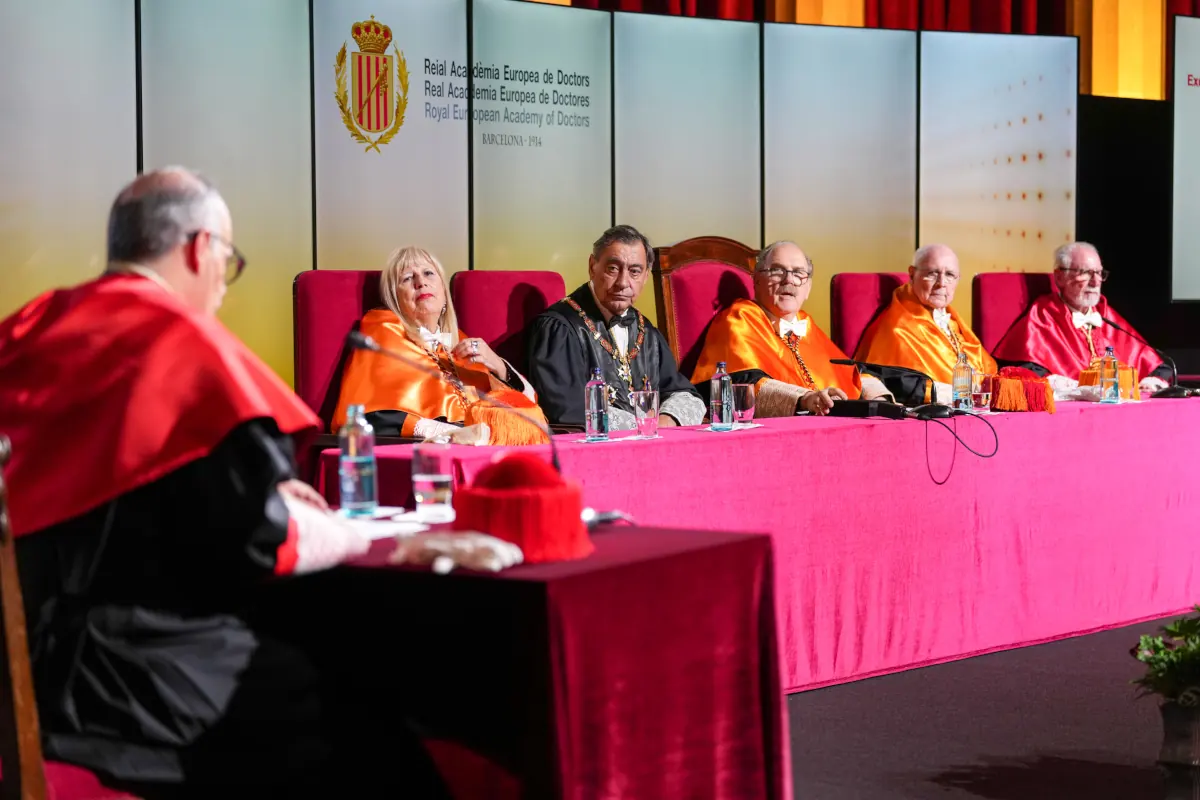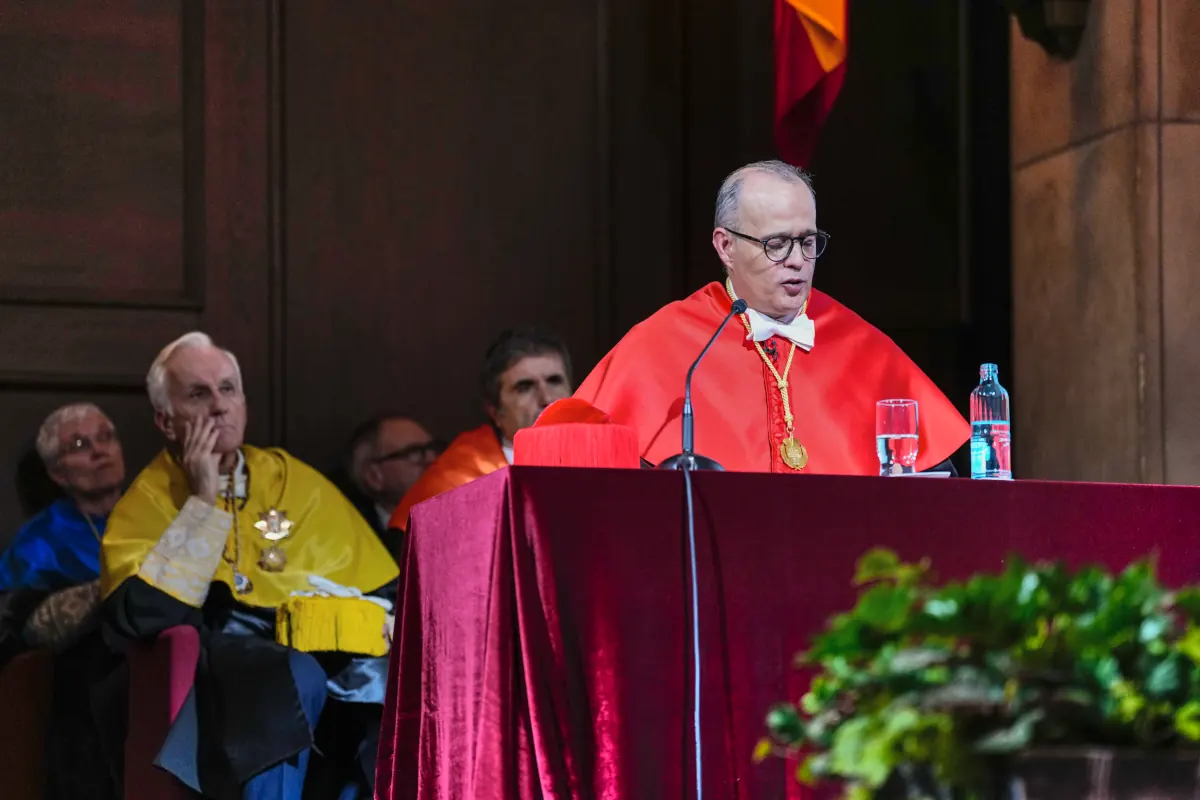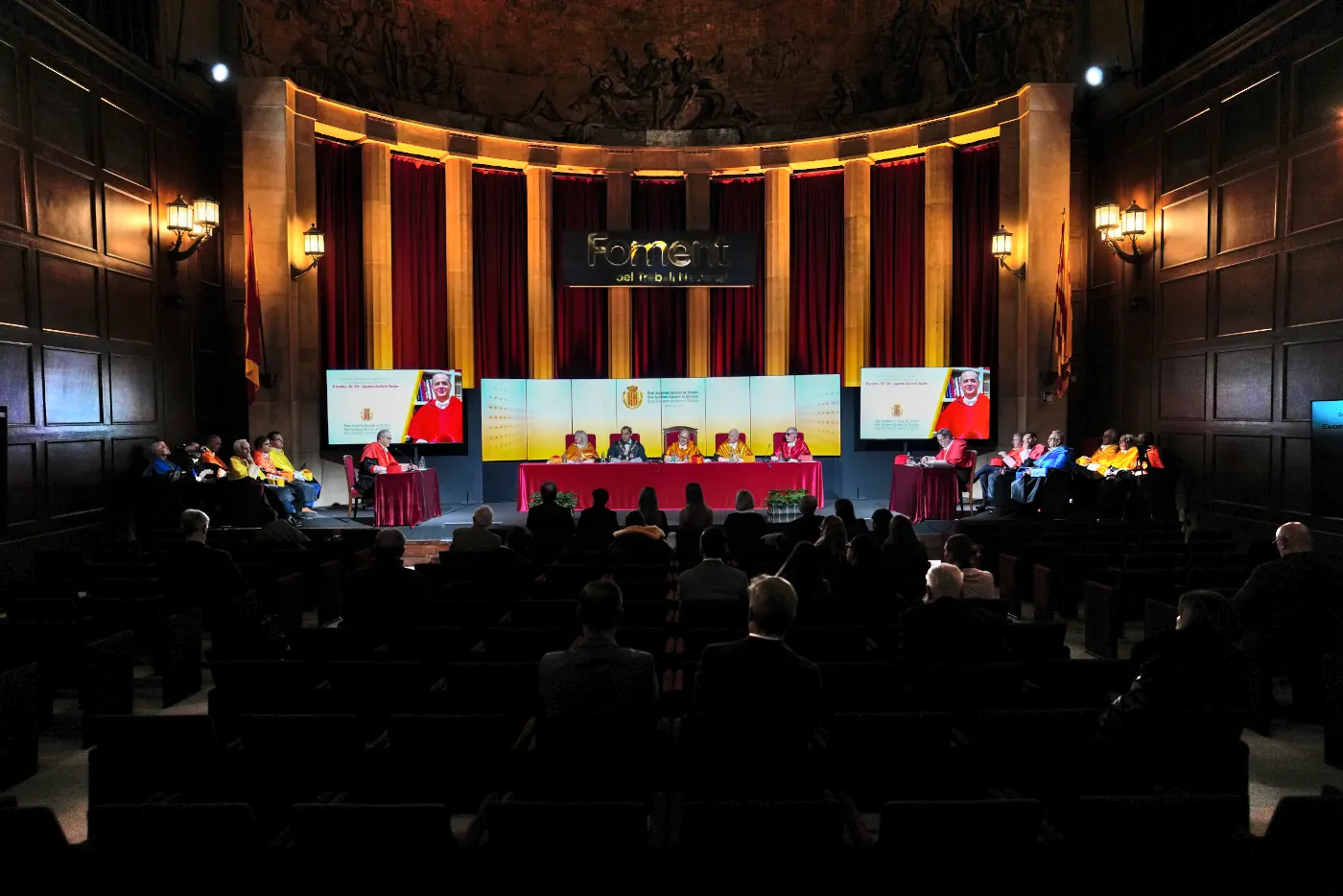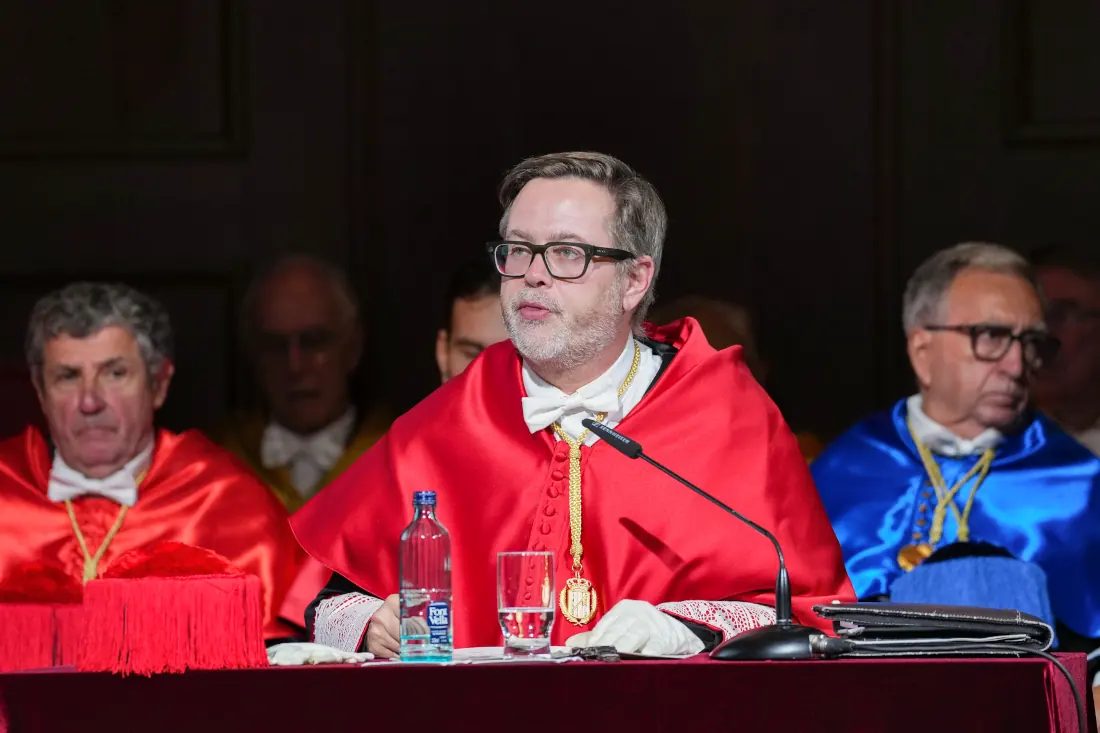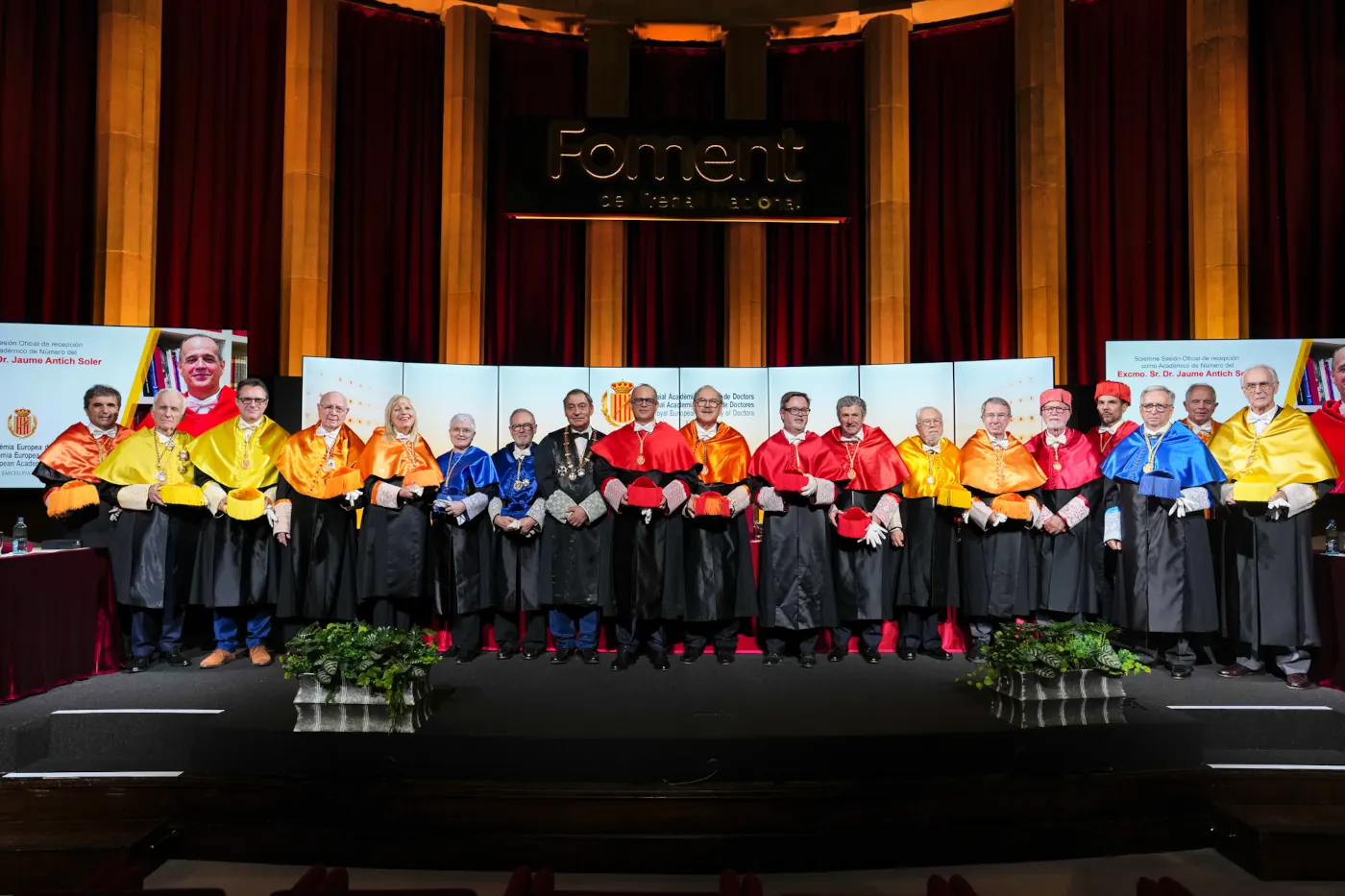



Jaume Antich Soler, Doctor of Law and Secretary General of the International Association of Penal Lawyers, was inducted as a Numerary Member of the Royal European Academy of Doctors (READ) during a solemn ceremony held on Monday, November 10, at Foment del Treball, the Academy’s institutional headquarters. The inductee delivered his admission speech, “La responsabilidad penal de las personas jurídicas ante la Corte Penal Internacional. Una nueva oportunidad para retomar el desafío” (The Criminal Liability of Legal Persons Before the International Criminal Court: A New Opportunity to Revisit the Challenge). Responding on behalf of the Royal Corporation was Santiago Castellà, Numerary Member and Secretary General of the Pro-READ Foundation. The session was livestreamed on the READ’s YouTube channel, where it can still be viewed.
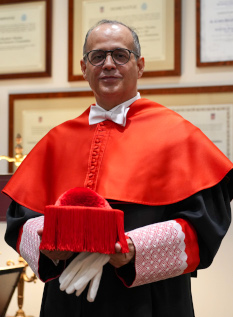
Dr. Jaume Antich Soler
The new Academician defended the need to revisit one of the longstanding challenges of International Criminal Law: the incorporation of criminal liability for legal persons before the International Criminal Court (ICC). According to Antich, the current model of international justice—focused exclusively on individuals—is insufficient to address the gravest crimes of the 21st century, in which corporations and transnational companies may play a decisive and often culpable role. He recalled that the Nuremberg tribunals, which tried Nazi leaders, had already debated this possibility after the Second World War, although the principle of individual criminal responsibility ultimately prevailed. However, today’s global realities—such as environmental disasters and armed conflicts involving corporate participation—require the revision and expansion of this legal framework.
Antich proposed that the ICC explore a model allowing for the prosecution of organizations that collaborate in serious human rights violations, genocide, or war crimes, establishing a system of sanctions adapted to their collective nature. He further stressed that corporate impunity undermines citizens’ trust in international justice and distorts the evolution of International Criminal Law. In this regard, he argued that legal doctrine and international bodies must move toward a more modern and effective conception of punishment, combining victim reparation, prevention of future abuses, and the effective accountability of corporate structures.
Antich is Professor of Criminal Law at the Faculty of Law of the Autonomous University of Barcelona, where he also teaches in the Master’s Degree in Access to the Legal Profession, and has supervised numerous undergraduate and master’s theses. He is also Professor of Criminal Law and Criminal Procedure at the Institute for Public Security of Catalonia, former Deputy Director of the Master in International Criminal Justice of the International Association of Penal Lawyers and Rovira i Virgili University, and lecturer in the Master in Compliance at the Barcelona Bar Association. A practicing lawyer since 2003, he is the director of his own law firm in Barcelona, specializing in Criminal Law, International Criminal Law, and Corporate Compliance. He is an Honorary Member of the European Higher Council of Doctors and Doctors Honoris Causa, a member of the International Association of Penal Law, and a member of the Spanish Compliance Association, among other professional organizations.
Throughout his career, he has held various institutional positions, including President and Vice President of the Young Lawyers Group, and Secretary of the Compliance Section and of the International Criminal Justice and Human Rights Commission of the Barcelona Bar Association, among others. He is the author of numerous scientific publications, has participated as a speaker in more than fifty national and international conferences, and frequently collaborates as an expert commentator in various media outlets. His research focuses on International Criminal Law, corporate criminal liability, and Compliance.
See the speech: “La responsabilidad penal de las personas jurídicas ante la Corte Penal Internacional. Una nueva oportunidad para retomar el desafío”