

Dr. Antonio Zapatero
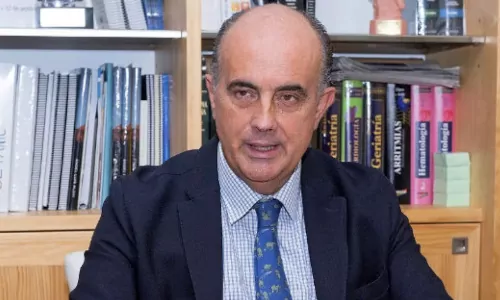
Antonio Zapatero, Head of the Internal Medicine Department at Fuenlabrada University Hospital, Professor in the Department of Medicine and Surgery at Rey Juan Carlos University, and Numerary Member of the Royal European Academy of Doctors (RAED), argued in an interview published on October 25 in La Voz de Galicia for a new model of healthcare designed to improve the care of chronic patients and eliminate systemic inefficiencies. To achieve this, he proposes promoting outpatient care and telemedicine, as well as advancing a prevention-based model aimed at improving public health, reducing care burden, and fostering the development of artificial intelligence tools—an element he considers essential to modern medicine and the optimization of clinical care, as he already defended in his admission speech to the Academy last year.
In a conversation with journalist Elisa Álvarez, the physician and healthcare manager warned that the traditional concept of hospitals is outdated, emphasizing that the key to designing a new healthcare center is to clearly define its purpose and the population it serves. He evocatively noted that effective planning should not focus solely on the physical infrastructure, but rather on the patient profile and the healthcare mission it aims to fulfill—integrating medical, social-health, and community dimensions. Zapatero stressed that the renewal of hospitals in Galicia, and in Spain as a whole, must overcome the duality between large hospital complexes and local care centers, warning that major construction projects, without a patient- or community-centered perspective, risk becoming costly monuments that fail to meet real needs.
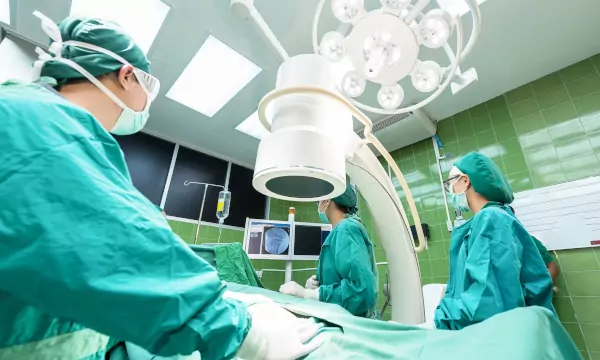 In his analysis, the expert highlighted that future strategies must address population aging, chronic illness, digitalization, and the shift toward home-based care so that the hospitals of tomorrow are efficient, humane, and sustainable. He also called for stronger collaboration among the different levels of care—primary, specialized, and social-health—and for a thorough reassessment of resources and their allocation. His proposal envisions flexible wards, mixed consultation and treatment spaces, integrated technology, and environments that promote recovery. As a concluding message, Zapatero was emphatic: “A hospital should not be designed as an isolated building, but as part of an ecosystem of care centered on the individual and their holistic health.”
Zapatero served as Deputy Minister for Public Health and the Covid-19 Plan at the Madrid Regional Ministry of Health from 2021 to 2023 and directed the creation and operation of the Ifema Field Hospital at the height of the pandemic. He was President of the Spanish Society of Internal Medicine (SEMI) between 2016 and 2018 and President of the Federation of Spanish Medical-Scientific Associations (FACME) from 2019 to 2020. He is the author of over one hundred scientific papers published in international journals and more than 130 in national journals, and he has contributed to several major medical reference works. He currently serves as Secretary for Healthcare and Public Health for Spain’s Popular Party and, beyond his professional and academic work, as Vice President of the Madrid Tennis Federation.