

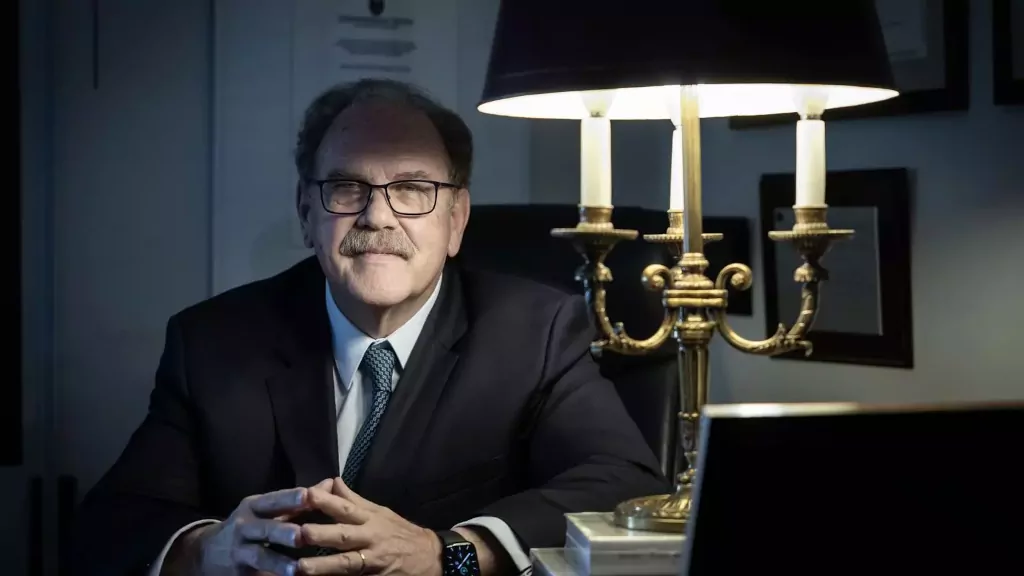
Dr Alfredo Rocafort
Alfredo Rocafort, Professor of Financial Economics and Accounting at the University of Barcelona, member of the Governing Board of the Fundación Independiente, Numerary Member of the Real Academia de Ciencias Económicas y Financieras (RACEF), and Numerary Member and President of the Governing Board of the Royal European Academy of Doctors (READ), has published the book «Emergencies and the Emergence of Global Power» on the occasion of his recognition as Doctor Honoris Causa by the Catholic University of New Spain and by the Casa Gentilicia Feigenblatt, which bestowed upon him its Grand Collar during the International Academic Meeting of Las Palmas, held last October in the Canary Islands capital by the Academia de Ciencias, Ingenierías y Humanidades de Lanzarote, the University of Las Palmas de Gran Canaria, and the READ.
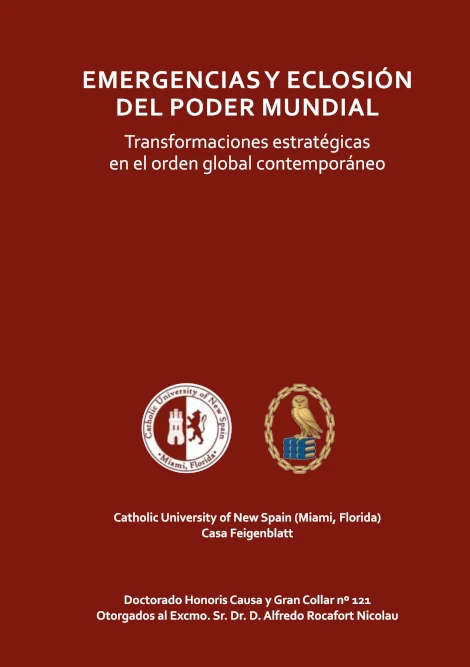 Bearing the explicit subtitle «Strategic Transformations in the Contemporary Global Order,» the book offers a broad and thoroughly documented development of the paper «Towards a 21st-Century European Leadership,» which Rocafort presented last November at the 20th edition of the RACEF International Barcelona Seminar, held under the general theme «A New European Project for a New World Order.» The author defended the premise that Europe is not a geography but a consciousness, and called for the construction of a future grounded in the democratic values that have shaped the continent, demonstrating that intelligence and ethics can prevail over the force-based logic of the current international order.
At the International Academic Meeting of Las Palmas, numerous academics, lecturers, and internationally renowned experts from the participating institutions addressed topics such as «The Unsustainability of the Current World,»«Paths Toward Sustainability,»«The State of Global Governance,»«United Nations Global Governance,»«Holistic and Integrated Strategic Plans for Sustainable Development,» and «Impacts of Implementing Integrated Sustainable Development Strategies.» The sessions were chaired by the Rector of the Canary Islands university, Lluís Serra Majem, also a Numerary Member of the READ; the President of the Canary Islands academy and Honorary Member of the READ, Francisco González de Posada; and Rocafort himself.
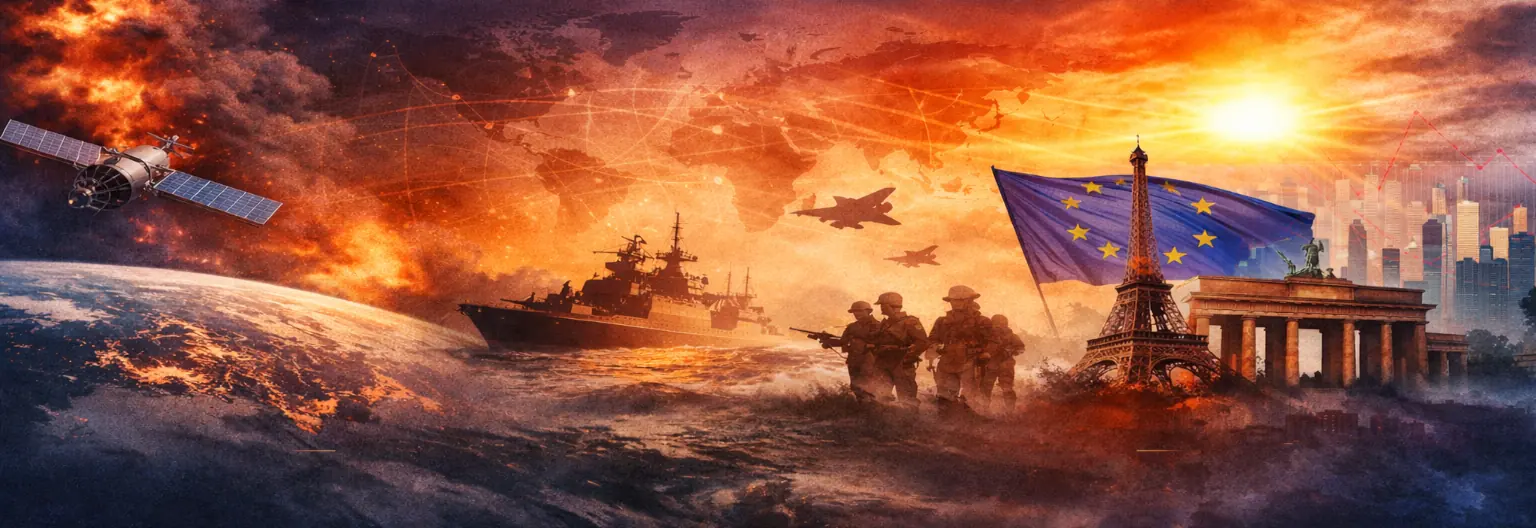
Across eight chapters supported by extensive data from official bodies, Rocafort reviews the current crisis of the international order, which has shifted from the bloc hegemonies that shaped contemporary history—particularly the 20th century—toward fragmentation. He also examines emerging global challenges that compel a redefinition of classical concepts such as sovereignty, security, and interdependence, as well as new forms of power now driven by non-state actors and defined by technology and narrative. Within this framework, he addresses the crisis of democracy and the rise of new populisms and adaptive authoritarianisms—what he terms asymmetric multipolarity and disputes over legitimacy—and turns to new geopolitical arenas such as Africa and the so-called Global South, where numerous conflicts remain largely invisible. All of this underscores the urgent and decisive challenge of rethinking power in the 21st century.
«We are not facing a mere shift in the balance of power among states, as has occurred at other moments in history, but rather a qualitative change in the very way power is understood and exercised. Power no longer resides solely in states, nor is it expressed only through military force or market control. Today, power is more fluid, more fragmented, more symbolic, and more technological, and its exercise requires a complex and multidimensional reading. In this context, two risks stand out clearly: the first is cynical withdrawal, which assumes the impossibility of understanding or transforming the new landscape and opts for resignation, opportunism, or strategic isolation. The second is false universalism, which insists on applying outdated formulas to unprecedented problems, refusing to acknowledge the plurality of actors, models, and visions that now coexist and compete globally. Against both dangers, this work proposes an alternative grounded in an ethics of responsibility—understood not as a mere moral stance, but as a structuring principle for political, academic, and institutional action in times of transition,» the author concludes.