


Introduction
The Royal European Academy of Doctors, true to its commitment to academic excellence, interdisciplinary dialogue, and addressing the great challenges of our time, invites academics, professionals, intellectuals, and representatives of civil society to one of its most emblematic events in 2026.
Under the title “La Humanidad en Crisis” (Humanity in Crisis,) this panel discussion proposes a high-level reflection on the existential crisis of our time, a phenomenon especially visible in adolescence and young adulthood, generations growing up in a context of profound technological transformations, cultural uncertainty, and growing disorientation in life.
The event will bring together three leading figures in contemporary thought, social action, and humanist research for a rigorous, profound, and open dialogue, capable of integrating ethical, philosophical, social, and spiritual perspectives. It will be a high-level intellectual conversation aimed not only at diagnosing the crisis but also at illuminating paths of understanding and hope for individuals and society.
Ponentes invitados
Cristóbal Colón Palasí
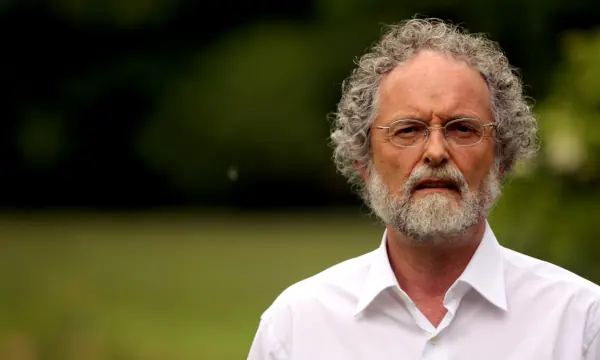
Sr. Cristóbal Colón
Honorary Academician of the Royal European Academy of Doctors and founder of La Fageda, an internationally recognized business and social project, Cristóbal Colón Palasí represents a unique model of humanist leadership applied to economic and social realities.
A psychologist by training, he launched La Fageda with the aim of providing dignified work for people with mental illness and other vulnerable situations, demonstrating that a company can be both economically viable and profoundly humane. His model integrates dignity, work, and community, placing the individual at the center of productive activity.
Under his leadership, La Fageda has become a case study in business schools and international forums, combining business excellence, social impact, and deep roots in the community. His career has been recognized for its capacity for social innovation and for demonstrating that competitiveness and social commitment are not opposing terms, but rather complementary.
His thinking contributes to the contemporary debate an ethical perspective on the meaning of work, corporate social responsibility, and community building, reminding us that the economy only acquires its full meaning when it serves people.
Francisco González de Posada
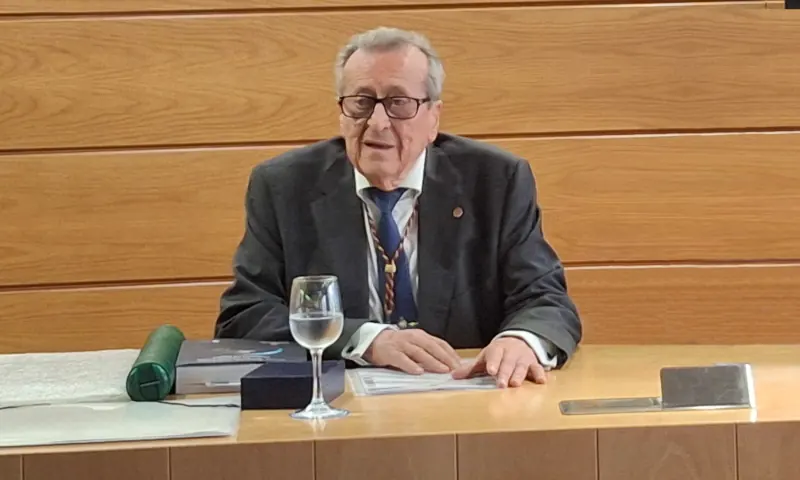
Dr. Francisco González de Posada
Honorary Academician of the Royal European Academy of Doctors, Dr. Francisco González de Posada is one of the most prominent intellectual figures on the contemporary academic scene.
Holding doctorates in multiple disciplines, his career embodies the humanist ideal of holistic knowledge, integrating science, philosophy, and critical thinking into a structured and coherent vision of knowledge.
His diverse doctorates—in both scientific and humanistic fields—are not merely a curricular merit, but rather the foundation of a body of work characterized by epistemological rigor and an interdisciplinary approach. Throughout his career, he has developed an extensive body of scientific and essayistic work, addressing issues related to the foundations of science, rationality, the history of thought, and reflection on reality.
A professor, researcher, and frequent speaker at academic forums, he embodies the defense of the culture of knowledge in its broadest sense. His contributions combine methodological rigor, conceptual depth, and a constant focus on the fundamental questions about humankind and the structure of knowledge, placing critical thinking at the heart of contemporary intellectual debate.
Manuel Sans Segarra
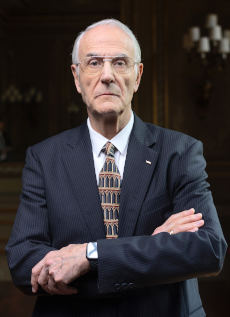
Dr. Manuel Sans Segarra
A member of the Royal European Academy of Doctors and a renowned surgeon, Dr. Manuel Sans Segarra has developed a distinguished clinical and scientific career.
In recent years, his research and public discourse have focused on the study of consciousness, near-death experiences, and the transcendent dimension of human beings. In this context, he has formulated and developed the concept of “superconsciousness,” understood as a higher level of consciousness that transcends strictly cerebral activity and which, according to his theory, would explain certain borderline experiences, expanded states of perception, and near-death experiences.
Dr. Sans argues that consciousness cannot be reduced solely to neurobiological processes, but that there exists a deeper dimension—superconsciousness—that connects human beings to a transcendent reality. From this perspective, he integrates medical expertise, scientific analysis, and a humanistic approach to address questions such as the continuity of consciousness, the meaning of life, death, and the ultimate nature of humankind.
Debate Focus
The panel discussion will address the notion of crisis as a central category for understanding the historical moment our civilization is experiencing. Far from reducing it to a circumstantial phenomenon or a succession of economic, social, or psychological difficulties, the meeting will analyse crisis as a structural reality that simultaneously affects culture, the individual, work, and the spiritual dimension of human beings.
The starting point will be a general reflection on the very concept of crisis. In its deepest sense, crisis is not only rupture or collapse, but also transition, transformation, and the possibility of redefinition. However, the present time seems to be characterized by an accumulation of destabilizing factors that generate collective disorientation: technological acceleration, weakening of shared cultural references, institutional fragility, geopolitical uncertainty, and a progressive loss of horizons of meaning. From this perspective, the discussion will consider whether we are facing a crisis of our time or a civilizational shift of greater scope.
Within this general framework, the existential dimension of crisis will be explored in greater depth. Beyond conventional psychological diagnoses, the existential crisis will be analysed as an experience of loss of meaning, inner rupture, or disconnection between the individual and their life environment. Its triggering factors in the contemporary context—digital overstimulation, social isolation, weakening of family and community ties, competitive pressure, and cultural relativism—will be examined, as well as its clinical and behavioural manifestations. Particular attention will be paid to the increase in self-harm and suicide, especially among adolescents and young adults, a phenomenon that challenges not only medicine and psychology, but also education, culture, and the social structure as a whole.
The debate will also incorporate the economic and labour dimensions of the contemporary crisis. In a world marked by increasing automation, intensive digitalization, and the rise of artificial intelligence, work is undergoing a profound transformation. The discussion will reflect on the loss of purpose in certain work environments, the tension between productivity and human dignity, and the ethical responsibility of businesses in building cohesive communities. The economic crisis will not be considered solely in terms of macroeconomic indicators, but rather as a human experience that affects people’s identity, stability, and self-esteem.
Based on these three dimensions—civilizational, existential, and socioeconomic—the dialogue will open up to fundamental questions that permeate our time: the root causes of the crisis, its relationship to the contemporary conception of the human being, the role of the education system in character formation and resilience, the influence of the indiscriminate use of screens on the psychological makeup of new generations, the potential impact of artificial intelligence on the redefinition of human responsibility, and the importance of revaluing the human factor in business productivity.
The religious and spiritual question will also be addressed. The discussion will analyse whether there is a crisis of institutional religiosity, whether this necessarily translates into a loss of spirituality, and what the conceptual and experiential differences are between religion and spiritual experience. At this point, the debate will seek to avoid reductionism, integrating medical, philosophical, economic, and humanistic perspectives into a coherent and rigorous vision.
The overall approach of the meeting will therefore be interdisciplinary and structural. It will not be merely about diagnosing symptoms, but about understanding the deep roots of the contemporary crisis and exploring possible paths for cultural, educational, and human reconstruction.
Dynamics
The event will follow a structured academic format that combines individual presentations with open dialogue, ensuring both conceptual depth and interaction between perspectives.
Following the guidelines established by the Presidency of the Royal European Academy of Doctors, each speaker will initially have approximately ten minutes to present their specific approach. This initial presentation will not be merely introductory, but will clearly establish the conceptual framework from which each participant will address the notion of crisis.
The planned sequence will begin with a presentation by Dr. Francisco González de Posada, who will offer a general reflection on the concept of crisis in the history of thought and in contemporary culture, outlining its structural dimensions and triggering factors in the current context.
Next, Dr. Manuel Sans Segarra will delve into the individual existential crisis, addressing its definition, its clinical manifestations, and its relationship to contemporary phenomena such as the increase in psychological suffering and suicide.
His presentation will connect the cultural dimension of crisis with its direct impact on personal experience.
Cristóbal Colón Palasí will close this first segment, analysing the crisis from an economic and labour perspective, reflecting on the meaning of work, the centrality of the human factor in business, and social responsibility in times of structural uncertainty.
Following the initial presentations, a roundtable discussion will begin. This second segment will allow for a calm exchange of ideas, a deeper exploration of points of convergence and divergence, and a joint analysis of key issues: the root causes of the crisis, its relationship to the existential conception of human beings, the role of education in preventing existential emptiness, the influence of the digital environment and artificial intelligence, the revaluation of human capital in business productivity, and the possible existence of a religious crisis distinct from spiritual experience.
The final segment will include a question-and-answer session with the audience, conceived not as a mere formality, but as a space for enriching the dialogue and broadening perspectives.
Organiza:

Con la colaboración de: