

Dr. Francesc Torralba
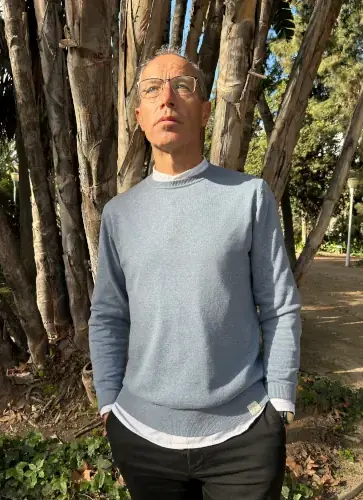
Francesc Torralba, Director of the Ethos Chair in Applied Ethics at the Ramon Llull University and of the Chair of Christian Thought of the Bishopric of Urgell, member of the Dicastery for Culture and Education of the Holy See, and Full Member of the Royal European Academy of Doctors (READ), is featured in the latest issue (No. 3,445) of the magazine “Vida Nueva,” corresponding to the week of 7–13 February. In recent weeks, the academic has been the subject of numerous interviews and reports following his receipt of the Josep Pla Prize, awarded by the publishing house Destino for his work “Anatomy of Hope,” presented at the traditional Epiphany gala held in Barcelona. The book explores the mechanisms that sustain the human spirit when all seems lost, drawing on philosophy, literature, and lived experience, and deepens themes addressed in his two previous works, “The Word That Sustains Me” and “There Are No Words. How to Come to Terms with the Death of a Child,” in which he shares his grief over the tragic death of his son Oriol, aged 26, in a mountain accident during a hike in which Torralba himself accompanied him.
In an extensive conversation with journalist José Luis Celada, Torralba reflects on the meaning, value, and necessity of hope in today’s context, marked by disenchantment, immediacy, and individualism. For the philosopher, hope is essential to human life because it fuels action, commitment, and the ability to overcome both personal and social fragility. “To expect nothing is like dying while still alive,” he states, since hope enables us to project ourselves toward the future and find meaning even amid suffering. In this regard, he identifies four fundamental elements of hope: the possibility of change, trust in the future, faith understood as trust, and the awareness that good is difficult and requires effort, patience, and communal commitment. He rejects the notion of hope as naïve optimism and presents it instead as an active and persevering attitude.
The academic also warns that contemporary culture, dominated by immediacy and pessimism, hinders the cultivation of hope, which can only develop through time, perseverance, and communal bonds, since human beings cannot sustain themselves alone in extreme situations. Torralba criticizes the nostalgia and defeatism prevalent in today’s society and underscores the need to construct meaningful horizons capable of combating nihilism and cynicism. According to him, the greatest problem of our time is the loss of purpose, which leads to despair. He concludes that what we have in excess today are cynics, while what we lack are witnesses of hope—individuals capable of living and transmitting a credible and committed hope.
“Vida Nueva” also dedicates its editorial and an opinion article to Torralba’s life and work. “Through his books, articles, lectures, and conversations, Torralba has become—without seeking it—a beacon of Christian humanism, at a time when such humanism often lacks intellectual figures capable of fostering a faith-reason dialogue connected to present reality, without pontificating or polarizing. A thought inoculated against sensationalist headlines and banal advice typical of a coach seeking clients or an ‘influencer’ amassing followers through shallow catchphrases,” states the editorial. Meanwhile, Josep Otón, in his regular column in the magazine, highlights the author’s trajectory: “One might think that such intellectual stature would distance him from everyday life and from the experience of human vulnerability. Quite the opposite. In Torralba we find a constant concern for the contingency of human existence. Behind this more-than-impressive résumé stands someone deeply engaged with the human condition and fully aware of the value of weakness as a constitutive element of personhood.”
 A teacher and communicator of Christian humanism in major Catalan media outlets such as Catalunya Ràdio and the newspapers “La Vanguardia” and “El Punt Avui,” Torralba is the author of notable works including “The Meaning of Life” (2008), “Do Not Pass By” (2010), “The Value of Having Values” (2012), “A Sea of Emotions” (2013), “Running to Think and Feel” (2015), “Knowing How to Say No” (2016), and “Volatile World” (2018). During the pandemic, he published “Humility,” “Words of Consolation: On the Death of a Loved One,” “Forming Persons: Edith Stein’s Theology of Education,” “Living in What Is Essential: Ideas and Questions After the Pandemic,” “Algorithmic Ethics,” which received the Bones Lletres Prize for Humanistic Essay awarded by the Royal Academy of Good Letters and Edicions62; “The Glory Façade of the Sagrada Família: Spiritual and Theological Sources of Antoni Gaudí’s Eschatology,” the result of his fourth doctoral thesis; “When Everything Falls Apart: Meditating with Kierkegaard” (2023), “There Are No Words. How to Come to Terms with the Death of a Child” (2024), and “Beatitudes for Agnostics” (2024). He was awarded the Ratzinger Prize 2023 by the Vatican Foundation Joseph Ratzinger–Benedict XVI.