

Mr. Fernando Ónega
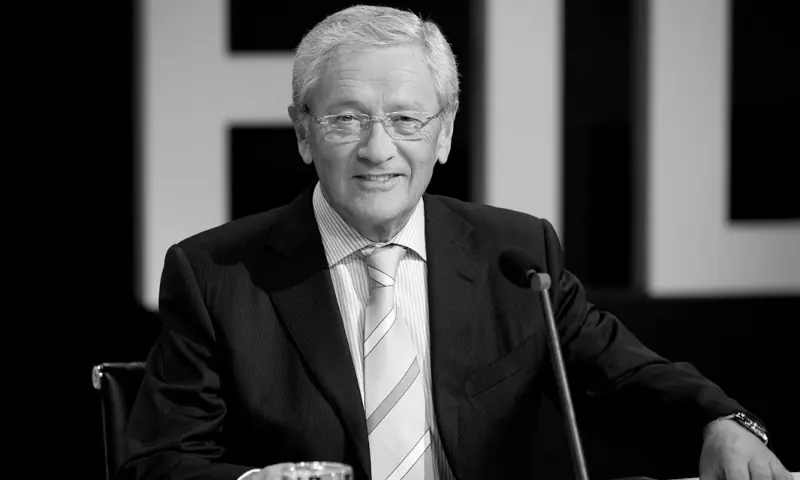
The Governing Board of the Real Academia Europea de Doctores (READ), on behalf of the entire academic community, deeply mourns the passing of Fernando Ónega, renowned journalist, president of the specialized platform 65ymás, and Honorary Member of the Academy, at the age of 78. Ónega joined the READ in March 2025, almost exactly a year ago, in an emotional ceremony held at the Great Hall of the Complutense University of Madrid, which became a deserved and well-attended tribute to his long professional career. On that occasion he delivered his inaugural address “The Agony of the State”. On behalf of the Academy, he was welcomed by Full Member and President of the Institute for International Cooperation of the READ, José Ramón Calvo. The ceremony was streamed through the Academy’s YouTube channel, where it can still be viewed.
In May of the same year, Ónega received the Honorary Award of the Madrid Press Association in a ceremony presided over by King Felipe VI and Queen Letizia at the Auditorio Caja de Música, located in the CentroCentro cultural space, the current headquarters of the Madrid City Council, in the presence of other prominent authorities. Earlier he had also received the Coexistence Award for Senior Citizens of the City of Granada, recognizing both his distinguished journalistic career and his commitment to Spain’s senior population. These honours—long overdue but well deserved—acknowledged the fundamental role he played during Spain’s democratic transition and his lifelong dedication to strengthening democracy and defending a free and independent press.
His commitment to the Academy and to the platform 65ymás, from which he championed the continued active participation of older people in society—encouraging them to innovate and contribute value—marked the final stage of his life, during which he remained fully active. During this period, he promoted the idea of creating a dedicated ministry for older citizens, addressing their interests and needs, and actively engaged in discussions surrounding the Silver Economy. At the same time, he warned against political interference and pressure groups within the media, defending the rigour and professional integrity of journalism in the face of content increasingly designed for rapid consumption and fueled more by populism than by the pursuit of truth.
In this context, his inaugural address at the Academy examined the principal challenges faced by the contemporary State during a period of profound social, political, and geostrategic transformation, driven by the international environment and the emergence of disruptive technologies. He also reflected on the role of the media and civil society in countering populist tendencies and safeguarding democratic coexistence. “I have dared to borrow from the colossal Miguel de Unamuno, because his use of the word agony in ‘The Agony of Christianity’ closely reflects what I wish to convey about the State. ‘Agony,’ wrote Unamuno, ‘means struggle. He who agonizes is one who lives struggling, struggling against life itself—and against death. Agony, therefore, is struggle.’ I bring these reflections into the secular, sometimes agnostic world of the State and begin with a risky thesis: this period will go down in history as one in which we did not know what to do with it. Nor with anything else. I once believed the next great war would be fought over water, yet it may instead arise from the whims of two highway robbers named Vladimir Putin and Donald Trump,” he said in his address.
Press Secretary of the Office of the Prime Minister during the administration of Adolfo Suárez—for whom he wrote many speeches—Ónega worked throughout his career in numerous print and broadcast media outlets. In radio, he inaugurated the genre of the political commentary column during Spain’s transition with the program “Hora 25” on the Cadena SER network. He later served as News Director for the same network as well as for Cadena COPE, and as Director General of Onda Cero, where he collaborated with Luis del Olmo and Carlos Herrera. In print journalism, he published his first article at the age of thirteen in “La Noche” of Santiago de Compostela. Two years later he was already writing a weekly page and conducting interviews for “El Progreso” of Lugo. He later directed the newspaper “Ya,” founded the confidential publication and agency “Off the Record,” and currently writes as a columnist for “La Vanguardia” and “La Voz de Galicia.” In television, he directed several programs for Televisión Española, served as Director of External Relations for the public broadcaster, and presented news programs on Telecinco and Antena 3. He was also the author of numerous books, including “The Thermometer of Life,” “I Can Promise and I Do Promise,” “Juan Carlos I,” and “What Has Happened to Us, Spain?” Throughout his career he received more than one hundred awards and distinctions.