

Enrique Sada
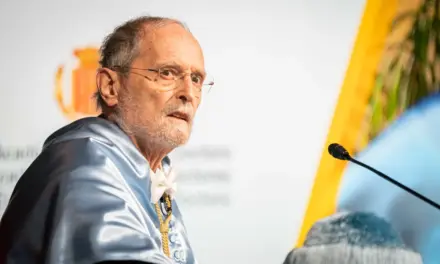
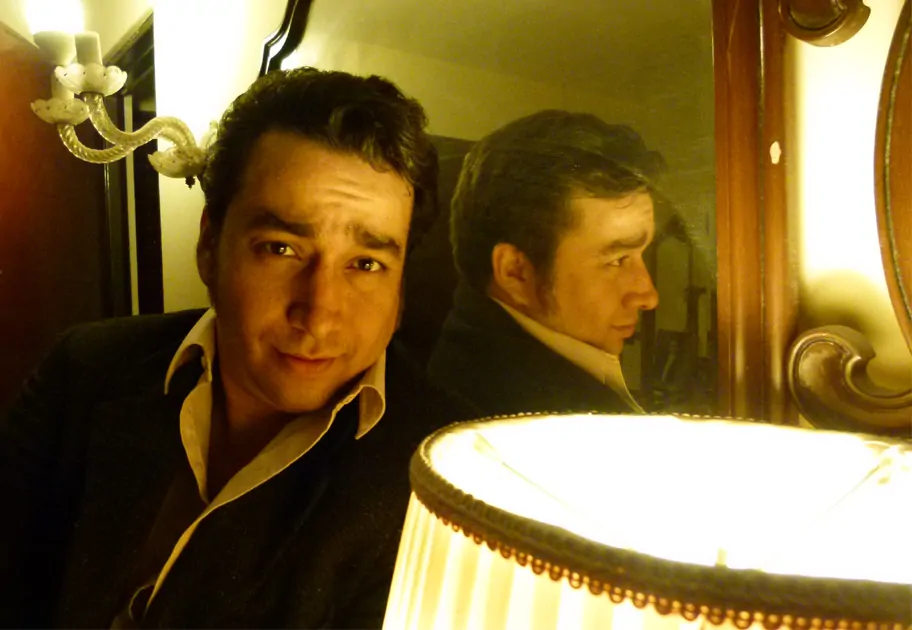
Mexican historian Enrique Sada, a regular contributor to the Royal European Academy of Doctors (READ), shares with the academic community a series of articles—«On the Triumphant Revolution,» «Trump and the Californization of the BBC,» «A Tainted Crown,» «Rescuing Doña Marina–Malintzin,»«Baseness,” and «A Cry for Freedom from the Nobel»—published between 21 November and 12 December on the digital portal Código Libre and in the newspapers «El Siglo de Torreón» and «El Siglo de Durango». In these pieces, Sada examines episodes of Mexican and international current affairs and their historical connections.
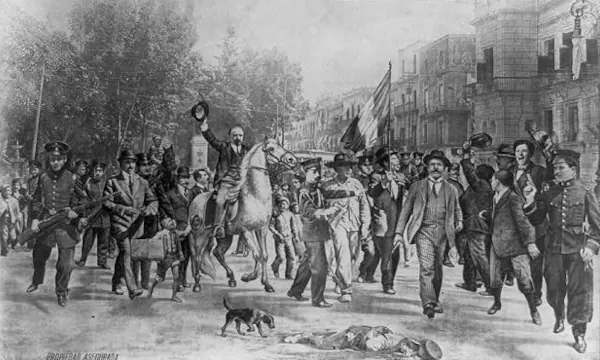
In «On the Triumphant Revolution,» the author criticizes the celebration of the Mexican Revolution as a kind of foundational legend rather than through the critical lens demanded by historical scholarship. «Among the customs inherited from the old regime and embraced with deep reverence by the new–old regime is the commemoration of the much-questioned so-called Mexican Revolution—an event typically celebrated with a parade in which the State spends enormous sums of public funds on a military display as entertainment for the general public, or simply so that political power may feel secure in retaining direct control, at will or on a whim, over the exclusive use of the nation’s armed forces,» he argues.
In «Trump and the Californization of the BBC,» Sada addresses the controversy sparked by a documentary broadcast by the British public broadcaster BBC about Donald Trump, whose edited excerpts distorted his message to the brink of manipulation, prompting resignations by those responsible. «It all began with an episode of Panorama, a program in which two truncated excerpts from the speech delivered by the President of the United States four years ago—separated by 54 minutes—were presented in a contrived manner as if they were a single statement, resulting in a false transmission of his message and provoking a severe public, political, and institutional backlash,» he explains.
In «A Tainted Crown,» the READ contributor turns to another current controversy: allegations of fraud in the Miss Universe pageant, with a Mexican contestant at the center. «What initially seemed like a small piece of good news amid the bleak panorama enveloping our country—the surprise designation of Tabasco native Fátima Bosch as Miss Universe 2025—very quickly turned into a warning plume of smoke, revealing dark clouds behind the sequins and festive glow of evening gowns. After the sudden resignation of three judges, allegations of fraud emerged, claiming that the contest had been rigged by none other than Fátima’s father, a senior official at Pemex, who was reportedly exposed for allegedly awarding a direct contract from the oil company to the owner of Miss Universe in the amount of 745 million pesos,» he details.
Sada devotes «Rescuing Doña Marina–Malintzin» to what he considers a partisan use of history in his country, reclaiming the figure of Edmundo O’Gorman, a leading proponent of historiographical revisionism. «In the face of the immense mythomania imposed from the nineteenth century onward, following the predatory triumph of the self-styled ‘pure liberal’ faction—which sought in the use and abuse of history not truth or science, but the indoctrination of generations of pliant Mexicans into a new state of affairs after 1867 through the publication of works such as the presumptuous Mexico Through the Centuries—there emerged the dissemination of a substitute spirit of identity based not on who we truly are, but on what we are not,» he writes.
 In «Baseness», Sada employs sarcasm to comment on the presentation of the book Grandeza by former Mexican president Andrés Manuel López Obrador. «It is hardly surprising that the book was rushed out amid journalistic revelations about the Tabasco cartel known as La Barredora and the arrest of one of its ringleaders in Paraguay. Hence it was promoted by Adán Augusto López, who, as the former president’s putative ‘brother’ and publicly linked to that group, took advantage of the moment to purchase and distribute copies en masse at a multimillion-peso cost unjustifiable on a senator’s salary. This also explains why the former president, as the book’s owner, refused to undertake the customary editorial tour to promote Grandeza and instead immediately retreated back into the shadows (whether to his militarily protected ranch or elsewhere),» he notes.
Finally, in «A Cry for Freedom from the Nobel,» Sada welcomes the reappearance of Venezuelan opposition leader María Corina Machado in Oslo, where she was emotionally reunited with her family and supporters after being recognized with the Nobel Peace Prize. «After arriving from a long journey undertaken in secrecy, the 58-year-old Machado arrived too late to attend the official Nobel Peace Prize ceremony, which in her absence was symbolically received by her daughter, Ana Corina Sosa, who opened a moving acceptance speech by saying: ‘We will be able to embrace her after 16 months!’» he concludes.