

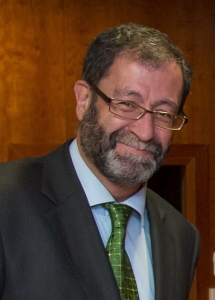
Dr. Francisco López Muñoz
Francisco López Muñoz, Professor of Pharmacology and Vice-Rector for Research, Science, and Doctoral Studies at Camilo José Cela University; founding member of the Observation Committee of the Spanish Human Rights Observatory; member of the Academy of Military Sciences and Arts; Corresponding Member of the Royal Academy of Medicine of the Basque Country; and Numerary Member of the Royal European Academy of Doctors (RAED), has published “Handbook of Melatonin-Based Therapy and its Applications” (Academic Press). The work, directed and coordinated by López Muñoz together with Alejandro Romero Martínez and Eva Ramos Alonso —professors in the Department of Pharmacology and Toxicology at the Faculty of Veterinary Medicine of the Complutense University of Madrid— offers an in-depth and multidisciplinary analysis of melatonin and its therapeutic uses. The academic had already authored various studies and outreach articles on melatonin, a hormone synthesized and used for different therapeutic purposes but often debated within the scientific community due to its widespread commercialization and use without proper medical supervision.
Written by around fifty internationally renowned experts in pharmacology and health sciences, the book serves as a comprehensive reference guide addressing the therapeutic applications of melatonin through a multidisciplinary lens. It opens with an overview of the safe use of melatonin, its translational aspects, and its potential for diverse clinical applications, including dosage, pharmacokinetic and pharmacodynamic profiles, toxicity, and mechanisms of action. The volume explores its uses in both adults and pediatric patients with conditions such as skin cancer, gastrointestinal, psychiatric, hepatic, and ocular disorders.
“This is an essential resource for scientists, pharmacists, and healthcare professionals involved in developing and applying patient therapies. Researchers in medicine, biology, neuroscience, and pharmacology working on melatonin-related studies will benefit from the latest insights into research findings, clinical trials, and therapeutic approaches,” notes the publisher in presenting this comprehensive guide, organized into 13 chapters spanning more than 350 pages in its first edition.
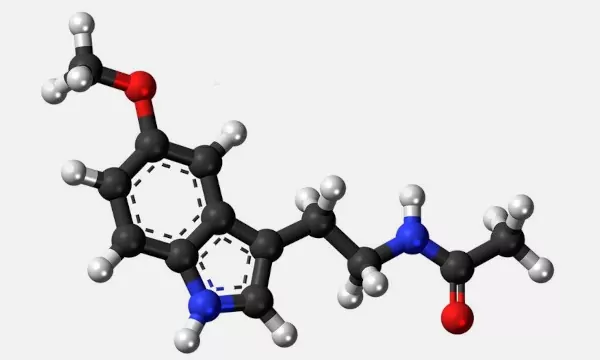
Ball-and-stick model of the melatonin molecule, a hormone that controls the sleep-wake cycle in animals
The handbook is designed as a reference work both for clinicians involved in treating patients with various disorders and for scientists studying the mechanisms of action of pharmacological agents and the pathological processes underlying different diseases—including prostate cancer, Covid-19 infection, skin conditions, neonatal oxidativestress, neurodegenerative diseases, injuries caused by vesicant chemical agents, gastrointestinal, psychiatric, hepatic, and ocular disorders. The book covers all essential aspects of melatonin: from a general overview of its safe use and translational aspects to its diverse clinical applications, including dosage, pharmacokinetics, pharmacodynamics, toxicity, and mechanisms of action.
A recognized scholar and science communicator in contemporary history, Spanish Golden Age literature, medicine, and pharmacology, López Muñoz holds doctorates in both Medicine and Surgery and in Spanish Language and Literature. He is a specialist in Pharmaceutical Medicine and a graduate in Holocaust Studies from the International School for Holocaust Studies at Yad Vashem in Jerusalem. He is also a researcher at the 12 de Octubre University Hospital Research Institute in Madrid and a member of several prestigious international scientific academies. Author of numerous monographs and articles in his research fields, he was recently appointed Honorary Colonel of Kentucky and Honorary Civil Guard, coinciding with the 25th anniversary of this honorary title—the highest civilian distinction awarded by the Spanish Civil Guard.