

Dr Francisco López Muñoz
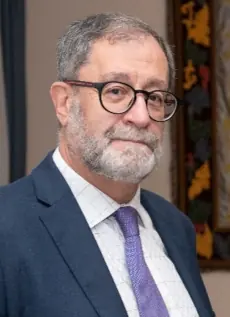
Francisco López Muñoz, Professor of Pharmacology and Vice-Rector for Research, Science and Doctoral Studies at Camilo José Cela University, corresponding member of the Royal Academy of Medicine of the Basque Country and other national and international academies, and full member of the Royal European Academy of Doctors (READ), examines the origins of road safety in Spain in the article “Creation of the Civil Guard Traffic Group,” published this August in the anniversaries section of the Academy of Military Sciences and Arts, of which he is a corresponding member. The expert recently published in the same section the article “The Terrorist Attack in Plaza de la República Dominicana against the Civil Guard and the Paradigm Shift in the Fight against ETA,” recalling one of the terrorist organisation’s most violent attacks.
The academic recalls how, on 26 August 1959, the Traffic Group of the Civil Guard was officially created, marking a key milestone in the modernisation of road safety in Spain. Although surveillance of roads and overland communications had formed part of the force’s duties since its foundation in 1844, the rapid growth of the motor vehicle fleet during the 1950s made a specialised and permanent structure essential. Its most immediate precedents, he notes, date back to the Road Watchmen Corps of 1929 and, after the Civil War, the Armed and Traffic Police Corps of 1941. However, the high accident rate, with more than 1,700 deaths in traffic-related accidents in 1958, together with pilot schemes launched in 1953 on the roads leading into Madrid, prompted a far-reaching reform.
The Traffic Group was created with a staff of 402 Civil Guards, under the command of a colonel, and included motorcycle officers wearing green helmets, brown leather jackets and riding boots, as well as accident-report specialists, drivers and mechanics. Its first operational service took place on the night of 5 to 6 September 1959 on the N-V road between Madrid and Talavera de la Reina, and on that very occasion it saved the life of a seriously ill young girl, symbolising its dual preventive and humanitarian vocation. A few months later, on 21 December, the Madrid Sector escorted US President Dwight Eisenhower during his visit to Spain. According to the expert, the Traffic Group professionalised traffic surveillance, standardised procedures for regulation, accident investigation and assistance, and over time became an essential instrument of road safety policy.
 A recognised communicator on contemporary history, Spanish Golden Age literature, medicine and pharmacology, López Muñoz holds doctorates in Medicine and Surgery and in Spanish Language and Literature, is a specialist in Pharmaceutical Medicine and holds a diploma in Holocaust Studies from the International School for Holocaust Studies at Yad Vashem in Jerusalem. He is a researcher at the Hospital 12 de Octubre Research Institute in Madrid, a member of the Governing Council of the HM Hospitales Health Research Institute and of the Miguel de Cervantes Institute of Medieval and Golden Age Studies at the University of Alcalá de Henares, a member of the Science and Technology Council of the Community of Madrid, scientific adviser to the Ibero-American Committee on Ethics and Bioethics, a member of the Observation Committee of the Spanish Human Rights Observatory, of the Spanish Chapter of the Club of Rome, and an honorary member of the Gandhi-Mandela Foundation.
He has participated in numerous research projects and is the author of monographs and articles in his fields of expertise. He was recently appointed an honorary Kentucky Colonel and Honorary Civil Guard, coinciding with the 25th anniversary of the creation of this distinction, the force’s highest civilian honour, awarded only in exceptional cases. On 20 March, he was also awarded the Medal of Merit in Cyber Defence, granted by the Professional Association of New Technology Experts.