

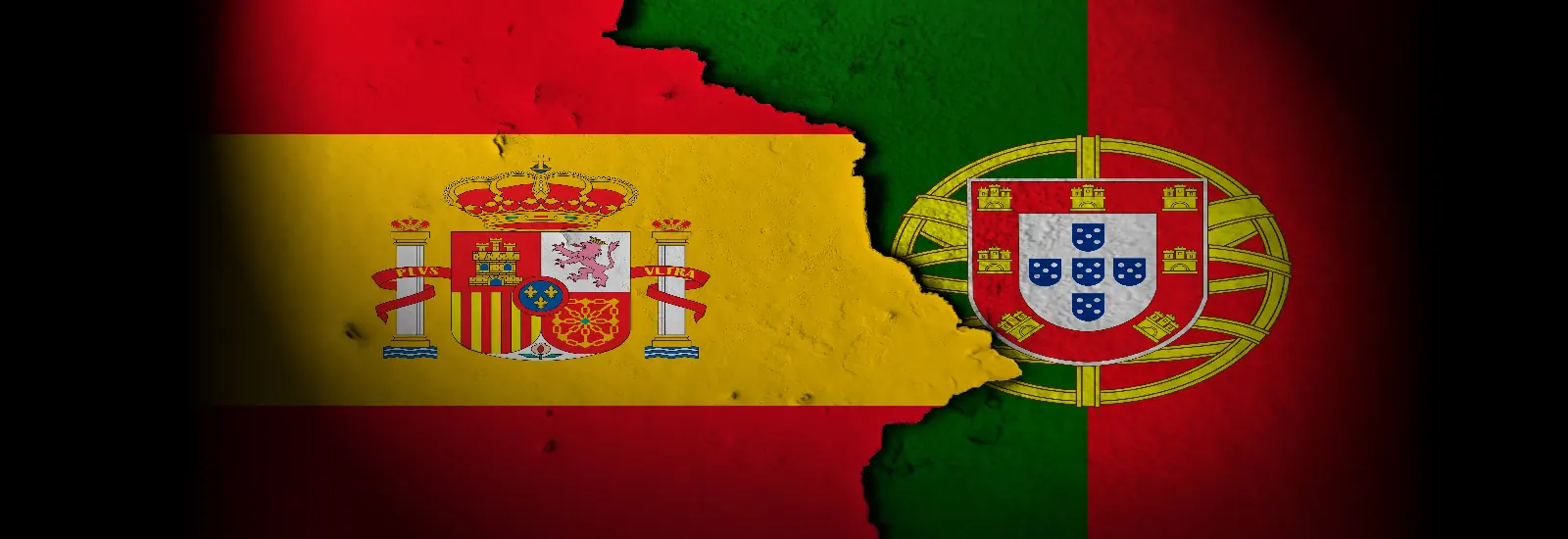
Frigdiano Álvaro Durántez, Director of the Chair of Ibero-American Studies and Iberophony at the Ibero-American University Foundation (FUNIBER) and a collaborator of the Royal European Academy of Doctors (RAED), is the subject of a feature published by the digital newspaper El Independiente on 15 July, explaining the concept of Iberophony and the ambitious educational and diplomatic project being promoted by the Foundation itself to create a community of 900 million Spanish- and Portuguese-speaking people with a common purpose. “Spanish geopolitics is not designed only in ministerial offices, international summits and official receptions; sometimes it is consolidated in places as remote as Cuito, the capital of the central province of Bié, in the heart of Angola. There, the Ibero-American University Foundation, based in Barcelona, has just announced the launch of a Medicine degree programme, the first of its kind in the region, and the creation of a network of small local campuses to structure access to higher education across the African country,” journalist Borja Martínez begins his report.
El Independiente explains how, in recent days, the Angolan Minister of Higher Education received FUNIBER’s senior leadership in Luanda, headed by Santos Gracia Villar and supported by the Spanish Ambassador to Angola. The reason was none other than the success of the International University of Cuanza, founded in 2021 by FUNIBER and already regarded as the country’s second-best university in terms of quality. It is now preparing to launch a Medicine degree, the first in the province, together with a network of satellite campuses to bring higher education closer to students who are unable to travel to Cuito. Behind this expansion, Martínez explains, lies a deliberate strategy promoted by Durántez to move beyond the traditional concept of Hispanidad, integrate the Portuguese-speaking world and build a multinational space with geopolitical weight in the face of powers such as China, France and India in Africa.
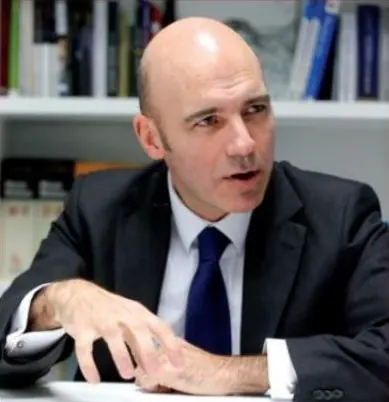
Mr Frigdiano Álvaro Durántez
“To understand the significance of this movement, we must go back to early 2022, when FUNIBER, with a presence in more than 30 countries and with its own universities and centres in Angola, Mexico, Puerto Rico, the Dominican Republic and Colombia, in addition to the European University of the Atlantic, founded in Santander in 2013, recruited Durántez as Director of Institutional Relations. It was this discreet political scientist and expert in international relations, a former adviser for Studies and Reports at the Royal Household, who was decorated by Felipe VI with the Order of Charles III, who introduced the concept of Iberophony into the King’s speeches: a multinational space bringing together Spanish- and Portuguese-speaking countries, breaking down the traditional boundaries of Hispanidad in order to integrate the Portuguese-speaking world,” the report continues.
This arduous work will reach a turning point, the journalist continues, with the thirtieth Ibero-American Summit, to be held in Madrid on 4 and 5 November, bringing together heads of state and government from this broad cultural community. “Durántez has already made his move. Specific participation by delegations from Angola and other African Iberophone countries is planned for the summit in the Spanish capital. A milestone which, in the words of the initiative’s chief advocate, will provide a far-reaching geopolitical and strategic boost to the Ibero-American system of dialogue and cooperation,” the article concludes. Durántez himself recently took part in the first edition of the Summer School organised by the Atenea Foundation, held in the Cantabrian town of Comillas, where he delivered the lecture “Iberophony, an Axis for Spain’s Foreign Policy: the Pan-Iberian Space”, presenting the context of Iberophony as a major global linguistic and cultural sphere and the work carried out by the Chair of Ibero-American Studies and Iberophony to increase knowledge and promote it. The event brought together renowned jurists, economists, academics, intellectuals and analysts under the theme “Rebuilding Democracy and Restoring Trust in Spain”.