



Bernat-Noël Tiffon Nonis and Rocío Margarita Naveja Oliva are admitted to the RAED
Hall A at the headquarters of Foment del Treball. Via Laietana, 32, Barcelona
Thursday, 16 April 2026
18:00 h
Format: On-site and live streaming
Registration: Please confirm attendance with the Secretariat: secretaria@raed.academy or by phone +34 93 667 40 54
Artificial Intelligence (AI) and Criminal and Forensic Psychology: ally, rival, ethics and deontology? Are we on the right path?
Previously, Dr Bernat-Noël Tiffon Nonis was admitted as a Corresponding Member of the Royal European Academy of Doctors (RAED) with his admission speech entitled “Artificial intelligence (AI) applied to criminal and forensic psychology: challenge, reality or fiction?”.
On this occasion, he is admitted as a Numerary Member, presenting a new admission speech entitled “Artificial Intelligence (AI) and Criminal and Forensic Psychology: are we on the right path?”.
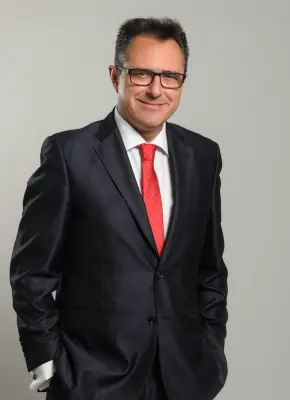
Dr. Bernat-Noël Tiffon
New horizons are opening in our contemporary society with the application of AI in almost all fields. For those of us born in the era of the “Baby Boomers” (1950s–1970s), Generation X (1970s–1980s) and Millennials (1980s–2000), it represents a significant advance that may exceed our limited technological understanding; by contrast, for those belonging to Generation Z (2000–2010) and Generation Alpha (2010–2025), there is nothing to understand—they experience and use it naturally in everyday life.
The social revolution brought about by the integration of AI into society has disrupted the traditional nineteenth-century patterns of personal, interpersonal and even socio-professional relationships. It is no longer merely a matter of AI applied to leisure and entertainment. AI has had a wide media and social impact, in some cases with legal consequences.
Hence, the purpose of this admission speech as a Numerary Member focuses on this highly topical issue and, as the title suggests, on whether we are heading in the right direction.
Ethical and deontological aspects, as well as issues relating to the application and use of AI in Criminal and Forensic Psychology, and even in Legal and Forensic Medicine and Law, will be addressed from the standpoint of the current state of the art.
Progressive structural criminological vulnerability: analysis of school disengagement as a factor of criminal risk

Dr. Rocío Margarita Naveja
This paper offers a critical and multidimensional evaluation of the Alas Guanajuato Model, based on the Progressive Structural Criminological Vulnerability Model (MOVCEP), which suggests that, in order to reduce crime rates, it is more effective to implement school-based models in basic education for adolescents, supported by extended schedules and a convergence of scientific evidence, with the participation of the universities of the State Council for Educational Planning of the State of Guanajuato; the involved state departments (Education, Nuevo Comienzo, Culture, Sport, Prevention), as well as the prevention departments of the 46 municipalities and the State Security Council, all of which must be evaluated from the perspective of systemic complexity.
At present, public educational policy aimed at basic education addresses exclusion not only as a pedagogical phenomenon, but as a structural criminogenic factor that facilitates the “territorial capture” of adolescents by illicit economies. Through the intervention of “Retention Leaders” (university mentors) and the technical coordination with the Network of Promoters of the Secretariat of Education of Guanajuato (SEG) and other partners, the model seeks to reverse processes of school disengagement detected through early warning systems and psychosocial risk diagnostics. The theoretical framework is based on the malleability of secondary psychopathy, that is, the presence of high levels of family violence, anxiety, depression, even due to hunger, as well as guilt associated with outbursts of anger or responses to perceived threats, considering that these may originate in childhood abuse, neglect or upbringing in high-crime environments; therefore, it is argued that school is the primary protective factor against antisocial trajectories. It is concluded that school retention is the scientifically and financially superior alternative to penal expansionism.
Watch the event live
You will be able to follow the event live from this page.
Organised by:


In collaboration with: