

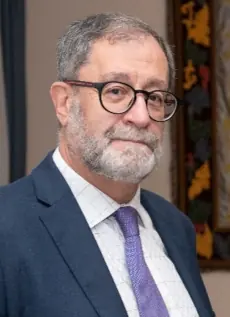
Dr Francisco López Muñoz
Francisco López Muñoz, Professor of Pharmacology and Vice-Rector for Research, Science, and Doctoral Studies at the Camilo José Cela University, member of the Academy of Military Sciences and Arts, Corresponding Member of the Royal Academy of Medicine of the Basque Country, and Full Member of the Royal European Academy of Doctors (READ), reflects on the dynamics of violent organizations in Mexico following the death of the leader of the Jalisco New Generation Cartel in a recent police operation in the article “The Death of El Mencho Triggers a Wave of Violence that Reveals the Power of the Narco and Its Capacity to Reconfigure Itself.” The article was published on 23 February in the specialized platform The Conversation and later reproduced by several Spanish media outlets such as the newspaper “El Periódico.” López Muñoz co-authored the piece with Francisco Pérez Fernández, Professor of Criminal Psychology, Psychology of Crime, History of Psychology, Profiling, and psychosocial researcher and expert in the history of graphic novels at the Camilo José Cela University.
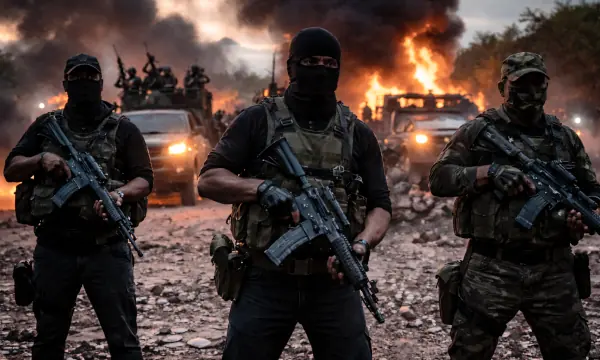
“The operation that ended the life of the leader of the Jalisco New Generation Cartel, Nemesio Oseguera Cervantes, has unleashed an unprecedented wave of violence in the streets of Mexico. This response, organized and distributed across several states, reveals that the hydra of organized crime is far from extinguished. Rather, the death of El Mencho fits into a pattern already known in Mexican organized crime: eliminating the leader does not destroy the existing structure—deeply consolidated socioculturally, economically, and politically—but will most likely catalyze internal transformations and violent realignments,” the experts begin their analysis.
López Muñoz and Pérez Fernández explain that the cartel emerged around 2009 following the fragmentation of other criminal organizations and quickly consolidated itself as one of the most powerful cartels in the country. Its expansion relied on a decentralized structure based on autonomous regional cells with strong paramilitary capabilities, which enabled it to operate effectively across much of Mexican territory and maintain its functioning even after the death of its leader. Since then, the Jalisco New Generation Cartel has developed significant operational and military capacity, evidenced in coordinated actions such as blockades, simultaneous attacks, and the use of heavy weaponry. In addition, it functions as a complex criminal organization with multiple sources of funding linked to international drug trafficking, particularly synthetic drugs.
The article emphasizes that the power of such organizations does not depend solely on a single leader but on deeply rooted economic, social, and territorial structures. For the authors, therefore, the death of El Mencho does not mark the end of the criminal organization but rather the beginning of a phase of reconfiguration that may lead to a more fragmented, unstable, and potentially more violent scenario. In their conclusion, López Muñoz and Pérez Fernández argue that in this case—as in many similar situations—the fall of a cartel leader represents the closure of a symbolic stage but confirms the adaptability of organized crime and its persistence as a structural phenomenon in Mexico. “From all this, it can be inferred that rather than signaling the end of Mexican narcotrafficking as we know it, the indications seem to point toward an atomization and diversification of the model,” they conclude.
 A recognized communicator of contemporary history, Spanish Golden Age literature, medicine, and pharmacology, López Muñoz holds doctorates in Medicine and Surgery and in Spanish Language and Literature, is a specialist in Pharmaceutical Medicine, and holds a diploma in Holocaust Studies from the International School for Holocaust Studies at Yad Vashem in Jerusalem. He is a researcher at the Hospital 12 de Octubre Research Institute in Madrid, a member of the Governing Board of the HM Hospitales Health Research Institute, and a member of the Miguel de Cervantes Institute for Medieval and Golden Age Studies at the University of Alcalá de Henares. He also serves on the Science and Technology Council of the Community of Madrid, is a scientific advisor to the Ibero-American Committee on Ethics and Bioethics, a member of the Observation Committee of the Spanish Human Rights Observatory, of the Spanish Chapter of the Club of Rome, and an honorary member of the Gandhi–Mandela Foundation. He has participated in numerous research projects and is the author of monographs and articles in his areas of specialization. Recently he was appointed honorary Colonel of Kentucky and Honorary Civil Guard, coinciding with the 25th anniversary of the creation of this distinction—the highest civilian recognition of the corps, granted only on exceptional occasions.