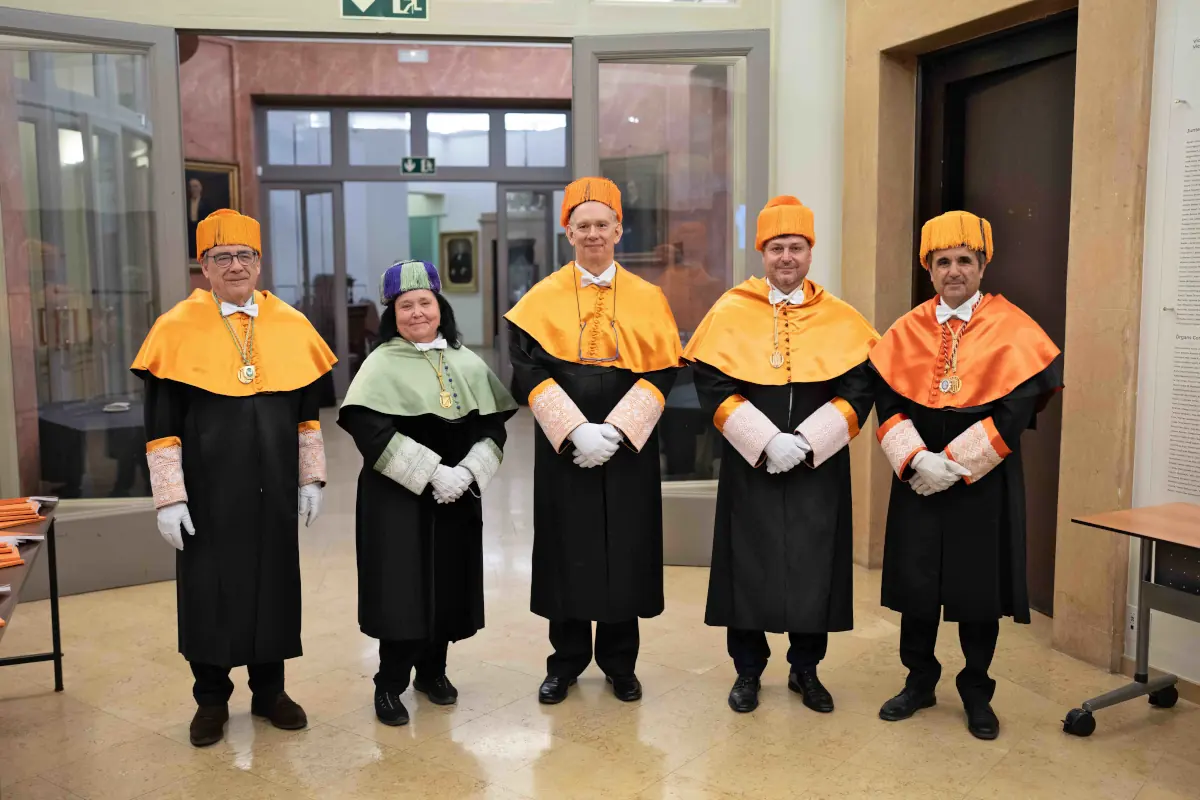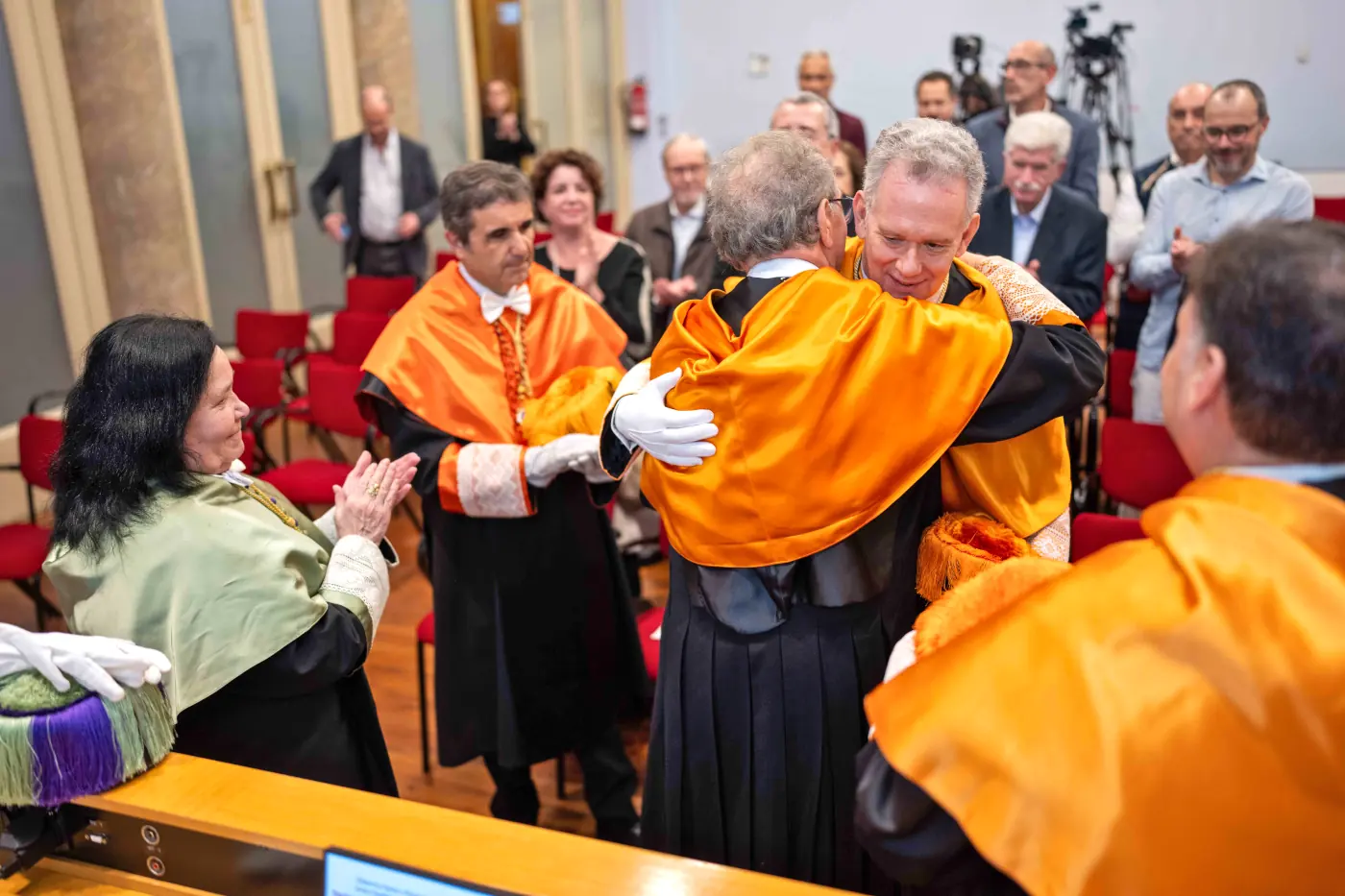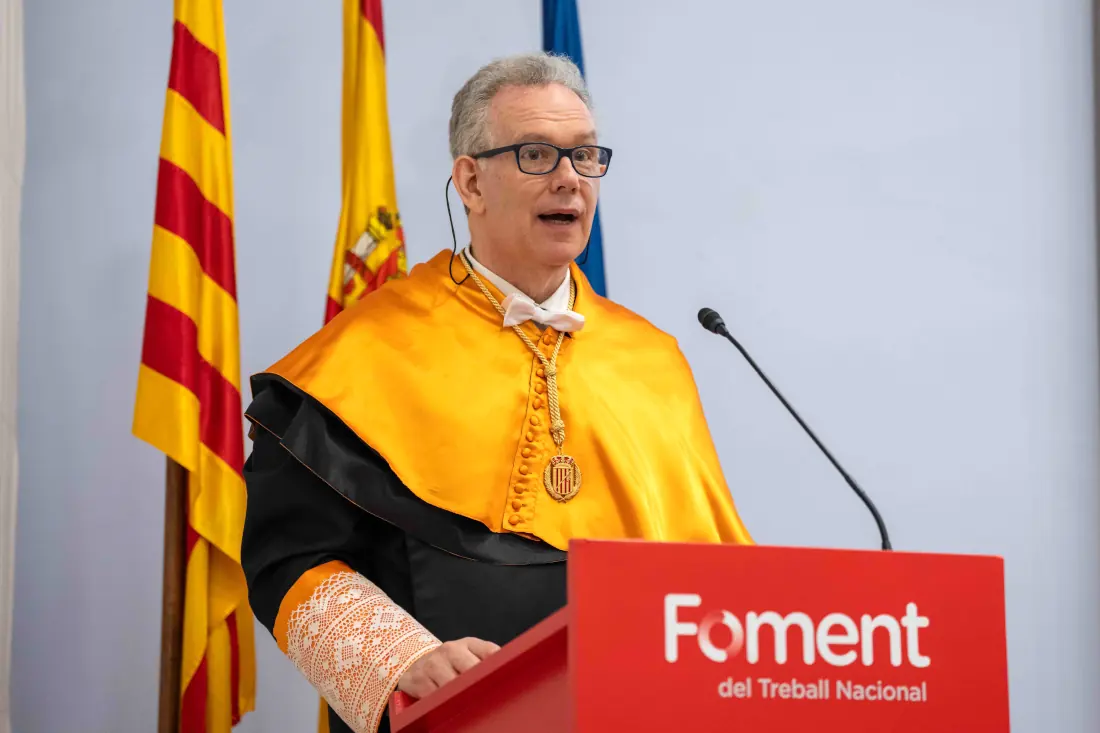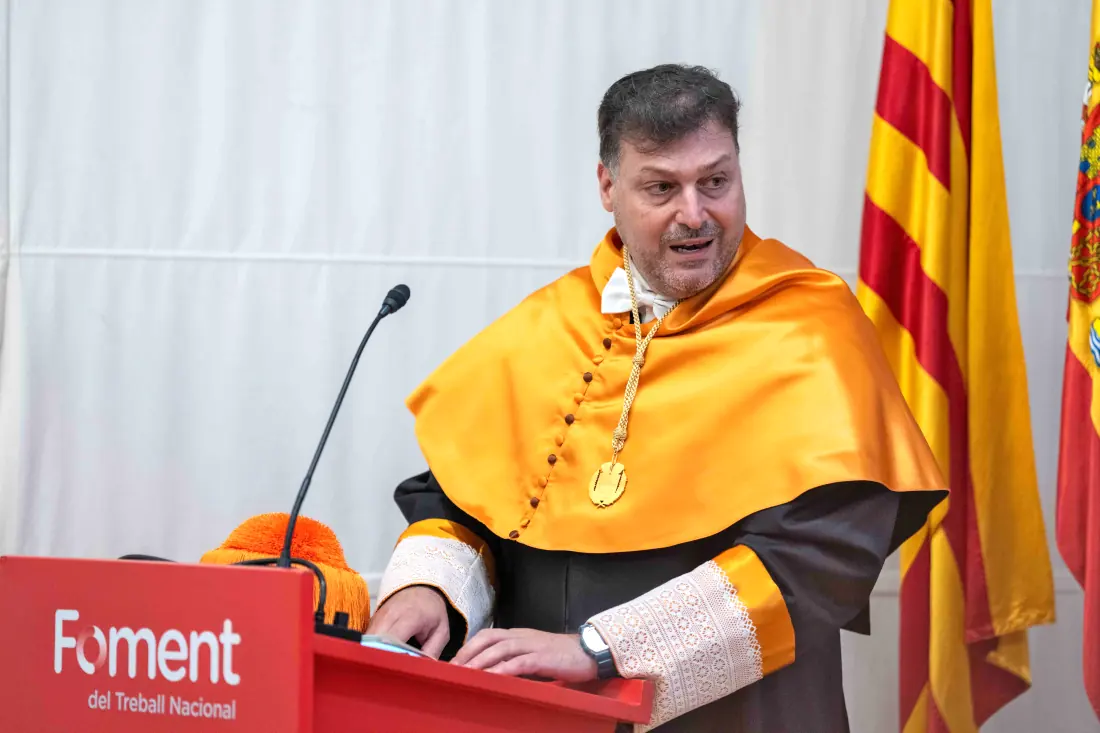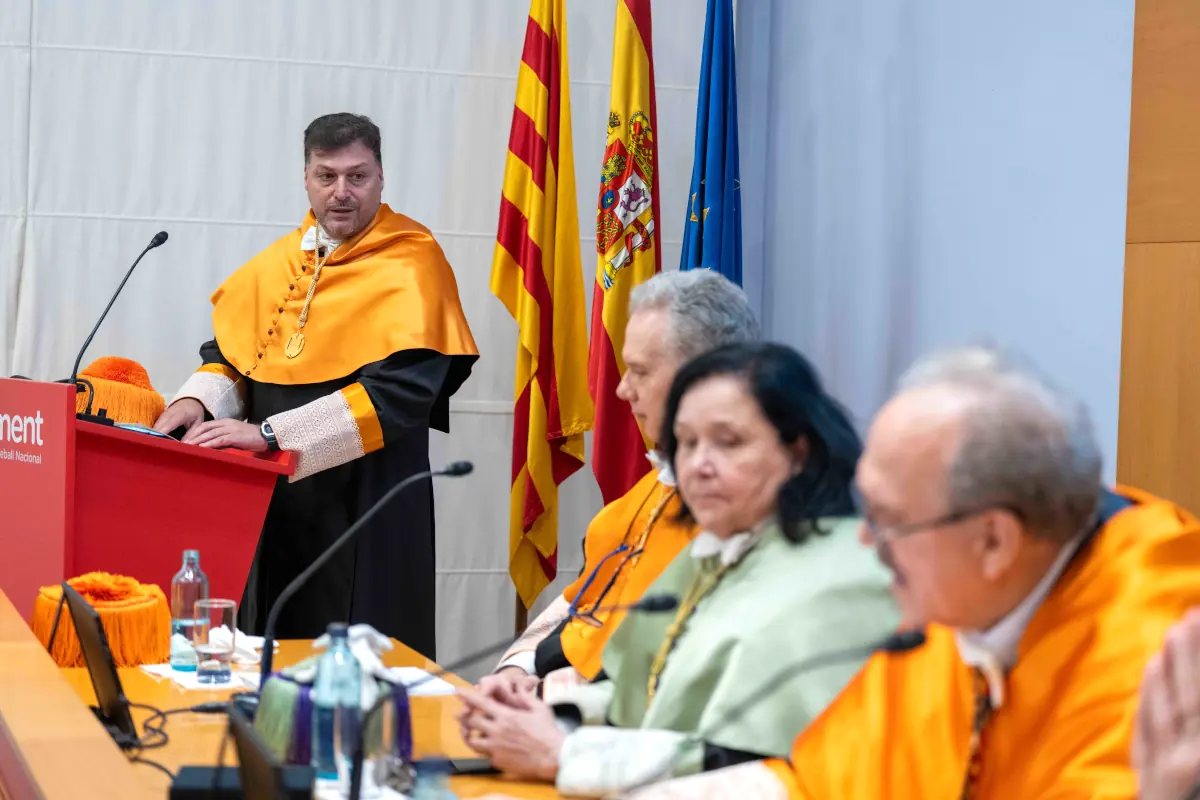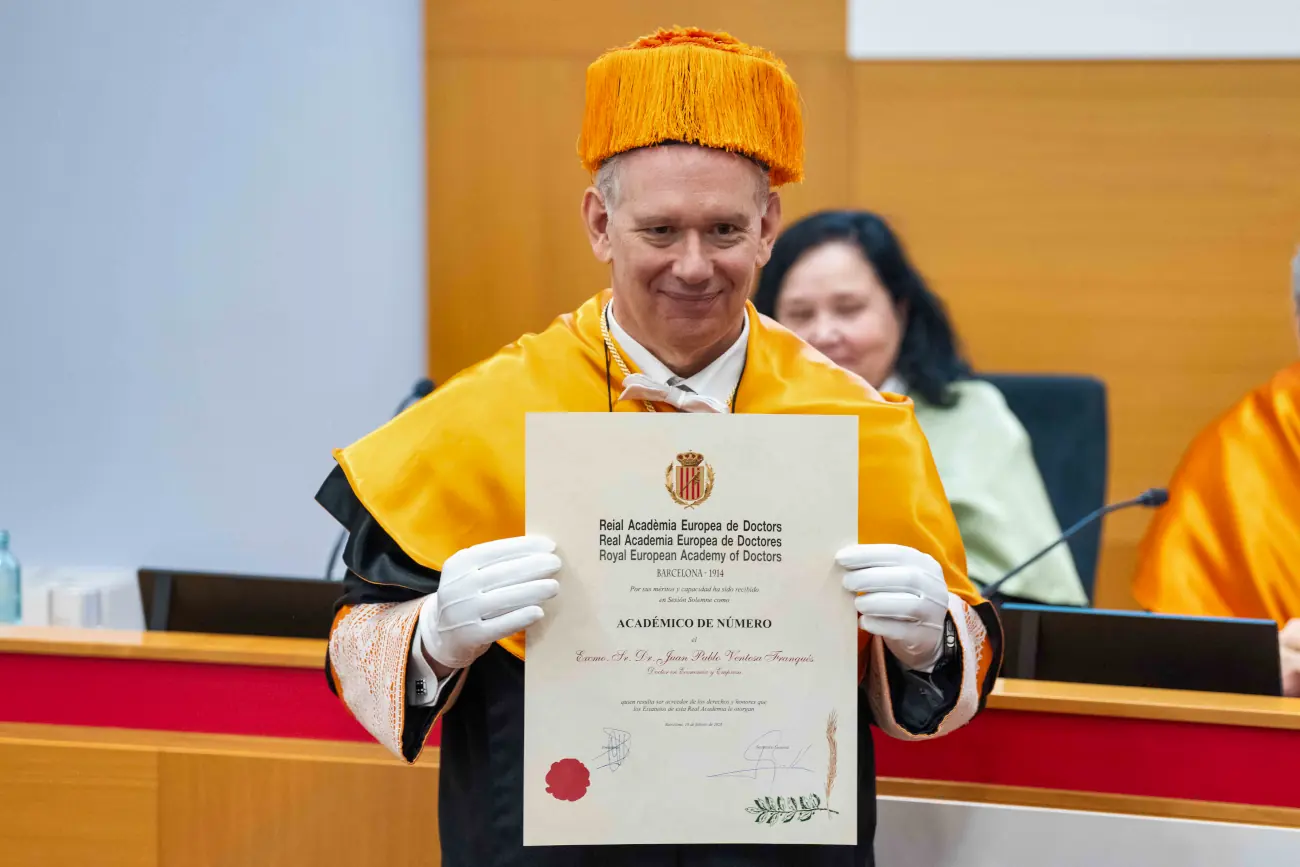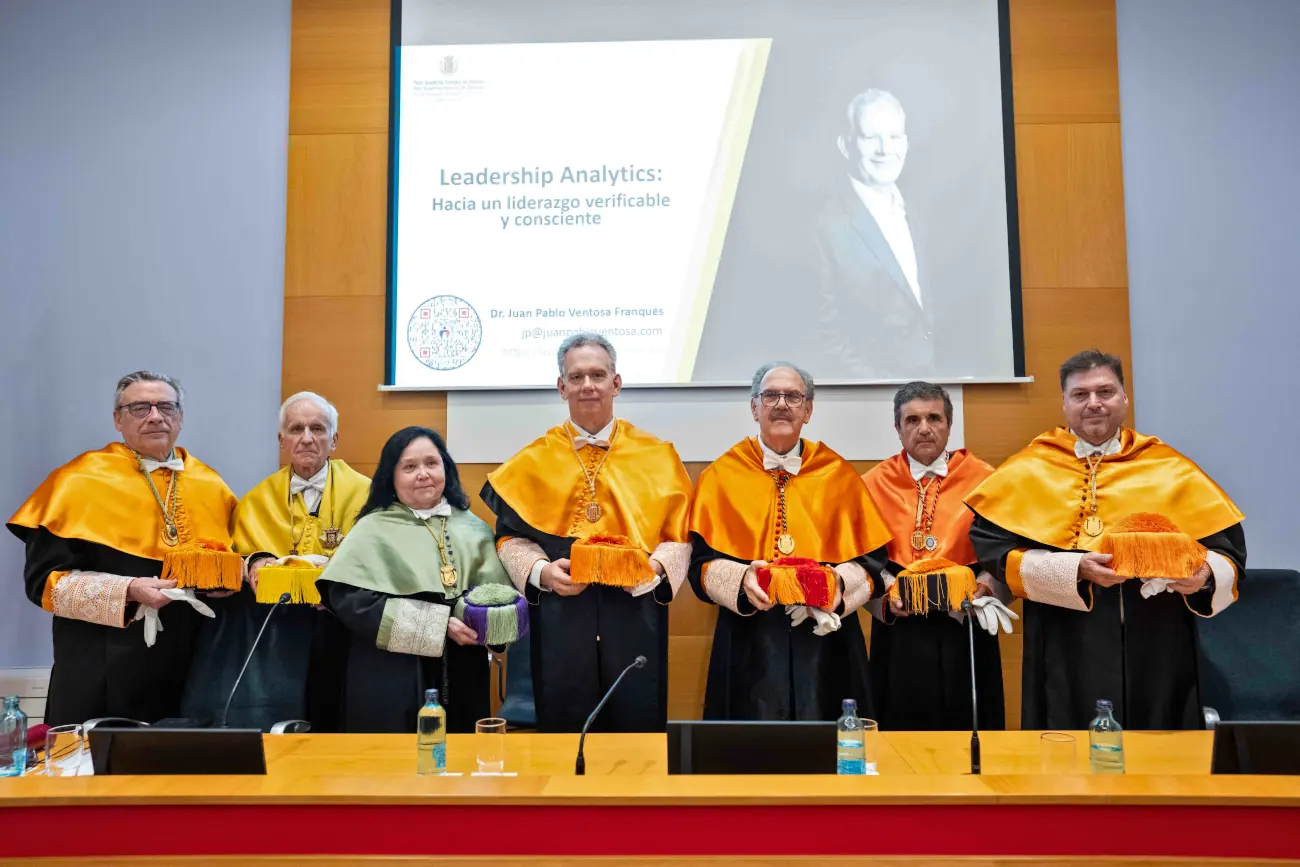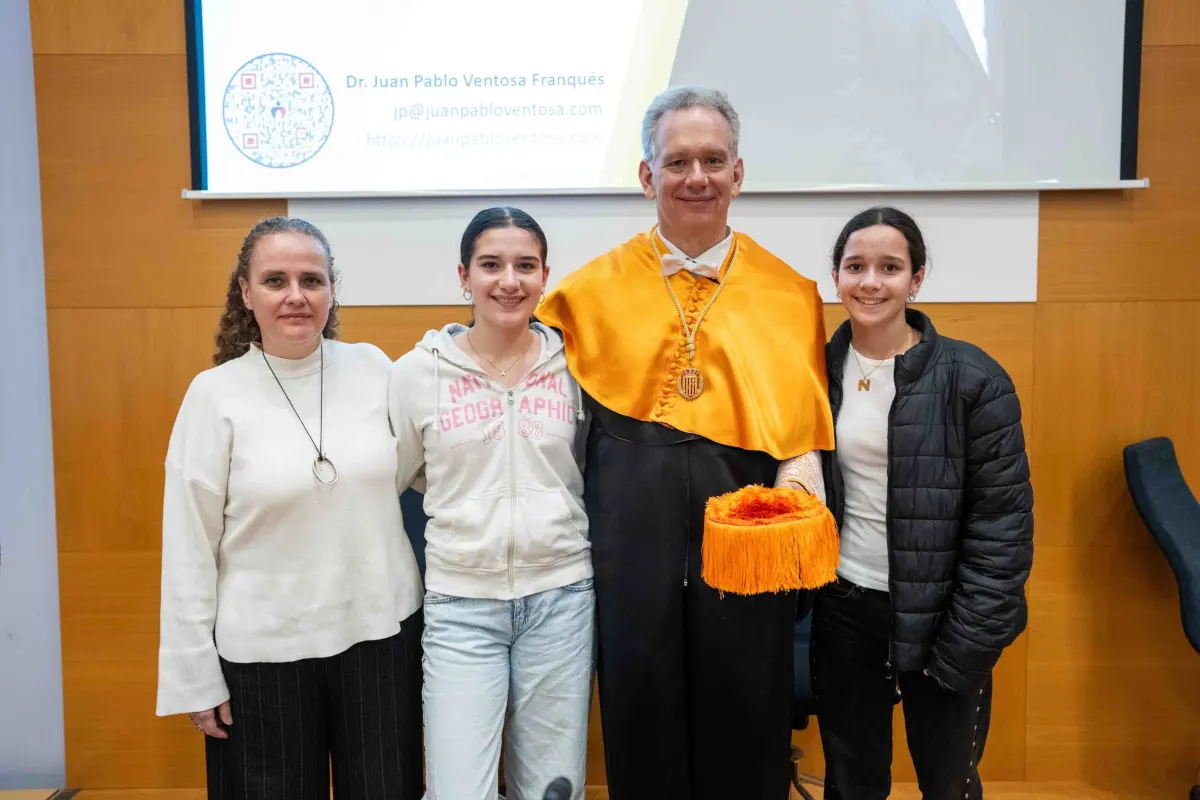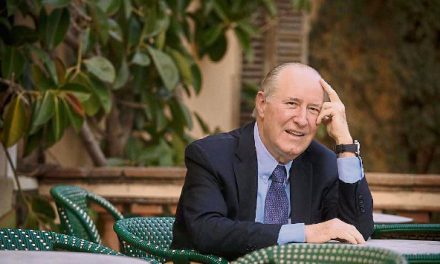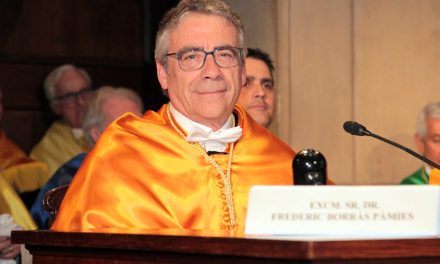



Juan Pablo Ventosa, PhD in Economics and Business and founding partner of the consulting firm Human Performance, was inducted as a Full Member of the Royal European Academy of Doctors (READ) during a solemn ceremony held on 18 February at Fomento del Trabajo, the Academy’s headquarters. The new academic delivered his inaugural address “Leadership Analytics: hacia un liderazgo verificable y consciente” (Leadership Analytics: Toward Verifiable and Conscious Leadership), in which he called for a form of business leadership that moves beyond being an abstract and arbitrary concept to become a verifiable, conscious, and adaptive discipline. On behalf of the Academy, he was welcomed by Full Member and Dean of the MBA at the Esade Business School, David López.
According to Ventosa, leadership in today’s organizations is a critical factor for sustainability and social progress, yet it has traditionally been based more on perceptions of personality, ownership structures, corporate consensus, or accumulated experience than on evidence regarding its development and effectiveness. His proposal—developed over the course of a long and successful career in business consulting—consists of applying analytical methods that make it possible to measure the quality of leadership, assess its impact, and manage it as a strategic asset.
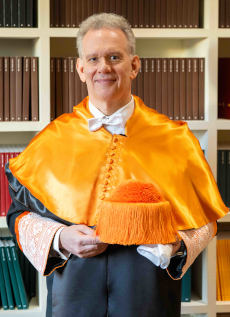
Dr Juan Pablo Ventosa
“We are facing a practical necessity: to establish a mechanism that enables the governance of organizational leadership with the same discipline applied to other areas such as quality, safety, or sustainability. Its function is to ensure that leadership remains aligned with strategic purpose and corporate values. This mechanism seeks not only to align leadership styles but to ensure their coherence with strategy, transforming leadership into a verifiable and manageable asset,” he stated.
Ventosa also warned of a crisis of leadership in a context characterized by accelerated change, digital transformation, and global uncertainty. Many organizations, he explained, lack objective systems for evaluating the coherence and effectiveness of their executives, which generates mistrust, cultural fragmentation, and a loss of purpose. For the expert, leadership should not be understood as an individual trait but as an organizational system. In his Leadership Analytics model, intangible aspects such as trust, coherence, and purpose are systematized into verifiable indicators that support better decision-making and corporate sustainability.
The economist emphasized that, according to these indicators, organizations with coherent leadership achieve better results, greater talent engagement, and higher stability. Conversely, the absence of effective leadership produces hidden costs, deteriorates workplace climate, and jeopardizes institutional futures. In his address, Ventosa concluded with a call to professionalize leadership, asserting that only leadership that combines data, awareness, and responsibility will be able to confront the challenges of the 21st century and contribute to building more reliable organizations and more just societies.
“Conscious and verifiable leadership does not seek heroes but systems that generate collective coherence. In a time of complexity and distrust, coherence is the new capital. Companies that manage it with method and purpose will be those worthy of enduring. Academic thought now faces the challenge of accompanying this transformation. The science of leadership must unite analytical tools with the depth of ethical judgment. Only in this way can the economy recover its original meaning: to serve the common good,” he concluded.
Author of the reference work in human resource management “Leadership Analytics,” Ventosa promotes an innovative vision of leadership understood as a system integrating science, awareness, and results. His approach combines executive experience with a solid methodological foundation linking the quality and quantity of leadership to business sustainability. He has developed his career as a professor, consultant, and advisor, working with executives, boards, and family-owned businesses in Spain and Latin America, and has taught at leading business schools. Human Performance is a benchmark consulting firm in talent management and organizational efficiency, with offices in Madrid, Barcelona, Mexico City, and Monterrey, and extensive experience advising top-tier international companies.
Speech “Leadership Analytics: hacia un liderazgo verificable y consciente”