

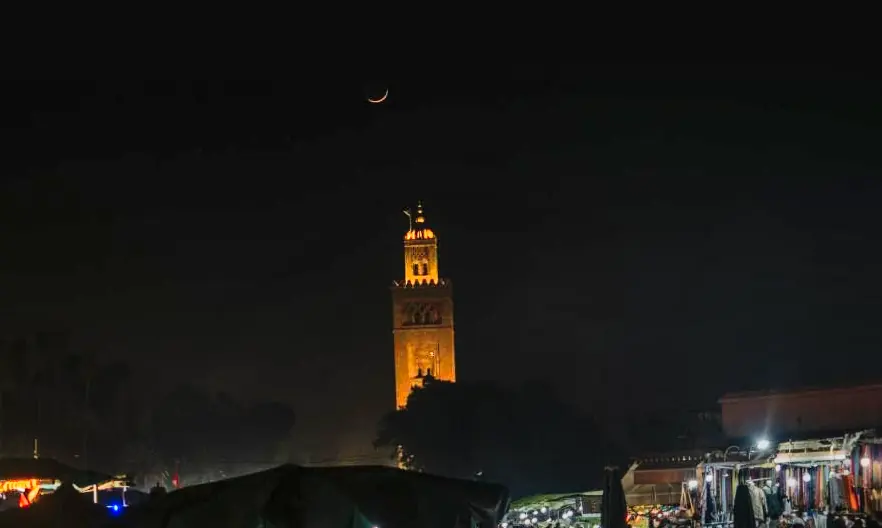
Luis Pons, Corresponding Member of the Royal European Academy of Doctors (READ), shares with the academic community the photo gallery “The New Moon over Marrakech,” published on 22 January in the section “Readers’ Photos” of the digital edition of the newspaper “La Vanguardia.” “I took this photograph for the ‘FotoFlash’ section of ‘Readers’ Photos’ in La Vanguardia on 20 January, after sunset, while strolling through Jemaa el-Fna Square in Marrakech. It was at that moment, amid the bustle of this famous square, that the new moon appeared to me, crowning the minaret of the Koutoubia Mosque, which inspired the Giralda of Seville,” explains the photographer in the text accompanying the gallery.
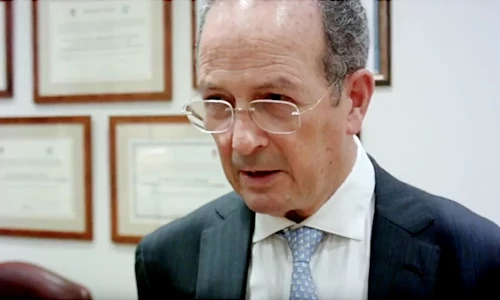
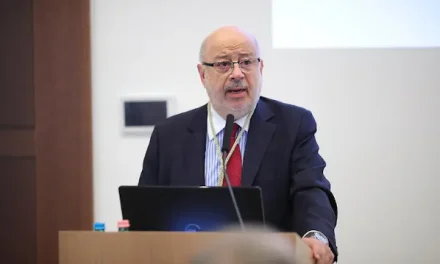
Dr. Luis Pons Puiggros
With this work, Pons returns to a theme that has earned him recognition from both readers and professional photographers at the publication. Among his most celebrated lunar-themed galleries are “The Moon’s Daily Visit”, “The Waxing Moon Levitates Among Wind Clouds”, “Discover the Language of the Moon”, “The New Moon Shines as Never Before in Barcelona”, “The Settings of Bécquer’s ‘El rayo de luna’”, “The Deer Moon Rests over La Ràpita”, and “Omega Effect of the Moon in the Ebro Delta”.
The academic is one of the regular contributors to this section, where he has published numerous photographic series on diverse themes, all warmly received by readers. Among his most recent galleries are “The Chupa Chups of the Collserola Tower”, “Images of the Sant Joan Festivities”, “How Were the New Year’s Fireworks Seen in Barcelona?”, “Guide to Identifying the Birds of Diagonal Mar”, “When the Moon Rises Beside the Torre Glòries”, “The Creative Universe of Frida Kahlo, in Monochrome and Color”, “Are Pickpockets Reappearing in Barcelona?”, “Dragonflies Return to Barcelona”, “The Milky Way with Meteorites in La Cerdanya”, “The Living Nativity Scene of Corbera”, and “The Colors of Autumn in Montseny”, one of whose images was selected among the best photographs of last November.
Luis Pons discovered photography in the 1980s, driven both by his interest in the chemical process of developing negatives in analog photography and by his proximity to the photography departments of the newspapers “El País” and “Avui,” where he worked as an executive, as he has explained to fellow academicians who have followed his work in recent years. From there, he transitioned to digital photography.