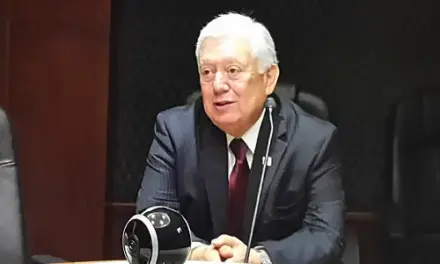


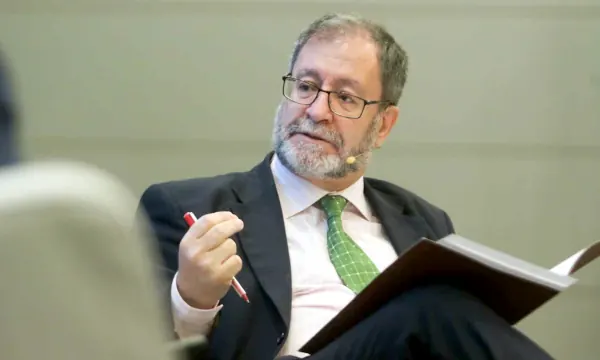
Dr. Francisco López Muñoz
Francisco López Muñoz, Professor of Pharmacology and Vice-Rector for Research, Science, and Doctoral Studies at the Camilo José Cela University, member of the Academy of Military Sciences and Arts, Corresponding Member of the Royal Academy of Medicine of the Basque Country—as well as those of Cádiz, Seville, Eastern Andalusia, and Castile-La Mancha—and Full Member of the Royal European Academy of Doctors (READ), has published in the cultural journal “Hasta el tuétano”, together with Francisco Pérez Fernández, Professor of Criminal Psychology and History of Psychology at the Camilo José Cela University, the article “Psychoanalysis, Quixotes and Enchanted Dogs: When Freud Met Cervantes.” In this work, the authors explore the interest of the renowned psychiatrist in classical literature and, in particular, in the universe surrounding madness created by Miguel de Cervantes in his works.
The two scholars explain that during his adolescence the founder of psychoanalysis established, together with his friend Eduard Silberstein, a secret society called the Spanish Academy, aimed at learning the language and reading Cervantes in the original version. Both adopted the names Cipión and Berganza, the canine protagonists of “The Dialogue of the Dogs,” one of Cervantes’s “Exemplary Novels.” In their youthful correspondence—part of it written in Spanish—Freud used these pseudonyms and developed an epistolary exchange that some scholars consider an embryonic antecedent of the therapeutic dialogue that would later characterize the psychoanalytic method.
According to López Muñoz and Pérez Fernández, “Don Quixote”, with its conflict between reality and fantasy embodied by Don Quixote and Sancho Panza, marked the genesis of certain principles of psychoanalysis. Cervantes’s work has indeed been the subject of multiple interpretations from a Freudian perspective. The character of Don Quixote has been analyzed in terms of neurosis, narcissism, repression, death drive, and the conflict between desire and reality. The authors conclude that although it cannot be stated that Cervantes exerted a direct and decisive influence on Freudian theory, the epistolary evidence and conceptual parallels suggest that his reading played a significant role in Freud’s intellectual formation, and that the convergence between literature and psychoanalysis—far from being anecdotal—constitutes an essential dimension of a body of work that constantly oscillated between science and narrative.
In addition, López Muñoz shares with the academic community his participation in “Las Minervas de la Academia,” a series of educational episodes disseminated by the Academy of Military Sciences and Arts through its YouTube channel, aimed at bringing prominent figures and episodes of Spanish military history closer to the general public. In this case, the episode focuses on the legendary scientist Santiago Ramón y Cajal.
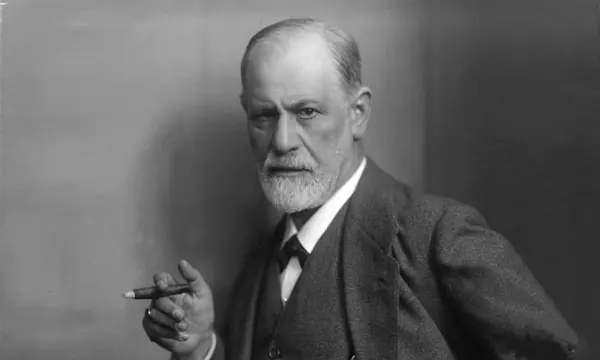
Sigmund Freud
“Santiago Ramón y Cajal, Nobel Prize in Physiology or Medicine in 1906, always felt a strong attraction to the military: ‘It would make me the happiest of men,’ he wrote in his ‘Memoirs.’ He joined the Military Medical Corps in 1873 as a second lieutenant physician and, although assigned to the Carlist front, did not participate in combat operations. In 1874 he was deployed to the Cuban Expeditionary Army as a medical captain, remaining on the island for fourteen months. He served in what was considered the worst possible posting—the field infirmaries of Vista Hermosa and San Isidro—isolated stations deep in the jungle, unhealthy and difficult to supply. There he treated soldiers wounded in action as well as patients suffering from malaria and dysentery, arriving from mobile operational columns in Camagüey. He even took part, rifle in hand, in defending his camp against attacks by insurgent forces, commanding all able patients. Military command showed little interest in his scientific work; indeed, the commander of his outpost requested his replacement because he spent hours ‘looking through a tube.’ After contracting malaria and dysentery, Cajal was diagnosed with severe malarial cachexia and declared unfit for campaign service, returning to Spain in June 1875,” explains the expert in the video.
A recognized scholar and science communicator in contemporary history, Spanish Golden Age literature, medicine, and pharmacology, López Muñoz holds doctorates in Medicine and Surgery, Spanish Language and Literature, and Biomedicine and Pharmacy. He is a specialist in Pharmaceutical Medicine and holds a diploma in Holocaust Studies from the International School for Holocaust Studies at Yad Vashem in Jerusalem. He is a researcher at the Hospital 12 de Octubre Research Institute in Madrid, a member of the Governing Board of the HM Hospitales Health Research Institute, and of the Miguel de Cervantes Institute for Medieval and Golden Age Studies at the University of Alcalá de Henares. He serves as a member of the Science and Technology Council of the Community of Madrid, scientific advisor to the Ibero-American Committee on Ethics and Bioethics, member of the Observation Committee of the Spanish Human Rights Observatory, the Spanish Chapter of the Club of Rome, and honorary member of the Gandhi-Mandela Foundation. He has participated in numerous research projects and is the author of monographs and articles in his fields of expertise. He has recently been appointed Honorary Colonel of Kentucky and Honorary Civil Guard, coinciding with the 25th anniversary of the creation of this distinction, the highest civilian honor awarded exceptionally by the corps.