


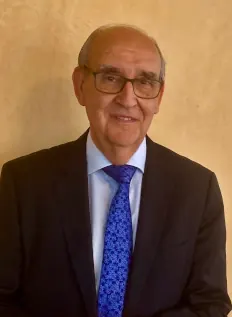
Sr. Antoni Garrell
Antoni Garrell, President of HM Hospitales and Honorary Member of the Royal European Academy of Doctors (READ), reflects on the future of engineering and the role it must play in Europe’s technological and industrial sovereignty in the articles “The Future of Engineering: Is Education Adequate?” and “Europe Does Have the Capacity to Achieve Technological Sovereignty,” published respectively in the digital publication Fulls d’Enginyeria, edited by Enginyers de Catalunya—the College and Association of Industrial Engineers of Catalonia—and in Crónica Global, a supplement of the digital newspaper El Español, on January 19 and 22.
In Fulls d’Enginyeria, the expert builds on the conclusions already set out in his latest book, “The Second Digital Revolution: A New Era for Humanity” (Marge Books), recently published, to explain that the challenges facing the engineering profession in a context of accelerated technological change—driven particularly by artificial intelligence—include the need for professionals to acquire more advanced skills to design and optimize complex industrial systems and to lead projects by integrating sustainability and safety, making decisions based on data analysis.
The text emphasizes that this transformation will not be limited to newly graduated engineers but will also require continuous training for practicing professionals, as sustainability, decarbonization, renewable energies, clean industrial processes, and the circular economy will gain increasing importance. Engineering work is also expected to take place within multidisciplinary teams that include economists, sociologists, designers, and legal experts, using simulators, AI-based predictive models, digital twins, and connected environments (IoT). In this regard, the author criticizes current educational curricula for not fully addressing these emerging needs, which could lead to a shortage of professionals prepared for the technological and social challenges of the coming decades.
In Crónica Global, Garrell argues that, in the current economic and geopolitical context, it is necessary to strengthen proposals aimed at reducing strategic external dependencies, prioritizing local production and procurement, redirecting public aid toward projects that increase productivity, promoting a homegrown energy mix, and facilitating business recapitalization and access to productive credit. “A few days ago, following my article entitled ‘Europe Needs to Recover Its Industry: It Is Not a Slogan, It Is a Structural Necessity,’ together with colleagues from the association El País de Demà we organized a meeting to discuss the need for technological sovereignty and the fact that the European Union is at a decisive moment. The combination of geopolitical tensions and high external technological dependence has revealed an undeniable reality: technological sovereignty is no longer an option, but a strategic necessity,” he begins.
For the academic, the priority must be to boost innovation, leverage scientific advances, focus investment on strategic areas, and stimulate economic growth. This change in approach should be supported by appropriate and coherent instruments, such as an active industrial policy, innovative public procurement mechanisms, financial tools geared toward industrial scaling, and a more strategic use of European funds. “All of this requires policies aimed at structuring and strengthening the productive system through a real and stable symbiosis between industry, research centers, and universities. Only in this way will it be possible to capitalize on existing capabilities and rely decisively on industry—the only sector capable of transforming scientific and technological progress into GDP, quality employment, and social welfare,” he states.
 Garrell holds a degree in Industrial Engineering from the Polytechnic University of Catalonia, a master’s degree in Management and Administration, and doctoral studies in Decision Support Systems. A specialist in innovation and the knowledge economy, he has developed an extensive professional career in both computational technology and organizational and strategic management, holding executive positions at companies such as Arthur Andersen, La Caixa, the University and Technology Foundation La Salle, and the Textile Design Foundation. Since 2021, he has served as President of HM Hospitales. He has also been a member of various boards of directors and advisory boards and has held institutional positions, including President of the Circle for Knowledge and of the Executive Council of the Ramon Llull University Foundation.
In the academic sphere, he has taught and lectured at international universities and is the author of more than 850 articles on technical, economic, and opinion topics, as well as the author or co-author of around ten monographs on digital technology, multimedia, and industry. He was also the founder of the technology magazine INPUT. His two most recent books are “Industry 4.0 in the Digital Society” (2019) and “Intelligent and Sustainable Products and Services” (2021). Garrell was admitted to the Royal Corporation on November 20 with the address “The Second Digital Revolution: Are the Digital Economy and Artificial Intelligence Leading Us into a New Era for Humanity?”, in which he reflected on the profound changes generated by the transition toward a disruptive digital era, highlighting both the opportunities and the challenges involved in light of the effects of previous transformative revolutions.