


Dr. Agustín Moreno
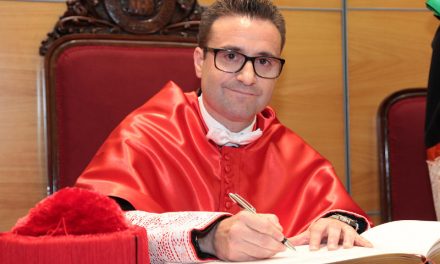
Agustín Moreno Ruz, professor at the Faculty of Economics and Business of the Universidad de Barcelona and a regular collaborator of the Royal European Academy of Doctors (READ), has published in issue 92 of the specialized journal Técnica Contable y Financiera, corresponding to January 2026, the article «Sustainability, Entropy, and Internal Goodwill». In it, he stresses that sustainability should not represent a burden for companies, but rather an opportunity to improve efficiency, profitability, and internal corporate value. The expert had already addressed this topic in the previous issue of the same publication with the article «Sustainability in Internal Goodwill: Costs in the Circular Economy», which focused on European Sustainability Reporting Standards.
«For a company to apply, embrace, and willingly integrate sustainability regulations—formerly defined as non-financial information—it must find tangible benefits. Goodwill arises when a business combination takes place and is recorded in the accounts of the acquiring company. However, in every company this goodwill is gradually built and only becomes visible if the company is eventually sold. Internal goodwill, the result of an established organizational order, is an intrinsic part of a company’s value. It also provides other advantages derived from its quantification», Moreno Ruz explains at the outset of the article.
The author starts from the premise that sustainability information will only be truly embraced by companies if they perceive tangible benefits from its implementation. To this end, he proposes quantifying qualitative aspects of business management, particularly through the concept of Internal Goodwill—an intangible value generated by organizational order, human resources activities, and the quality of internal processes, which is not currently reflected in official accounting. Moreno Ruz links this approach to the notion of business entropy, understood as the degree of disorder within an organization. The greater the disorder, the greater the inefficiency and risk of losses; conversely, higher levels of order and activity control reduce entropy and increase the capacity to generate sustainable value. According to the author, the systematic recording of Internal Goodwill would make it possible to reduce underutilization costs, improve decision-making, and audit internal processes more objectively.
 Within the European framework, the article places this proposal in the context of new sustainability directives and regulations that require companies to report environmental, social, and governance impacts. However, Moreno Ruz argues that these standards are essentially informative in nature and require a practical complement that integrates sustainability with cost accounting, activity management, and labor productivity. In this regard, he believes that through rigorous management of Internal Goodwill, a reduction in organizational entropy, and greater involvement of companies, executives, and trade unions, it will be possible to move toward genuine sustainability—one that fosters innovation, employment, lower pollution levels, and greater shared wealth. To achieve this, he advocates combining regulation, technical training, and advanced management systems in order to preserve competitiveness and the viability of the current economic model.
Moreno Ruz is a leading academic figure for his research into the accounting value of internal goodwill, addressing both the demands of markets and investors and the proper functioning of companies. He holds a PhD in Economic Sciences, Advanced Accounting, and Auditing from the Universidad Rey Juan Carlos. He argues for adapting accounting practices to market requirements and broadening their scope of research, exploring business management from all perspectives in order to identify emerging needs and the appropriate accounting responses.