


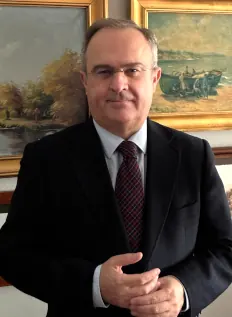
Dr. Javier Junceda
Javier Junceda, a distinguished jurist, former dean of the Faculty of Law at the Universidad Internacional de Cataluña, and an elected full academician of the Royal European Academy of Doctors (READ), shares with the academic community his latest articles published in the Asturian daily «La Nueva España» and in the digital newspaper El Debate, where he is a regular contributor. These are, respectively, «The Asturian Origins of the Glory of Creole Music: the Story of Chabuca Granda, Author of ‘La flor de la canela’», published on January 10, and «Lighthouse Keepers,» published on December 22. Likewise, the specialized legal portal Confilegal, which also features him among its renowned opinion and analysis writers, reported last November on his election as a new full member of the READ.
In La Nueva España, Junceda recalls how the Peruvian singer-songwriter María Isabel Granda y Larco—composer of legendary songs such as «La flor de la canela» and «Fina estampa»—never failed to express her pride in being descended from Asturian emigrants to the Americas. «With her customary elegance and beautiful Lima accent, she said in an interview: ‘Ancestry is a very powerful thing. I fear that if I start walking around Asturias, I’ll walk it for two years. We are from there. Those who study these matters trace my family back to the seventh century. It is a mining country, and I was born in a mine. But greenery also grows there. Ancestry is strong, and my fear is that when I come to Spain, I’ll walk it and forget to return to Lima,’» he explains.
For the elected academician, the figure of Chabuca Granda—born in Peru and a benchmark of Creole music—serves as a bridge between cultures and an example of the impact of Latin American popular music across different latitudes. The article highlights how her legacy has transcended borders and endures in the collective memory of Spanish-speaking communities on both sides of the Atlantic, thanks to a repertoire that blends emotion, tradition, and creativity and has influenced generations. Junceda reflects on the value of musical heritage as a vehicle of identity and intercultural encounter, citing Granda as an emblematic case of how an artist can become a symbol of broader cultural dialogue.
In El Debate, the jurist pays tribute to lighthouse keepers—an occupation on the brink of extinction—and to their dedication to arduous work in inhospitable locations, often accompanied by their families, according to a recent study by historian Enrique Pérez-Campoamor. «The data drawn from his meticulous research differ greatly from the romanticized image that has endured of these workers. It bears no resemblance to those scenes of portly gentlemen with a captain’s cap and graying beard scanning the horizon with binoculars held by hands that also clutched a steaming cigar», he explains.
Junceda presents these civil servants as exemplars of those who devote their working lives to public administration. «I can think of no dedication to public service as intense as this. It would be unimaginable today to revive the sacrifice of those who had to spend years and years with their families in places not only inhospitable and dangerous, but incompatible with an ordinary existence. The commitment assumed by these public servants has nothing to do with that of others who merely clock in each day in order to collect a paycheck», he states.
As for Confilegal, its report underscores both the jurist’s distinguished career and the prestige of the Academy, offering details of the induction ceremony. «The new academician will devote his address to the phenomenon of legislative incontinence—a legal problem describing excess, dispersion, and volatility in contemporary legislative systems. This is an area he has researched for years and which, he explains, is decisive for improving the quality of law and ensuring good governance. The READ has particularly valued this line of work for its substantive contribution to current legal debate and its relevance to the formulation of more stable and coherent public policies. The appointment has been received with immense honor by Junceda, who acknowledges that the proposal came as a surprise from the earliest contacts several months ago. He has expressed his satisfaction at joining an institution with more than a century of history and an exceptional academic legacy», the article notes.
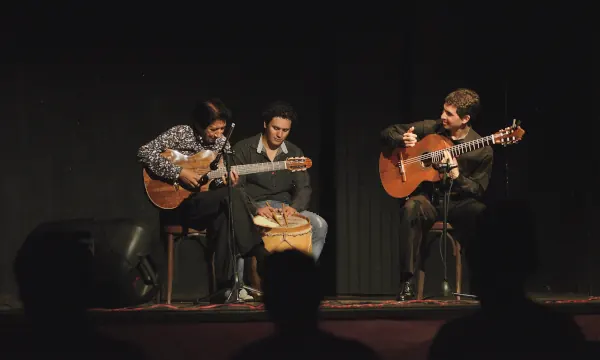
Image by PxHere
Founder and director of Junceda Abogados, the elected academician is a full member of the Real Instituto de Estudios Asturianos, where he chairs the Commission on Law, Social and Economic Sciences, and a full member of the Real Academia Asturiana de Jurisprudencia. He is also a corresponding academician of the Real Academia de Jurisprudencia y Legislación de España and of the Academia Norteamericana de la Lengua Española, as well as an honorary academician of the Academia Peruana de Derecho. He is a member of the Tribunal Arbitral de Barcelona, the Court of Arbitration of the Asociación Europea de Arbitraje, and the Court of Arbitration of the Pontificia Universidad Católica del Perú. Since 2016, he has served as a member of the Commission on Urban Planning and Territorial Organization of the Principality of Asturias, selected from among experts of recognized prestige, and as a member of the Advisory Council of the Asociación Española de Derecho Urbanístico.
He has participated as an expert in 18 parliamentary committees on legislative reforms and has drafted various bills, legislative proposals, and regulatory instruments. He is the author or co-author of more than two hundred legal works, some of which have served as the basis for judicial rulings by the Constitutional Court of Chile, the Supreme Court of Peru, and courts in Bolivia. He has received mentions in the Luis Sela Sampil Awards for doctrinal articles from the Faculty of Law of the Universidad de Oviedo, as well as twice (1992 and 2012) in the prestigious Estudios Financierosawards convened by the Centro de Estudios Financieros in Madrid. He is also a member of the editorial boards of 14 Spanish and international legal journals. He has been awarded honorary doctorates by six foreign universities and named honorary professor at another six, and has served as director, lecturer, or professor in more than fifty training programs conducted in Spain and Ibero-America.