

Teresa Freixes, Jean Monnet Chair ad personam, president of the international organization Citizens pro Europe, vice-president of the civic platform Sociedad Civil Catalana, and Numerary Member and Vice-President of the Board of Governors of the European Academy of Doctors (READ), reflects on Spanish and international political affairs in the articles «The Advocate General, the Trees and the Forest,» «Juan Carlos I: From Clandestinity to the Throne,» «Once Again Self-Determination or Independence by Instalments,» «Remember Sarajevo,» and «On the 47th Anniversary of the Constitution,» published between November and December on the specialized portal Artículo 14 and the digital newspapers The Objective and El Imparcial.
In «The Advocate General, the Trees and the Forest,» the jurist examines the considerations of the Advocate General of the Court of Justice of the European Union regarding the preliminary questions referred by Spain’s National High Court and the Court of Auditors on certain aspects of the Organic Law on Amnesty. “It is striking that the Advocate General systematically resorts to international humanitarian law as a source of interpretative principles for his opinion. He mentions it dozens of times, albeit generically, without specifying which rules or articles he considers applicable to the case. This is surprising because international humanitarian law is a body of law made up of treaties and other rules governing the law of war, applicable only in situations of armed conflict. Its primary purpose is to delimit the rights of combatants and non-combatants and to protect the civilian population. It is not applicable to terrorism unless it occurs in the context of an armed conflict, which entails the involvement of armies, guerrillas identified as such, or other organized combatant forces. Does the Advocate General not know that international humanitarian law does not apply to terrorism? Or is he suggesting that the ‘procés’ was an armed conflict, or should be considered as such?” she argues.
In «Juan Carlos I: From Clandestinity to the Throne,» the academic praises the role played by the King Emeritus in driving Spain’s political transition to democracy after the death of Francisco Franco. «Few were aware of the direct or indirect contacts the Prince maintained with the anti-Franco opposition, grouped around the so-called Platajunta and made visible through the so-called Commission of the Nine. Among them were figures close to Don Juan, Count of Barcelona and father of Juan Carlos, as well as socialists, Christian democrats, communists, liberals, and anti-Franco monarchists, who had to reach basic and partial agreements that made possible the success of a path begun even before Franco’s death,» she explains.
Freixes devotes «Once Again Self-Determination or Independence by Instalments» to what she considers desperate attempts by Spain’s Prime Minister, Pedro Sánchez, to maintain at all costs the support of Junts and its leader, Carles Puigdemont. «Puigdemont is not satisfied with everything he has negotiated with Sánchez and extracted from democracy, concession by concession, from Waterloo or Geneva, like a privileged fugitive from justice—having managed to whitewash the coup attempt and grant privileged support to the heirs of terrorism by giving them institutional presence, something few now remember since his party organized, with great fanfare, a lavish reception for them in the Parliament of Catalonia on 18 May 2016, presided over by the Convergència activist Carme Forcadell—an event that only a handful of us at the time recognized as one of the signs of the totalitarianism taking root in Catalonia. Little could we imagine what would follow» she writes.

Dr Teresa Freixes
In «Remember Sarajevo,» the president of Citizens pro Europe draws on her professional experience in the former Yugoslavia in connection with the Milan Prosecutor’s Office investigation into alleged “sniper tourism” that appears to have been organized in Bosnia—particularly in Sarajevo—turning the “hunting” of civilians during the war into a business and a macabre form of entertainment. “These reports have affected me deeply because I was there and witnessed first-hand the aftermath of a terrible war, which here filled newscast after newscast, and there meant tragedy after tragedy. Beyond massacres such as Srebrenica, the constant drip of attacks on civil society revealed boundless cruelty, compounded by what we are now discovering. I do not know whether this could have been known at the time. I hope the Milan Prosecutor’s Office will shed light on it,” she notes.
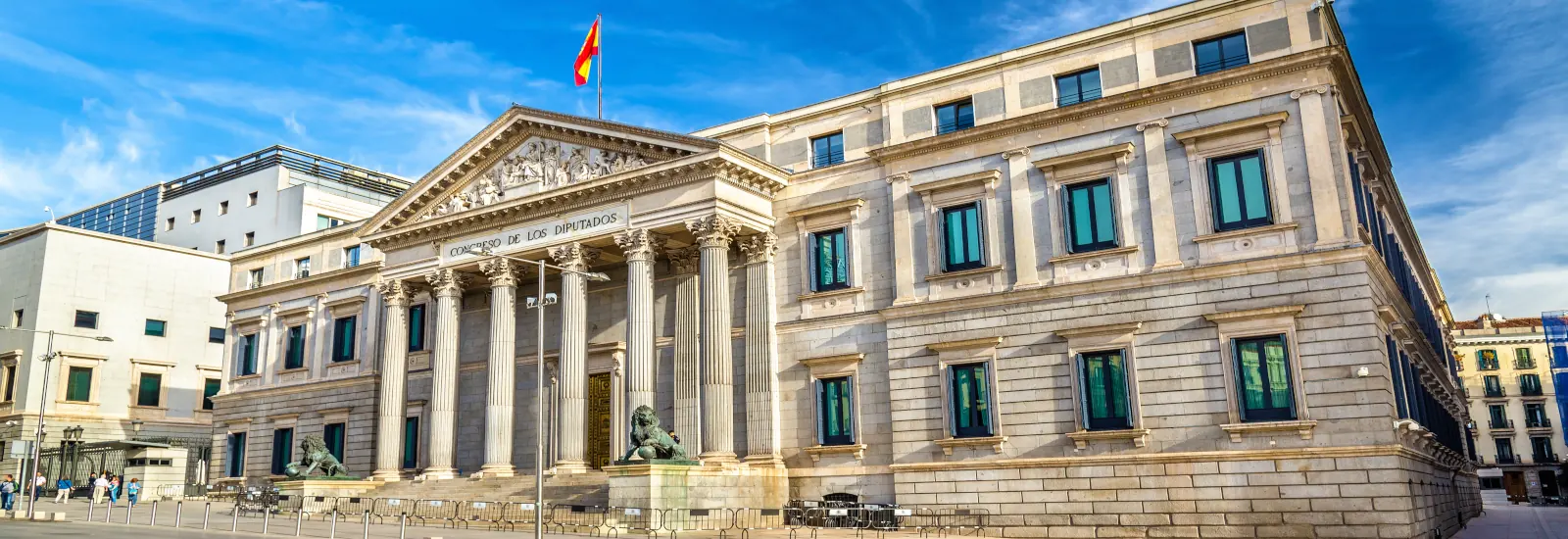
Finally, «On the 47th Anniversary of the Constitution» pays tribute to a Constitution that, in Freixes’s view, has brought concord and progress to Spain. «Enduring, enduring, we may ask what has enabled us to have it—and to keep it. If we look back to the years in which it was drafted—because although the text was completed in a matter of months, it required years of contextual groundwork—we can identify several factors. Legally, we learned from the constitutional texts of other countries that also transitioned from dictatorship to democracy, as well as from those that, after defeating fascism by force of arms, produced consensus-based constitutions. Socially, we sought an embrace—like that depicted in Juan Genovés’s painting displayed in Congress—bringing together Spaniards from inside and outside the country, from left and right, from the center and, we believed, from the periphery. Economically, we achieved the Moncloa Pacts, laying the foundations for social dialogue and the transition of the economy toward modernity. And we had a then Prince of Asturias who, in those years, moved from clandestinity to the throne. We wanted to live in democracy, and we wanted to be aligned with the other countries of Europe,» she concludes.
Read “El abogado general, los árboles y el bosque”
Read “Juan Carlos I: de la clandestinidad al trono”
Read “Otra vez autodeterminación o independencia a plazos”
Read “Remember Sarajevo”
Read “En el 47 aniversario de la Constitución”