

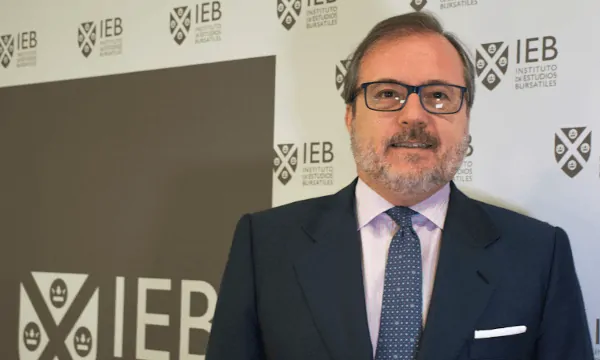
Dr. Daniel Berzosa
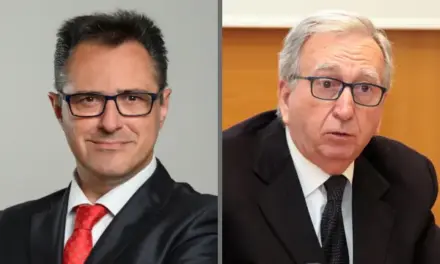
Daniel Berzosa, Professor of Constitutional Law and Fundamental Rights at CUNEF University, the Instituto de Estudios Bursátiles and the Instituto de Empresa–Law & Business School; member of the Global Academy and the Scientific Council of the international collective Citizens pro Europe; and Numerary Member and member of the Governing Board of the Royal European Academy of Doctors (READ), took part on 21 November in the special feature published by the newspaper ABC to mark the 50th anniversary of the proclamation of Juan Carlos I as King of Spain and Head of State. His contribution, titled “The Functions of a King in a Parliamentary Monarchy: What Can He Do and What Can He Not Do?”, outlines the King’s constitutional powers under the Spanish Constitution and their application in current institutional practice.
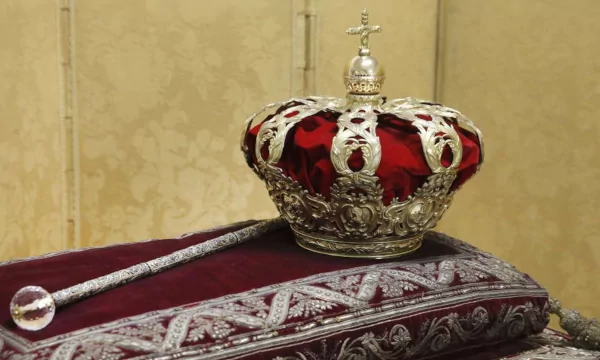
The expert explains that the monarch—currently King Felipe VI—performs a crucial symbolic and institutional role: representing the unity and continuity of the State, acting as arbiter and moderator of institutional functioning, and assuming the Headship of State in its formal dimension. Among his constitutional powers are the sanctioning and promulgation of laws once approved by Parliament, calling elections, dissolving the Cortes, proposing the candidate for Prime Minister, appointing members of the Government, accrediting ambassadors, ratifying international treaties, and representing the State abroad.
Berzosa highlights in particular—and in light of the events Spain has experienced over the past half-century—the role of arbitration, stability, and representation exercised by the Crown, especially during periods of political polarisation. In such moments, the monarch, being detached from electoral competition, can provide a framework of moderation and continuity.
 “The King provides institutional stability. In a world where political changes can be abrupt, detached from electoral turbulence, he serves as a referential anchor for the community. It is enough to recall the economic crisis of 2008, the political tensions of 2017, the Covid-19 pandemic or the 2024 DANA. The King expands and reinforces Spain’s international presence. The Crown, with its historical prestige and ties to other royal houses, facilitates diplomacy and bilateral relations. The King embodies unity in diversity. Spain is a country with pronounced territorial identities, and the monarch, as a symbol of all, helps build bridges between its people, political parties, autonomous communities and provinces, fostering respect for pluralism within the constitutional framework,” he explains.
The academic concludes with praise for the role of King Felipe VI and the rigour and exemplary conduct with which he fulfils his constitutional duties. “Felipe VI has restored public trust through exemplary transparency and a renewed commitment to democratic values. The parliamentary monarchy in Spain plays both a functional and symbolic role that contributes to the country’s unity, stability, and international projection,” he asserts.
Berzosa is a member of the Society of Diplomacy and Political Science of the United States, coordinator of the International Observatory on the Regulation of Public Sector Entities at the University of Santiago de Compostela, a member of the organising committees of the World Law Congress in Cartagena de Indias 2021 and Madrid 2019, and author of books and scientific articles in prestigious journals. He is also a well-known commentator on legal and political issues in major Spanish media outlets.