

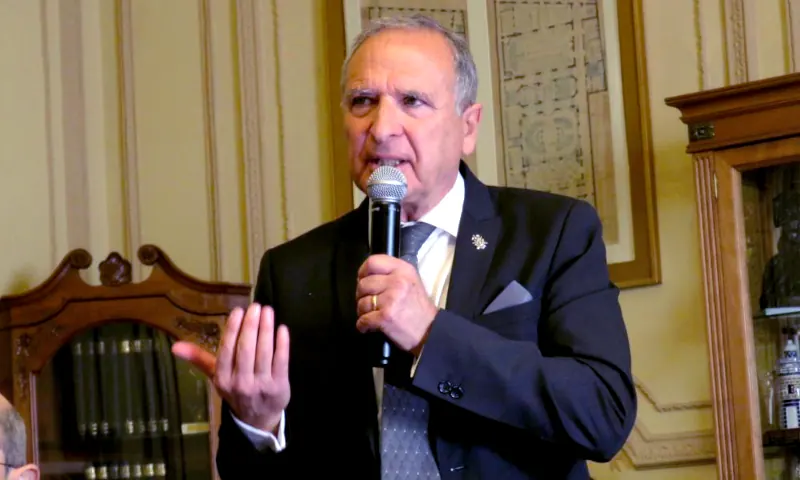
Jesús Alberto García Riesco
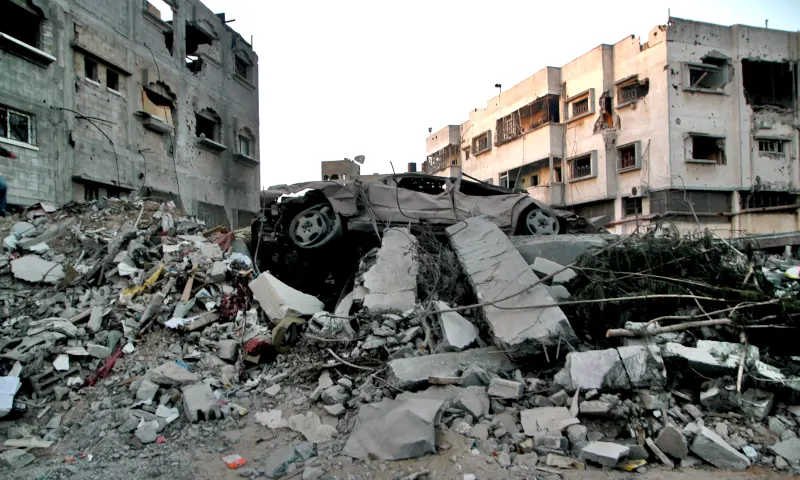
Jesús Alberto García Riesco, a colonel in the Spanish Army, member of the Spanish Association of Military Writers, and collaborator of the Royal European Academy of Doctors (READ), analyzes in the article «The Lights and Shadows of Trump’s Peace Plan for Gaza,» published on November 21 in the digital newspaper La Crítica, the peace plan presented by the President of the United States aimed at ending the military occupation of the Gaza Strip by the Israeli Armed Forces and its destruction in order to eliminate the terrorist group Hamas, highlighting both its positive aspects and the risks or uncertainties it entails.
On the positive side, the expert notes that the plan includes a ceasefire, the release of hostages and prisoners, a partial withdrawal of the Israeli army, and the promise that Gaza will be handed over to the Palestinians, with the mandatory dissolution of Hamas. It also foresees a reconstruction process for the Strip involving humanitarian aid, rehabilitation of infrastructure, and international supervision to ensure security. However, the article emphasizes that the plan also presents significant structural problems. These include the difficulty of achieving the complete disarmament of Hamas, Israeli reluctance to recognize a Palestinian state, and the possibility that Gaza could become a kind of protectorate under international supervision, which calls into question its legitimacy as a lasting solution.
 Furthermore, the author continues, there is an ethical and political concern: the plan advocates what he calls an “economic peace” that would offer material incentives to Palestinians but could require them to renounce their national narrative. This may generate cultural and social resistance and leave the conflict unresolved at its religious and identity-based roots. The article concludes that although Donald Trump’s plan represents an opportunity—perhaps the clearest in years—to put an end to violence, its success will largely depend on the genuine willingness of the parties involved to honor their commitments and on their ability to transform material conditions into a fair and sustainable agreement. As long as fears, mistrust, and conflicting interests persist, the “lights” of the plan may be overshadowed by its “shadows.”
“The Oslo Accords of 1993 raised great hopes, but the rise to power of Ariel Sharon in Israel and Hamas in Gaza caused them to fail. Since then, the fighting has not ceased, and there has been no agreement to end the conflict. Trump’s peace plan is great news—the weapons have fallen silent and a Palestine for the Palestinians is envisaged—but any agreement in the region cannot remain limited to tangible aspects; it must delve deeper into collective sentiments: interreligious dialogue, full recognition of human rights, and the security of both sides. As long as Israelis and Palestinians maintain their fundamentalist approaches, every attempt to achieve peace will end in failure,” García Riesco concludes.